CM Sawant Launches Ekadash Teerth Yatra, Temple Beautification in Priol
Synopsis
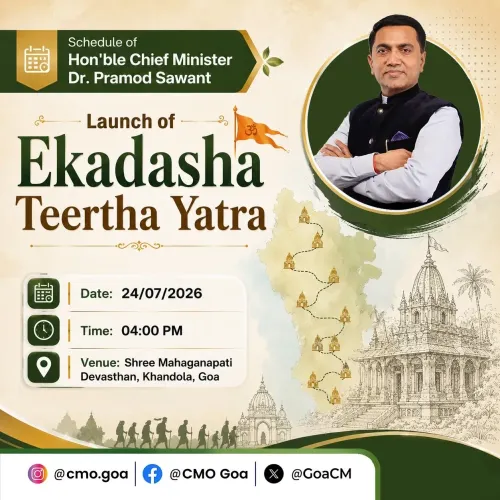
Goa CM Pramod Sawant inaugurated temple beautification at Shree Mahaganpati Temple, Betki-Kandola, and launched the Ekadash Teerth Yatra — a state circuit linking eleven temples with upgraded infrastructure and a 50% concession for senior citizen pilgrims, reinforcing Goa's 'Dakshin Kashi' identity.
Key Takeaways
Ekadash Teerth Yatra connects eleven revered temples across Goa through enhanced infrastructure, connectivity, and pilgrim facilities.
CM Pramod Sawant inaugurated beautification works at Shree Mahaganpati Temple, Betki-Kandola, Priol on 25 July 2026 .
A 50 per cent concession for senior citizens has been announced to improve access for elderly pilgrims.
The initiative frames Goa as 'Dakshin Kashi' , positioning the state as a major spiritual tourism destination.
The programme is linked to the state's Swayampurna Goa vision and the national Viksit Bharat framework.
GTDC , chaired by MLA Kedar Naik , is the nodal agency for implementation across the circuit.
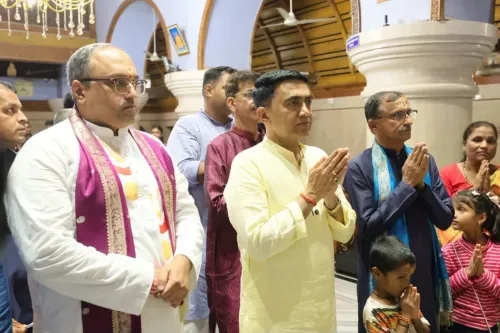
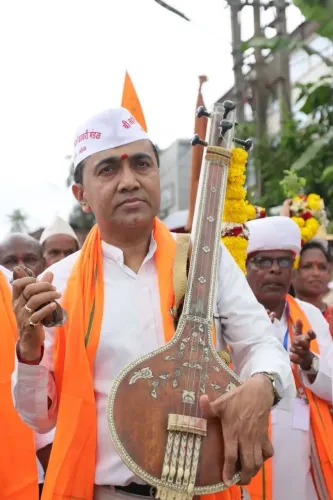
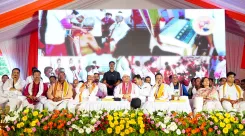
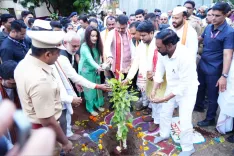
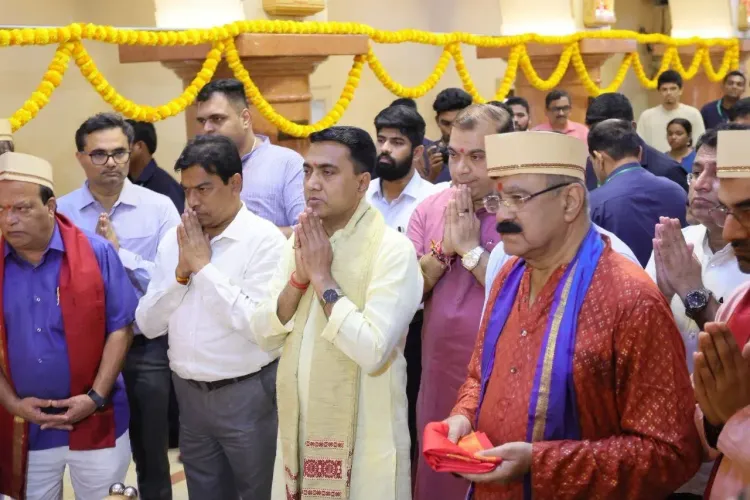
Goa Chief Minister Pramod Sawant on Friday, 25 July 2026, inaugurated the beautification and development works at Shree Mahaganpati Temple, Betki-Kandola, Priol, and flagged off the Ekadash Teerth Yatra — a state government initiative to connect eleven of Goa's revered temples through upgraded infrastructure and curated pilgrim facilities.
Context
The inauguration was held in the presence of Tourism Minister Rohan Khaunte, BJP State President Damu Naik, MLA and GTDC Chairman Kedar Naik, and MLA Govind Gaude, alongside other dignitaries. Sawant described the Yatra as a 'landmark initiative of the Government of Goa to preserve our sacred heritage while strengthening spiritual tourism.' The Shree Mahaganpati Temple at Betki-Kandola is a significant local pilgrimage site in the Priol constituency of central Goa.
Policy Backdrop
The Ekadash Teerth Yatra links eleven revered temples across Goa through enhanced road connectivity, improved infrastructure, and dedicated pilgrim amenities. The scheme positions Goa as 'Dakshin Kashi' — a southern counterpart to Varanasi — reinforcing the state's identity as a centre of Hindu spiritual heritage alongside its coastal tourism profile. A key feature is a 50 per cent concession for senior citizens on the Yatra, aimed at enabling greater participation among elderly devotees.
The initiative draws on the lineage of the Government of India's PRASAD scheme (launched 2014-15), which funds pilgrimage rejuvenation and spiritual tourism infrastructure. Goa's BJP administration has accelerated temple restoration and heritage projects since 2017, and the Ekadash Teerth Yatra represents the most structured circuit-based rollout to date. The programme is framed within the broader Swayampurna Goa vision — the state government's programme for village-level self-reliance and comprehensive development.
Stakeholders and Impact
The primary beneficiaries include pilgrims and senior citizens across Goa and from neighbouring states, temple trusts managing the eleven sites, and the local tourism and hospitality sector that stands to gain from increased footfall. The Goa Tourism Development Corporation (GTDC), chaired by MLA Kedar Naik, is the nodal agency responsible for implementing infrastructure upgrades and coordinating pilgrim logistics along the circuit. Multiple Indian states have developed similar temple circuits — from Uttar Pradesh's Char Dham corridor to Andhra Pradesh's Tirupati-linked routes — and Goa's effort follows this established model of linking religious sites with state branding and improved connectivity.
What's Next
Attention will now turn to the rollout of physical infrastructure works across all eleven temples and the operationalisation of the 50 per cent senior citizen concession. Observers will watch whether the initiative receives a dedicated budget line in the next Goa state budget or assembly session. CM Sawant reiterated the government's commitment to 'developing world-class spiritual tourism infrastructure' as part of the national Viksit Bharat framework, signalling that further phases or announcements are likely as the programme matures.
Point of View
Senior citizen outreach, and destination branding — all packaged within the politically resonant 'Dakshin Kashi' frame. By anchoring the launch at a constituency-level temple and assembling senior BJP figures including the party state president, Sawant signals that spiritual tourism is now a core pillar of Goa's governance narrative, not merely a cultural footnote. The initiative mirrors a pan-India BJP pattern of using temple circuits to simultaneously generate tourism revenue and consolidate a Hindu cultural identity for the state. The real test will be whether infrastructure delivery across all eleven sites matches the ambition of the launch event.
NationPress
24 Jul 2026
Frequently Asked Questions
What is the Ekadash Teerth Yatra in Goa?
The Ekadash Teerth Yatra is a Goa government initiative that links eleven revered temples across the state through upgraded roads, improved connectivity, and dedicated pilgrim facilities, positioning Goa as 'Dakshin Kashi' for spiritual tourism.
Which temples are included in the Ekadash Teerth Yatra?
The Yatra covers eleven revered temples of Goa; the exact list of all eleven sites has not been officially confirmed in public records available at the time of the launch.
What is the senior citizen concession for the Ekadash Teerth Yatra?
The Goa government has announced a 50 per cent concession for senior citizens on the Ekadash Teerth Yatra to enable more elderly devotees to participate in the pilgrimage circuit.
Where is Shree Mahaganpati Temple, Betki-Kandola?
Shree Mahaganpati Temple is located at Betki-Kandola in the Priol constituency of central Goa. It is a significant local Ganesh pilgrimage site where CM Sawant inaugurated the beautification works.
What is Swayampurna Goa?
'Swayampurna Goa' is the Goa government's programme for comprehensive village-level development and self-reliance. The Ekadash Teerth Yatra is framed as part of this broader vision alongside the national Viksit Bharat framework.