CM Sawant Launches Satellite Fishing App at Goa University
Synopsis
Goa CM Pramod Sawant launched the Matsya Sandhana Kshetram app at Goa University on August 10, 2026, using satellite and oceanographic data to guide fishermen to Potential Fishing Zones, cutting fuel costs and boosting catch efficiency under Goa's Blue Economy push.
Key Takeaways
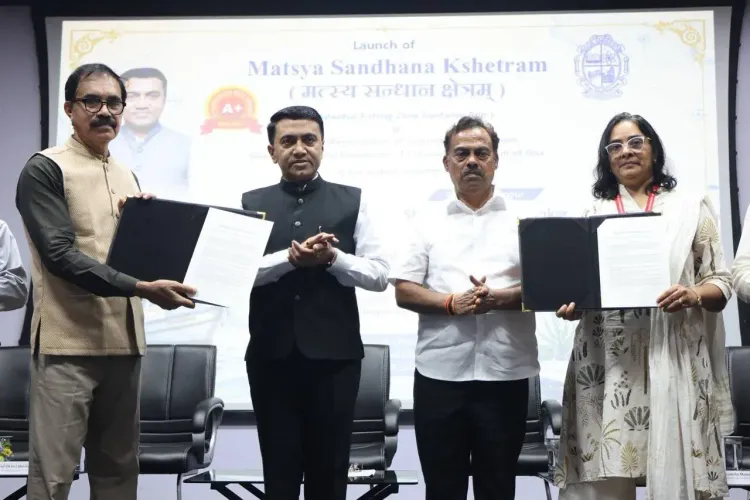
Goa CM Pramod Sawant launched the Matsya Sandhana Kshetram app on August 10, 2026 , at Goa University, Taleigao .
The app uses satellite observations and oceanographic data to identify Potential Fishing Zones (PFZs) for Goa's fishing community.
An MoU was signed between Goa University and the Directorate of Fisheries, Government of Goa , institutionalising the platform.
The initiative aims to cut fuel consumption , reduce search time at sea, and improve catch efficiency for fishermen.
India's national INCOIS has provided satellite-based PFZ advisories since 1999 ; Goa's app brings that data to a state-level mobile platform.
The launch is framed as part of Goa's broader Blue Economy development strategy.
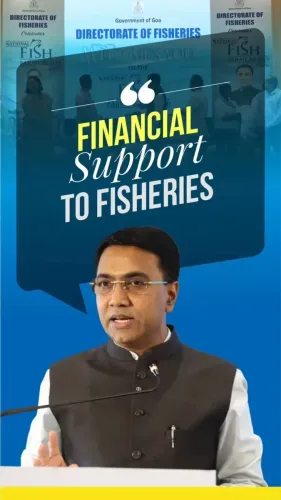
A digital tool built on satellite data and ocean science is now in the hands of Goa's fishing community — and it could change how thousands of boats decide where to cast their nets. Goa Chief Minister Pramod Sawant on Monday, August 10, 2026, witnessed the signing of a Memorandum of Understanding between Goa University and the Directorate of Fisheries, Government of Goa, and launched the Matsya Sandhana Kshetram application at the university's Taleigao campus.
What Matsya Sandhana Kshetram does for fishermen
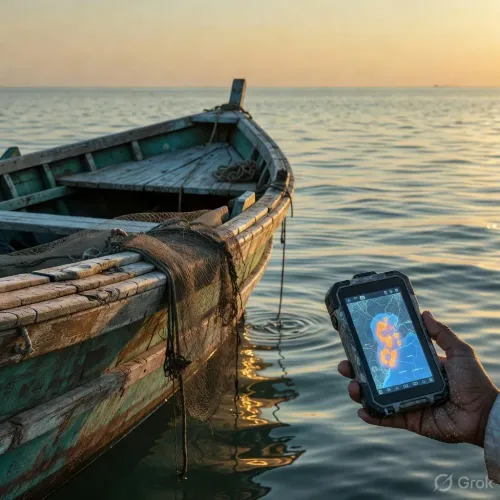
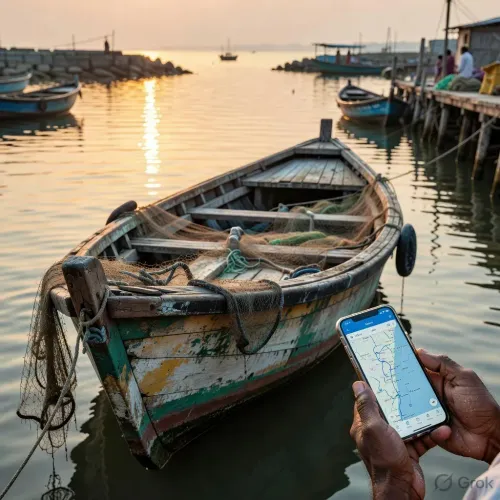
The app draws on satellite observations and oceanographic data to pinpoint Potential Fishing Zones (PFZs) — areas where fish are most likely to congregate based on sea-surface temperature, chlorophyll levels, and current patterns. For a fisherman burning diesel to comb open water, that intelligence is money. CM Sawant described the platform as a tool that will 'help fishermen reduce search time, lower fuel consumption, improve catch efficiency, and make fishing operations more productive and sustainable.'
The MoU between Goa University — a public research institution established in 1985 with active marine-science programmes — and the state's Directorate of Fisheries formalises the institutional partnership behind the app, anchoring it in ongoing academic research rather than a one-off government project.
Goa joins a decades-long national push for ocean intelligence
India's experiment with satellite-guided fishing is not new. The national Indian National Centre for Ocean Information Services (INCOIS) has been issuing PFZ advisories since 1999, using remote-sensing data to steer fishing fleets away from barren stretches of sea. What has changed is the delivery layer. States along the coastline are now building their own digital platforms — tailored to local fishing calendars, vessel types, and languages — on top of that national data infrastructure. Goa's Matsya Sandhana Kshetram is precisely that: a state-level, app-based interface that brings decades of ocean science to a fisherman's smartphone.
The move slots into India's broader Blue Economy agenda, which seeks to treat the country's vast maritime resources — fishing, shipping, coastal tourism, offshore energy — as a structured economic frontier. For a small coastal state like Goa, where artisanal fishing remains both a livelihood and a cultural identity, a tool that stretches each litre of fuel further is not a marginal improvement. It is a structural one.
The test ahead: adoption on the water
The real measure of Matsya Sandhana Kshetram will not be the MoU ceremony but the fishing season that follows. How many boats actually use the app? Does fuel expenditure drop? Do catch volumes hold or improve? Those numbers, if tracked and published, will determine whether this becomes a replicable model for other coastal states — or another well-intentioned digital initiative that stalls at the jetty.
CM Sawant called the launch 'a shining example of how scientific research and technology can empower traditional livelihoods.' The fishing community will deliver its own verdict, one trip at a time.
Point of View
App-based delivery. For the BJP-led Sawant government, anchoring the initiative in a university MoU signals an intent to institutionalise the platform beyond the electoral cycle. The Blue Economy framing also aligns Goa with central government priorities, potentially positioning the state for Union funding in coastal technology schemes. Whether the app achieves measurable adoption among Goa's largely artisanal fishing fleet — many of whom operate small, single-day boats — will be the true political and policy test.
NationPress
10 Aug 2026
Frequently Asked Questions
What is the Matsya Sandhana Kshetram app?
Matsya Sandhana Kshetram is a digital platform launched by the Goa government that uses satellite observations and oceanographic data to identify Potential Fishing Zones, helping fishermen locate fish-rich areas and reduce fuel consumption.
Who launched the Matsya Sandhana Kshetram application?
Goa Chief Minister Pramod Sawant witnessed and launched the app on August 10, 2026, at Goa University in Taleigao, alongside the signing of an MoU between Goa University and the Directorate of Fisheries.
What are Potential Fishing Zones and how are they identified?
Potential Fishing Zones are sea areas where fish are likely to congregate, identified using satellite data on sea-surface temperature, chlorophyll levels, and ocean currents. India's INCOIS has provided such advisories nationally since 1999.
How will this app benefit Goa's fishermen?
The app is designed to reduce the time fishermen spend searching for fish, lower diesel fuel costs, improve catch efficiency, and make fishing operations more sustainable by directing boats to data-identified productive zones.
What is Goa's Blue Economy initiative?
Goa's Blue Economy initiative refers to the state's efforts to sustainably develop its marine and coastal resources — including fishing, tourism, and ocean science — as a structured economic sector, aligned with India's broader national Blue Economy policy goals.