CM Sawant marks Article 370 abrogation anniversary
Synopsis
Goa Chief Minister Pramod Sawant marked the anniversary of the abrogation of Articles 370 and 35A on 5 August, crediting Prime Minister Modi and Home Minister Amit Shah for fulfilling the vision of Jana Sangh founder Syama Prasad Mookerjee and completing Jammu and Kashmir's constitutional integration with India.
Key Takeaways
5 August marks the anniversary of the abrogation of Articles 370 and 35A , which removed Jammu and Kashmir's special constitutional status.
The Jammu and Kashmir Reorganisation Act 2019 bifurcated the former state into two union territories: Jammu and Kashmir and Ladakh .
Union Home Minister Amit Shah moved the resolution in Parliament; the decision was a central plank of PM Narendra Modi 's government.
Goa CM Sawant invoked Dr.
Syama Prasad Mookerjee , founder of the Bharatiya Jana Sangh in 1951 , as the ideological originator of the 'One Nation, One Constitution' demand.
The BJP frames the abrogation as part of a broader constitutional uniformity agenda alongside moves such as the GST rollout .
Restoration of full statehood and on-the-ground development in the union territories remain active areas to watch.
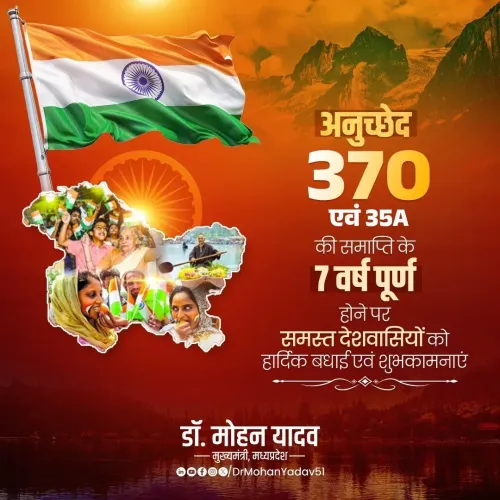
Seven years ago, a single parliamentary resolution rewrote the constitutional map of India. On 5 August, Goa Chief Minister Pramod Sawant marked the anniversary of the abrogation of Articles 370 and 35A, calling it the end of a decades-old asymmetry that had kept Jammu and Kashmir outside the full reach of the Indian Constitution.
Sawant invoked the old political slogan 'Ek Desh Mein Do Vidhan, Do Nishan, Do Pradhan' — 'One country, two constitutions, two emblems, two prime ministers' — to frame what the 2019 decision dismantled. The phrase, long associated with critics of Article 370, captured the argument that the provision created a constitutional two-tier India. That argument, Sawant said, is now history.
The decision that reshaped J&K's constitutional status
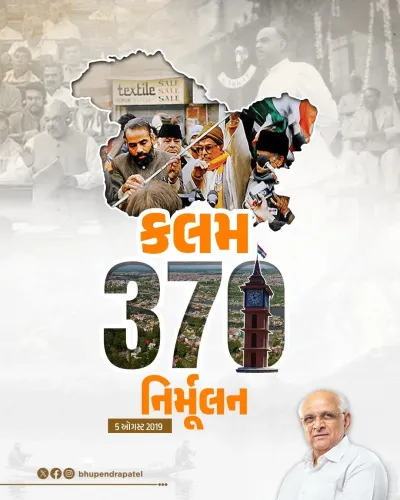
On 5 August 2019, the Union government moved the Constitution (Application to Jammu and Kashmir) Order 2019 and the Jammu and Kashmir Reorganisation Act in Parliament. Union Home Minister Amit Shah moved the resolution in the Rajya Sabha, ending the special status that had been in place since the early years of the republic. The former state was simultaneously reorganised into two union territories: Jammu and Kashmir and Ladakh.
The provisions being removed were themselves described as 'temporary' in the Constitution, though they had endured for nearly seven decades. Article 35A, which allowed the J&K legislature to define 'permanent residents' and restrict property rights and government jobs to that category, was a companion provision that fell alongside Article 370.
Syama Prasad Mookerjee's unfinished demand, finally answered
Sawant's post explicitly named Dr. Syama Prasad Mookerjee, the founder of the Bharatiya Jana Sangh in 1951, as the ideological forefather of the abrogation. Mookerjee had campaigned against the requirement for a separate permit to enter J&K and died in detention in Srinagar in 1953 while agitating for full constitutional integration. His demand for 'One Nation, One Constitution' became a foundational plank of the Jana Sangh and its successor, the BJP.
The abrogation, in BJP's framing, was the fulfilment of a promise that had been made and deferred for over sixty years — a lineage Sawant drew a direct line to in his post.
One Nation, One Constitution — and what comes next for J&K
The BJP has consistently positioned the abrogation alongside other uniformity-driven moves — the Goods and Services Tax rollout, the push for a Uniform Civil Code — as part of a broader project of constitutional and economic integration. Sawant's framing of the anniversary as a step toward Viksit Bharat ('Developed India') places it within that same arc.
The practical test of the 2019 decision, however, continues to unfold in the union territories themselves — in the pace of development spending, the restoration of statehood, and the functioning of elected local governance. The anniversary is a moment of political commemoration; the longer story is still being written on the ground in Srinagar and Leh.
For the BJP, 5 August is now a date on the political calendar as fixed as any national holiday — a marker of what the party calls its most consequential act of governance. CM Sawant's post is one voice in that annual chorus, but the question every anniversary sharpens is the same: has constitutional integration translated into the lived integration of Jammu and Kashmir's people into India's mainstream?
Point of View
But it reflects a durable BJP political strategy: converting a governance act into a recurring cultural milestone that reinforces party identity and ideological lineage. By anchoring the abrogation to Mookerjee's 1951 founding demand, the BJP extends the narrative arc from the Jana Sangh era to the Modi government, presenting it as a decades-in-the-making inevitability rather than a partisan choice. The 'Viksit Bharat' framing also signals an attempt to shift the conversation from the political act of abrogation to its developmental dividend — a harder claim to sustain as statehood restoration and local governance in the union territories remain pending. Regional leaders like Sawant amplifying the anniversary message suggests the party sees it as an electoral asset well beyond Jammu and Kashmir's own borders.
NationPress
5 Aug 2026
Frequently Asked Questions
What is Article 370 and why was it abrogated?
Article 370 was a temporary provision in the Indian Constitution that granted Jammu and Kashmir special autonomous status, including its own constitution and restrictions on outsiders buying property. It was abrogated on 5 August 2019 by the Modi government, which argued it prevented full constitutional and economic integration of the region with the rest of India.
What happened to Jammu and Kashmir after Article 370 was removed?
After the abrogation, the Jammu and Kashmir Reorganisation Act 2019 split the former state into two union territories: Jammu and Kashmir (with a legislature) and Ladakh (without one), both directly administered by the central government.
Who was Syama Prasad Mookerjee and what is his connection to Article 370?
Dr. Syama Prasad Mookerjee was the founder of the Bharatiya Jana Sangh in 1951 . He campaigned against Article 370 and the permit system that required Indians to obtain permission to enter J&K, and died in detention in Srinagar in 1953 while agitating for full integration. The BJP considers him the ideological originator of the 'One Nation, One Constitution' demand.
What does 'Ek Desh Mein Do Vidhan, Do Nishan, Do Pradhan' mean?
The phrase translates as 'One country, two constitutions, two emblems, two prime ministers.' It was a slogan used by critics of Article 370 to argue that the provision gave Jammu and Kashmir a separate constitutional identity incompatible with national unity.
Why is Goa CM Pramod Sawant commenting on Article 370?
As a senior BJP leader and Chief Minister, Sawant's post is part of the party's nationwide commemoration of the 5 August anniversary of the abrogation — a date the BJP marks annually as a landmark in its governance record.