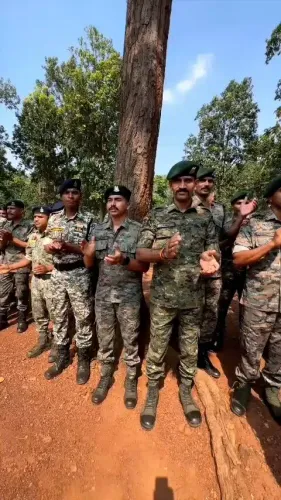
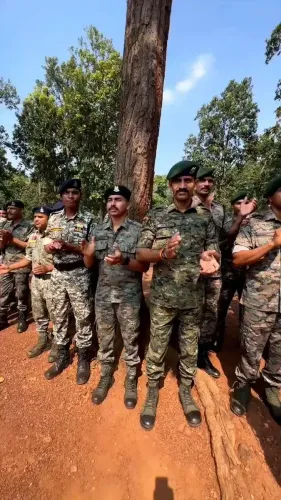
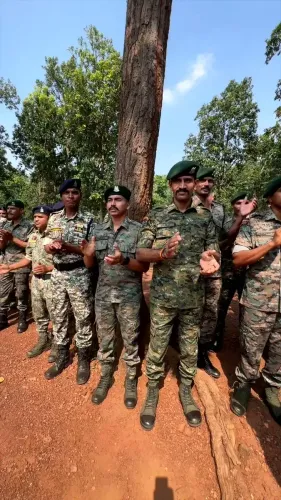
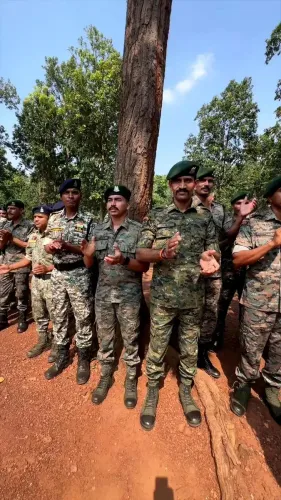
CM Sawant Hails PM Modi's Diwali in Bastar With Security Forces

Synopsis
Goa Chief Minister Pramod Sawant praised Prime Minister Narendra Modi's Diwali visit to Bastar — a former Naxal stronghold in Chhattisgarh — where Modi continued his tradition of celebrating the festival with security forces, calling it a symbol of India's march toward a Naxal-free future.
Key Takeaways
PM Modi celebrated Diwali 2026 with security forces in Bastar, Chhattisgarh , a district historically at the heart of Left Wing Extremism.
Goa CM Pramod Sawant praised the visit on X, calling it a 'powerful message of courage, commitment and a new dawn of peace.' The Naxal-Mukt Bharat (Naxal-Free India) objective has seen Naxal-affected districts fall from over 90 to fewer than 40 since 2019 , per Home Ministry data.
Modi has observed a standing tradition of spending Diwali with jawans in conflict or border zones rather than at Delhi ceremonies.
The Bastar counter-insurgency strategy combines security operations with road-building, welfare schemes, and surrender policies targeting LWE-affected areas.
Tribal communities in Bastar remain the most direct stakeholders in any sustainable peace dividend from security gains.
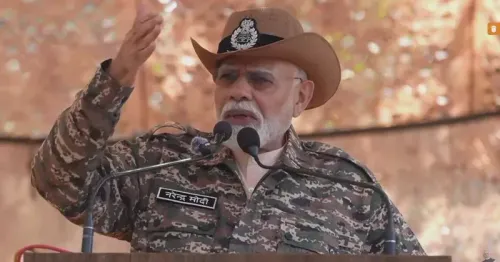
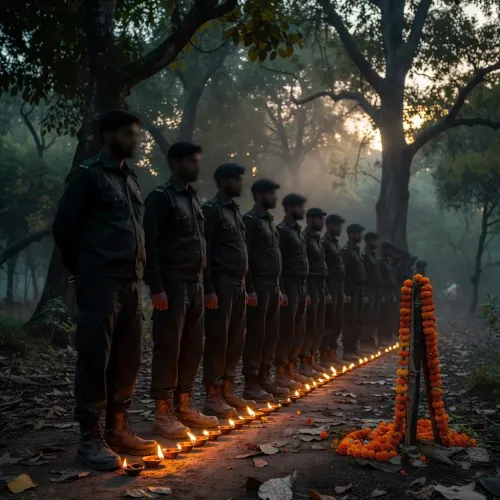
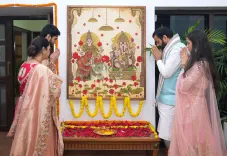
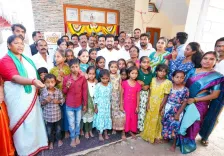
When the Prime Minister of India chooses to light Diwali diyas on a battlefield turned peace zone, the message travels far beyond the festivities. Goa Chief Minister Pramod Sawant marked Diwali 2026 by saluting Prime Minister Narendra Modi's visit to Bastar, Chhattisgarh — a district long synonymous with Naxalite violence — where Modi continued his tradition of celebrating the festival with India's security forces.
Sawant's post captured the symbolic weight of the moment: 'Diwali is sweeter with those who guard our nation.' He framed the visit as 'a powerful message of courage, commitment and a new dawn of peace,' signing off with the rallying phrase Naxal-Mukt Bharat — Naxal-Free India.
Why Bastar Was the Chosen Backdrop
Bastar is not a routine Diwali postcard location. For decades, the region in southern Chhattisgarh stood at the epicentre of Left Wing Extremism — a theatre of ambushes, roadside blasts, and prolonged state-insurgent conflict. Choosing it as the site of a Prime Ministerial festival visit carries deliberate political and strategic weight: it signals that the terrain, once conceded to the insurgents, now belongs to the republic.
The broader counter-Naxal campaign has combined stepped-up security operations with road-building, tribal welfare schemes, and structured surrender policies. Home Ministry data since 2019 has tracked a significant reduction in Naxal-affected districts — from over 90 to fewer than 40 — a trend the BJP government has consistently cited as evidence of territorial and administrative recovery.
Modi's Tradition of Diwali With the Forces
Prime Minister Modi has made a point across successive years of spending Diwali with jawans deployed in conflict or border zones rather than at ceremonial events in Delhi. The practice carries a dual purpose: a morale signal to deployed personnel and a political statement about state authority in difficult terrain. Bastar's selection in 2026 extends that tradition into the LWE theatre, putting the festival's warmth directly on the frontline.
Tribal communities in Bastar — long caught between the state and the insurgency — remain the most direct stakeholders in any claim of lasting peace. Security gains on paper have to translate into school attendance, road access, and market connectivity for those communities before the 'new dawn' rhetoric earns its full weight.
Sawant Joins a Chorus Celebrating the Milestone
By amplifying the visit from Goa, Chief Minister Sawant underscores the BJP's pan-India framing of the Naxal-free mission — not a Chhattisgarh-only story but a national security achievement worth every state leader's endorsement. His post pairs the patriotic imagery of Diwali lights with the government's counter-insurgency narrative, keeping the Naxal-Mukt Bharat goal squarely in the public conversation ahead of the next Home Ministry review of LWE district classifications.
India's longest-running internal security challenge may not be over yet — but a Prime Minister celebrating Diwali in Bastar is a headline no previous government managed to script.
Point of View
The visit reinforces the Naxal-free narrative ahead of what will likely be another Home Ministry district reclassification exercise. Sawant's amplification from Goa signals the party's intent to nationalise the Chhattisgarh security story as a collective governance achievement. The real test, however, lies in whether development follow-through in newly secured tribal belts translates the military gains into durable peace.
NationPress
8 Nov 2026
Frequently Asked Questions
Why did PM Modi celebrate Diwali in Bastar in 2026?
PM Modi chose Bastar in Chhattisgarh to mark Diwali with security forces deployed there, continuing his tradition of spending the festival with jawans in conflict or border zones and signalling progress on the government's Naxal-free India mission.
What is the Naxal-Mukt Bharat objective?
'Naxal-Mukt Bharat' or Naxal-Free India is the central government's goal of eliminating Left Wing Extremism. Home Ministry data shows Naxal-affected districts have fallen from over 90 to fewer than 40 since 2019.
What did Goa CM Pramod Sawant say about PM Modi's Bastar visit?
CM Sawant posted on X calling the visit 'a powerful message of courage, commitment and a new dawn of peace,' saluting India's security forces and celebrating the march toward a Naxal-free India.
What is the security situation in Bastar, Chhattisgarh?
Bastar has historically been a core area of Naxalite operations, but successive security operations combined with road-building and welfare schemes have produced a documented decline in LWE activity across the region.
How has India reduced Naxal-affected districts?
India's approach has combined intensified security operations with infrastructure development, tribal welfare schemes, and surrender policies; the number of affected districts has dropped from over 90 to fewer than 40 since 2019 according to Home Ministry reports.