CM Sawant Holds Sarkar Tumchya Dari Under Seva Sankalp Abhiyan
Synopsis
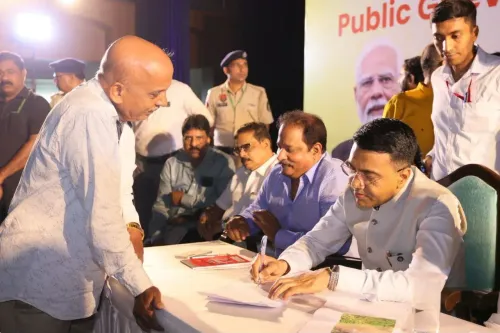
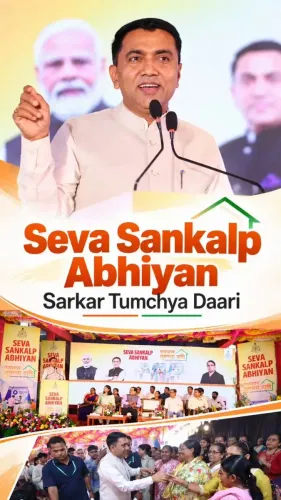
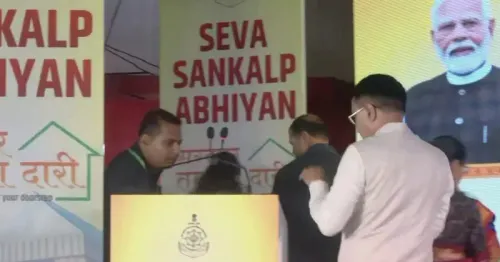
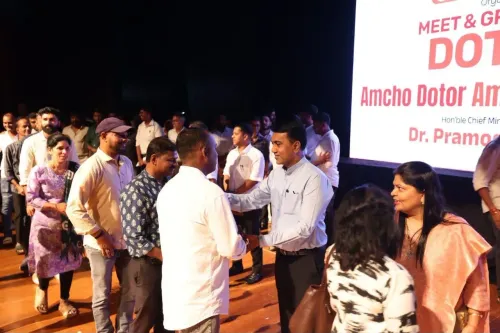
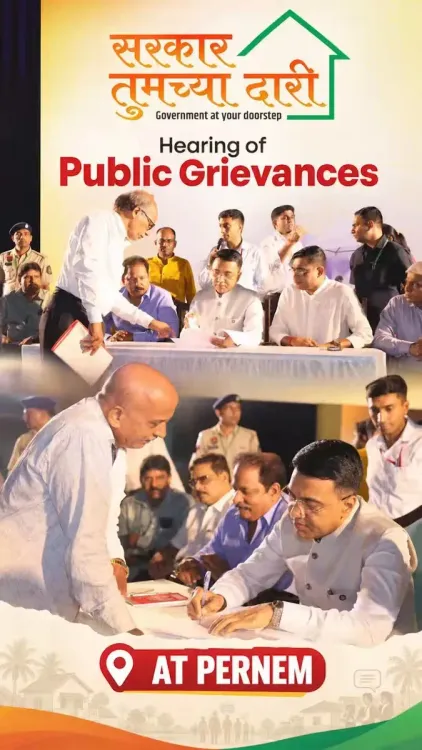
Goa Chief Minister Pramod Sawant participated in a Sarkar Tumchya Dari session under the Seva Sankalp Abhiyan on October 17, engaging citizens directly to address grievances and improve public service delivery at the local level.
Key Takeaways
Goa CM Pramod Sawant held a Sarkar Tumchya Dari session on October 17, 2026 under the Seva Sankalp Abhiyan.
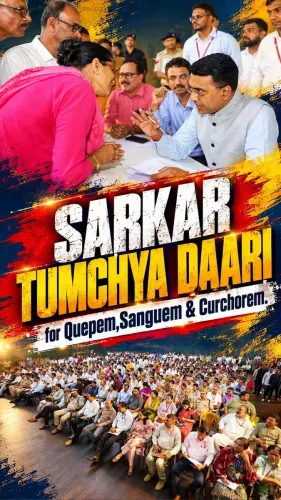
Sarkar Tumchya Dari translates to 'Government at your doorstep,' bringing officials directly to citizens.
The Seva Sankalp Abhiyan is a citizen outreach campaign focused on responsive and timely public service delivery.
The initiative targets last-mile gaps in scheme access, documentation, and grievance redressal.
Resolution rates from such camps and expansion to other talukas remain the key measure of impact.
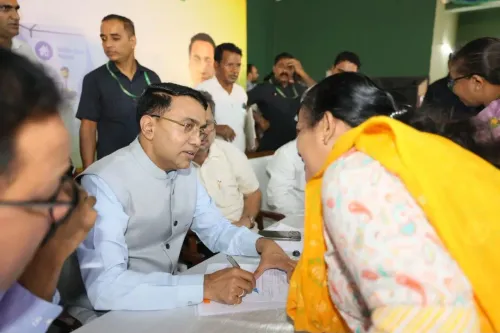
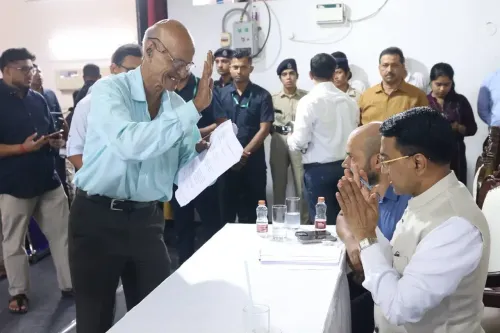
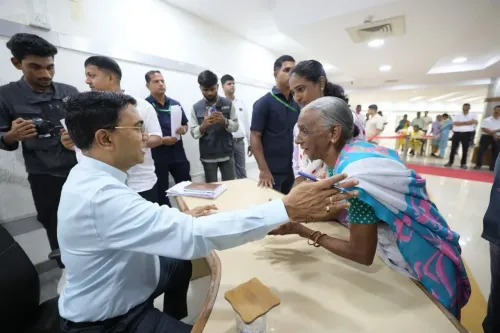
Government reaching the governed — not the other way around. Goa Chief Minister Pramod Sawant stepped into direct conversation with citizens on Saturday, October 17, under the Sarkar Tumchya Dari initiative, part of the broader Seva Sankalp Abhiyan, committing his administration to timely and responsive delivery of public services.
What Sarkar Tumchya Dari actually does
Sarkar Tumchya Dari — meaning 'Government at your doorstep' in Konkani and Marathi — is a structured outreach programme designed to remove the distance between citizens and the state machinery. Instead of residents navigating bureaucratic corridors, officials and elected leaders move into localities to hear grievances on the spot. The Seva Sankalp Abhiyan frames these camps under a single citizen-service umbrella, targeting last-mile gaps in scheme delivery, documentation access, and complaint redressal.
CM Sawant described the session as governance that 'listens and acts' — a deliberate signal that responsiveness, not just presence, is the intended outcome.
Goa's outreach effort in a wider governance pattern
Periodic government-citizen contact programmes have become a recognisable feature of BJP-administered states over the past decade, designed to demonstrate administrative accountability and reduce the perception of a distant or indifferent state. In smaller states like Goa, where talukas are few and populations compact, such camps can cover meaningful ground quickly — but the real test, as policy observers note, lies in grievance resolution rates after the cameras move on.
What to watch going forward: whether the Seva Sankalp Abhiyan publishes resolution data from these sessions, and whether similar camps roll out across remaining talukas before the abhiyan concludes.
Point of View
Citizen-facing outreach — useful both as administrative tool and political optics. For CM Sawant, who has worked to consolidate his position since taking office in 2019, demonstrating hands-on accessibility reinforces a 'responsive government' brand ahead of any future electoral cycle. The deeper question is institutional: whether the Seva Sankalp Abhiyan builds durable grievance pipelines or remains a periodic show of presence. In compact Goa, the gap between promise and measurable resolution is short enough to be held accountable.
NationPress
17 Oct 2026
Frequently Asked Questions
What is Sarkar Tumchya Dari in Goa?
'Sarkar Tumchya Dari' means 'Government at your doorstep' and is a programme where government officials and leaders go directly to citizens to hear grievances and resolve issues related to public services and schemes.
What is the Seva Sankalp Abhiyan?
The Seva Sankalp Abhiyan is a citizen outreach campaign run by the Goa government under Chief Minister Pramod Sawant, focused on ensuring timely and responsive delivery of public services at the grassroots level.
What did CM Pramod Sawant do at the Sarkar Tumchya Dari event?
CM Pramod Sawant engaged directly with citizens to hear their concerns and ensure timely delivery of government services, describing the approach as governance that 'listens and acts'.
Who is Pramod Sawant?
Pramod Sawant is the Chief Minister of Goa and a BJP leader who assumed office in 2019.
How does Sarkar Tumchya Dari help Goa citizens?
The programme removes bureaucratic barriers by bringing government officials to local communities, helping residents access schemes, obtain documents, and resolve complaints without travelling to government offices.