CM Bhajan Lal Sharma rallies BJP workers in Kishangarh ahead of panchayat polls
Synopsis
Rajasthan CM Bhajan Lal Sharma addressed BJP workers in Kishangarh, invoking the double-engine governance model and recent urban poll victories to rally the cadre ahead of the state's upcoming panchayat elections.
Key Takeaways
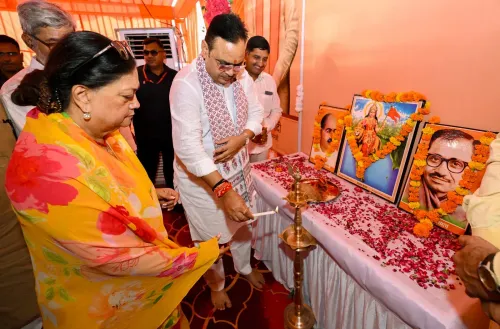
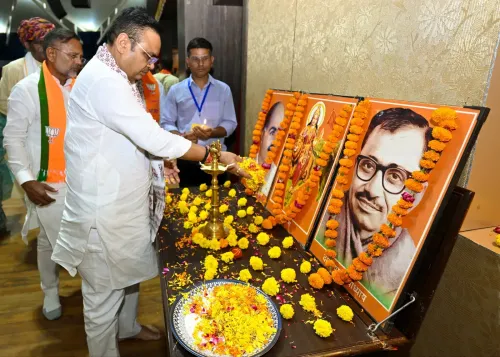
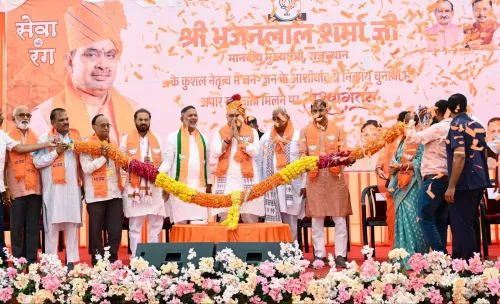
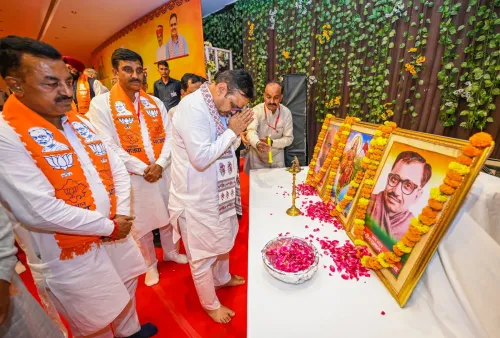
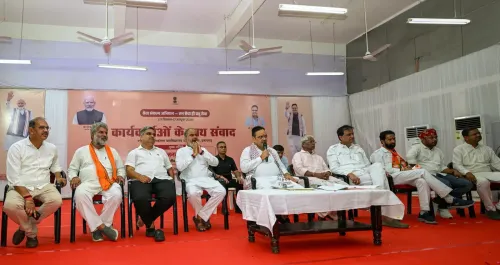
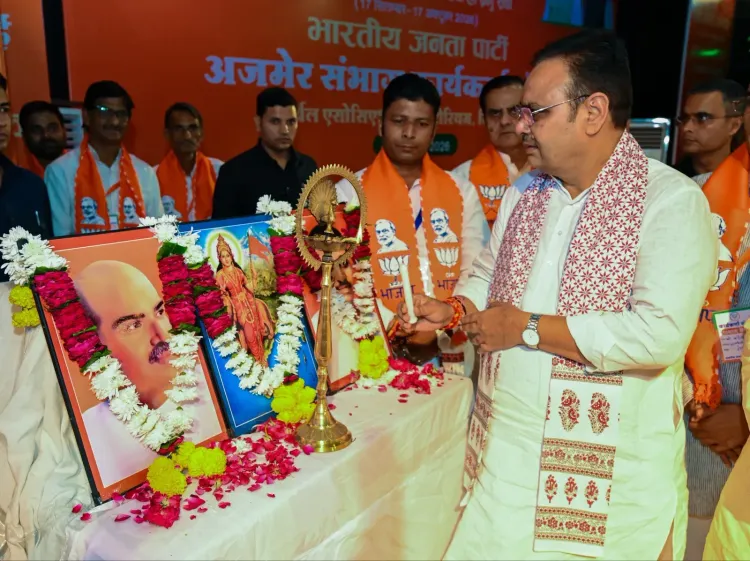
CM Bhajan Lal Sharma held an organisational meeting with BJP workers in Kishangarh, Ajmer district on 29 September 2026 .
He described party workers as a 'powerful bridge' ensuring welfare schemes reach the most deprived sections without discrimination.
The BJP's performance in Nikay Chunav (urban local body elections) was cited as a public endorsement of good governance and transparency.
Sharma announced the party will contest the upcoming Panchayat Chunav on a platform of service, dedication, and holistic development.
The meeting fits a recurring BJP pattern of using district-level worker conclaves to set organisational and campaign tone ahead of local elections.
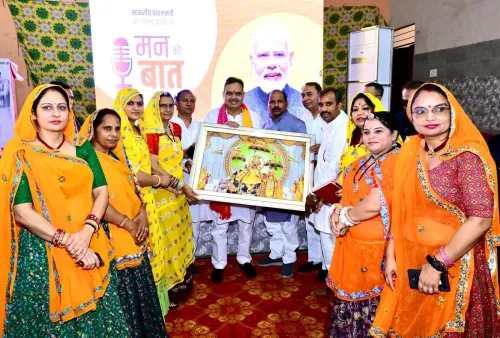
With panchayat elections on the horizon, Rajasthan Chief Minister Bhajan Lal Sharma travelled to Kishangarh on Tuesday, 29 September 2026 to sit down with dedicated party workers — turning an organisational huddle into a pointed signal about the BJP's ground strategy for the next round of rural polls.
Addressing the gathering, Sharma framed the party's grassroots cadre as the essential link between government welfare and the people who need it most. 'Hamāre kāryakartāon kī bhumikā ek sashakt setu ke samān hai' — 'our workers serve as a powerful bridge' — he said, stressing that every scheme under the double-engine government must reach eligible beneficiaries 'without any discrimination.'
Nikay election mandate as a springboard
Sharma pointed to the BJP's performance in the recent Nikay Chunav (urban local body elections) as proof that voters have endorsed the party's governance model. He described the result as 'suśāsan aur pāradarśitā kī nīti par jantā kī muhar' — 'the public's seal of approval on a policy of good governance and transparency.' That framing is deliberate: in BJP political messaging, urban poll victories are routinely converted into moral authority for the contests that follow.
Kishangarh, a commercial hub in Ajmer district best known for its marble trade, provided the backdrop — a town that sits at the crossroads of urban commerce and rural Rajasthan, making it a symbolically apt venue for a meeting pitched at bridging welfare delivery gaps.
The double-engine pitch for rural Rajasthan
The 'double engine' formulation — shorthand for aligned BJP governments at both the state and Centre — has been central to the party's Rajasthan narrative since Sharma took office in December 2023 after the assembly elections. The idea is that coordinated policy between Jaipur and Delhi accelerates welfare delivery to the most marginalised communities. At Kishangarh, Sharma renewed that pitch explicitly, telling workers that the upcoming Panchayat Chunav will be contested on a platform of 'service, dedication, and holistic development.'
The meeting's subtext is organisational as much as ideological: candidate selection and booth-level mobilisation for panchayat elections typically begin at exactly these kinds of district-level worker conclaves, where the leadership takes the temperature of local units and sets the campaign tone.
Workers as welfare conduits — and campaign engines
Sharma closed with a line that doubled as both a governance philosophy and a campaign instruction: 'Jan-kalyān kī yah yātrā nirantar gatimān rahe, yahī hamārā sānjhā prayās hai' — 'May this journey of public welfare remain continuously in motion — that is our shared endeavour.' The message to the cadre was unambiguous: welfare delivery is not just policy, it is the party's electoral currency heading into the panchayat cycle.
How effectively that currency converts at the village level — where the last mile of scheme delivery is most contested — will define the BJP's rural Rajasthan story in the months ahead.
Point of View
A structural advantage opposition parties in Rajasthan cannot easily replicate. Citing the nikay election result as a mandate for transparency is also a pre-emptive counter to any anti-incumbency narrative that could build at the village level. The real test will be whether booth-level workers can translate that framing into last-mile welfare visibility before panchayat polling day.
NationPress
29 Sept 2026
Frequently Asked Questions
Why did CM Bhajan Lal Sharma visit Kishangarh?
CM Sharma visited Kishangarh to meet dedicated BJP workers, discuss organisational matters and public-interest issues, and prepare the party cadre for the upcoming panchayat elections in Rajasthan.
What is the double engine government Sharma mentioned?
The 'double engine government' refers to aligned BJP governments at both the Rajasthan state level and the Centre in New Delhi, which the party argues enables faster and more coordinated delivery of welfare schemes to citizens.
What are the Rajasthan panchayat elections and when are they expected?
The Panchayat Chunav are rural local body elections in Rajasthan. Sharma's remarks indicate the BJP is actively preparing its organisational machinery for these polls, though specific dates are yet to be officially announced.
What did the Rajasthan nikay elections result show?
According to CM Sharma, the BJP's strong public support in the recent urban local body (nikay) elections reflects voter approval of the government's policies of good governance and transparency.
What role does Sharma say BJP workers play in welfare delivery?
Sharma described BJP workers as a 'powerful bridge' ensuring that every government welfare scheme reaches eligible beneficiaries without any discrimination, framing grassroots cadre as essential to effective governance.