CM Shivakumar Boosts Sanitation Worker Pay in Karnataka
Synopsis
The Karnataka government led by CM DK Shivakumar has announced a ₹5,000 monthly special allowance for direct-payment pourakarmikas, doubled the breakfast allowance to ₹70, hiked permanent workers' special allowance from ₹7,000 to ₹10,000, and committed to building a KPS-model residential school for their children.
Key Takeaways
₹5,000 per month new special allowance announced for direct-payment pourakarmikas in Karnataka.
Breakfast allowance doubled from ₹35 to ₹70 per day for sanitation workers.
Permanent pourakarmika special allowance raised from ₹7,000 to ₹10,000 per month — a 43 percent increase.
A residential school on the KPS model to be built for the educational welfare of pourakarmikas' children.
Measures announced by the Chief Minister's Office of Karnataka on 25 September 2026 under CM DK Shivakumar .
Package follows Karnataka's pattern of periodic sanitation-worker benefit revisions aligned with the national Swachh Bharat Mission framework.
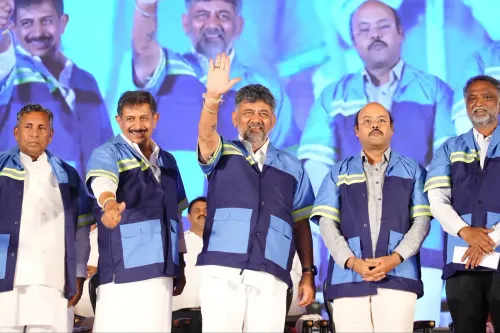
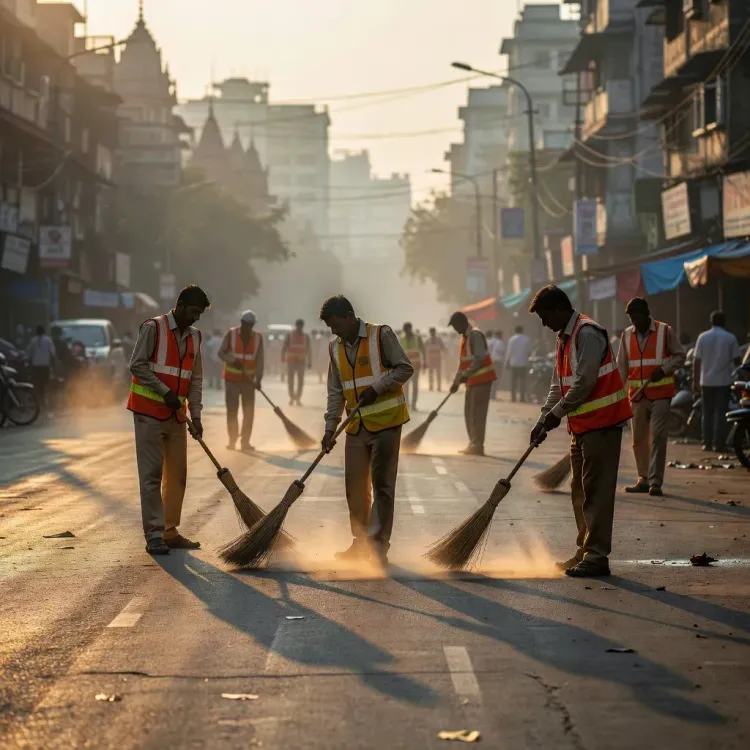
Every morning, before most of Bengaluru wakes, pourakarmikas — Karnataka's municipal sanitation workers — are already on the streets, keeping the state's cities livable. On Friday, 25 September 2026, the Chief Minister's Office of Karnataka announced that the government led by Chief Minister DK Shivakumar has declared a package of significant welfare measures to honour and improve the lives of these frontline workers.
What the allowance hike means for direct-payment workers
The centrepiece of the package is a ₹5,000 monthly special allowance for direct-payment pourakarmikas — those engaged by urban local bodies on a direct contractual basis rather than through outsourced agencies. This category of worker has historically received fewer protections and lower incremental benefits than permanent staff, making the dedicated allowance a meaningful floor-level uplift.
Alongside this, the government has decided to double the breakfast allowance from ₹35 to ₹70 per day. The revision, modest in isolation, signals an acknowledgement that the cost of a basic morning meal has risen sharply in urban Karnataka, and that sanitation workers — who begin shifts in the early hours — deserve adequate nutritional support funded by the state.
Permanent workers get a bigger special allowance
For permanent (khayam) pourakarmikas, the government has announced a hike in their special allowance from ₹7,000 to ₹10,000 per month — a ₹3,000 increase, or roughly a 43 percent jump. Permanent workers typically have longer service records and access to provident-fund and gratuity benefits, but their special allowances had not kept pace with inflation or the rising cost of living in Karnataka's urban centres. The revised figure brings their supplementary pay closer to a living-wage benchmark.
A residential school on the KPS model for workers' children
Perhaps the most structurally consequential element of the package is the decision to build a special residential school on the KPS (Karnataka Public Schools) model for the children of pourakarmikas. The Karnataka Public Schools network is the state's flagship chain of government-run residential institutions, designed to deliver quality education to children from economically weaker backgrounds in a boarding-school environment. By extending this model specifically to sanitation workers' families, the government is embedding an intergenerational equity commitment into what might otherwise be a routine allowance revision.
The announcement follows Karnataka's periodic pattern of revising sanitation-worker benefits through urban local-body governance frameworks — a pattern that has gained momentum since the Swachh Bharat Mission spotlighted frontline sanitation staff nationally from 2014 onward. Implementation timelines for both the revised allowances and the residential school construction will now be the critical next variable to watch.
Welfare as a governance signal, not just arithmetic
Read together, the three financial revisions and the school announcement constitute a layered welfare architecture — cash in hand, nutrition on the job, and education for the next generation. The Karnataka government has framed the measures explicitly as recognition of a workforce that sustains urban public health daily, often invisibly. Whether the disbursal mechanisms through urban local bodies can translate the announced figures into timely, friction-free payments will determine whether the political gesture becomes durable ground-level change.
For a government that has staked its urban governance credibility on equitable delivery, the pourakarmika package is a public benchmark — and the state's sanitation workers will be measuring it month by month.
Point of View
A framing that distinguishes it from similar packages elsewhere. However, the credibility of such announcements in Karnataka has often hinged on disbursal speed through urban local bodies, which have a mixed implementation record. If allowances flow on schedule and the school project reaches the ground, the package could set a benchmark for other states still revising sanitation-worker protections under the Swachh Bharat framework.
NationPress
25 Sept 2026
Frequently Asked Questions
What is the new monthly allowance for pourakarmikas in Karnataka?
Direct-payment pourakarmikas in Karnataka will receive a new special allowance of ₹5,000 per month, as announced by the state government on 25 September 2026.
How much has the permanent pourakarmika special allowance been increased to?
The special allowance for permanent (khayam) pourakarmikas has been increased from ₹7,000 to ₹10,000 per month — a rise of ₹3,000.
What is the new breakfast allowance for sanitation workers in Karnataka?
The breakfast allowance for pourakarmikas has been doubled from ₹35 to ₹70 per day under the new welfare package.
What is the KPS-model residential school announced for pourakarmika children?
The Karnataka government has decided to build a special residential school modelled on the Karnataka Public Schools (KPS) network specifically for the children of pourakarmikas, aimed at improving their educational outcomes.
Who announced the pourakarmika welfare measures in Karnataka?
The measures were announced by the Chief Minister's Office of Karnataka, under the government led by Chief Minister DK Shivakumar, on 25 September 2026.