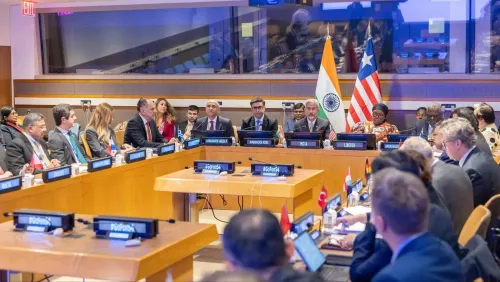
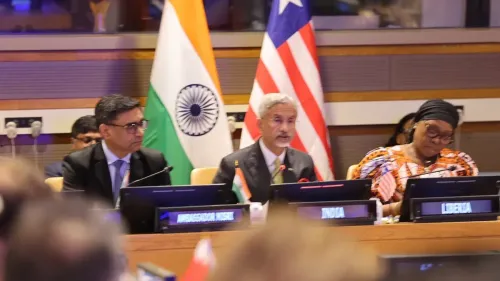
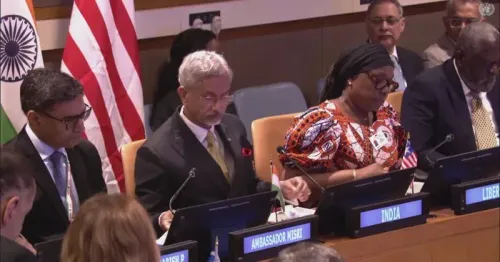
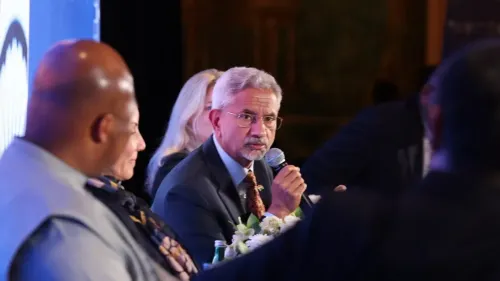
Jaishankar addresses media after inaugural GoFonS4 meet at UNGA
Synopsis
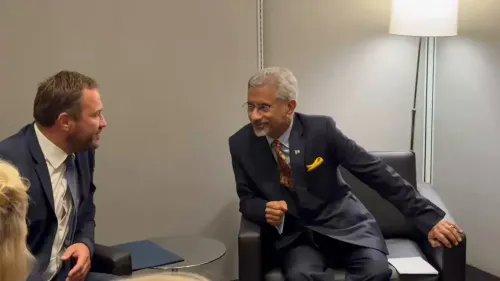
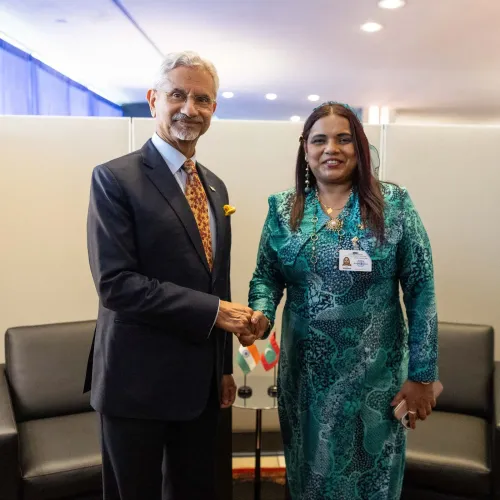
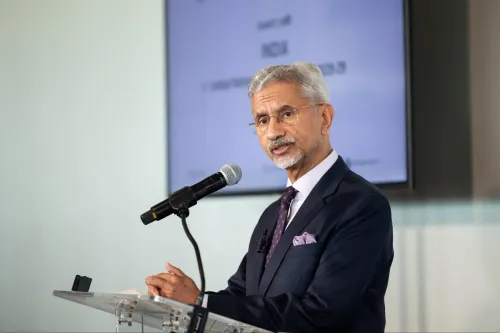
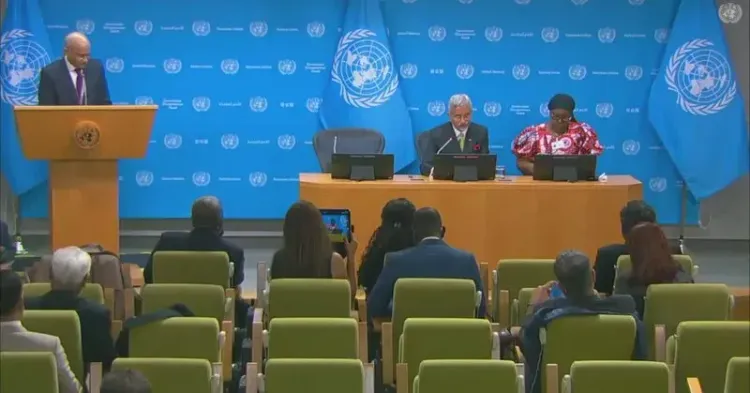
At UNGA81 in New York, External Affairs Minister Dr. S. Jaishankar addressed media after the inaugural meeting of the Group of Friends on Safety and Security of Shipping and Seafarers (#GoFonS4), positioning India as a key architect of a new multilateral maritime-security coalition.
Key Takeaways
Jaishankar addressed the media on September 25, 2026 after the inaugural meeting of the Group of Friends on Safety and Security of Shipping and Seafarers (#GoFonS4) at the UN General Assembly.
The GoFonS4 is a new informal multilateral coalition formed at the UNGA81 session in New York , focused on protecting seafarers and securing global shipping lanes.
Groups of Friends are standard UN diplomatic instruments — informal coalitions that advance focused agendas without formal resolutions.
India is one of the world's largest suppliers of maritime manpower, giving New Delhi a direct human-interest stake in seafarer safety frameworks.
The initiative is in line with India's broader positioning as a net security provider in the Indo-Pacific and a voice on global commons governance.
Key follow-up indicators include the number of co-sponsoring states and any joint statements issued before the close of UNGA81.
At the United Nations General Assembly's 81st session in New York, Union External Affairs Minister Dr. S. Jaishankar addressed the media on Friday, September 25, 2026, following the inaugural meeting of the Group of Friends on Safety and Security of Shipping and Seafarers — a new multilateral coalition convened under the #GoFonS4 banner.
A new coalition sails into the UNGA
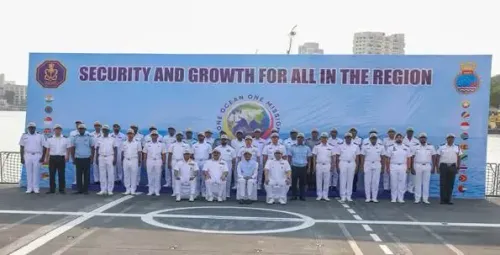
Groups of Friends are a well-established but often underappreciated instrument of United Nations diplomacy — informal coalitions that rally member-states around a focused agenda without requiring a formal resolution or a Security Council mandate. By co-founding or anchoring one dedicated specifically to the safety and security of shipping and seafarers, India is staking out a clear role as a steward of the global maritime commons at the world's most watched multilateral forum. The timing is deliberate. Shipping lanes carry roughly 80 per cent of global trade by volume, and seafarers — often invisible to landside headlines — are the human backbone of that system. Concerns over piracy, armed conflict spillover onto commercial routes, and the legal vulnerability of crew members in distress zones have drawn fresh urgency in recent years, making the launch of a dedicated Group of Friends at the UNGA81 session a pointed diplomatic signal.India's maritime diplomacy in multilateral focus
Dr. Jaishankar has consistently positioned India as a net security provider in the Indo-Pacific and a responsible voice on global commons governance. His appearance before the media after the inaugural GoFonS4 meeting — and his choice to broadcast the remarks live — underscores how seriously New Delhi is treating this initiative. The External Affairs Minister's background as a former Ambassador to the United States, China, and Singapore (a city-state whose prosperity is inseparable from maritime trade) lends him particular credibility on the subject. For India, the stakes are concrete: the country is one of the world's largest sources of maritime manpower, with Indian seafarers serving on vessels across every major ocean. Any international mechanism that strengthens their legal protections and safety standards carries direct human consequence for hundreds of thousands of Indian families.What the Group of Friends model means in practice
Unlike treaty bodies or formal UN committees, a Group of Friends operates by consensus-building, joint statements, and shared advocacy — it is diplomacy by coalition. The inaugural meeting signals that enough member-states see value in a dedicated focal point for shipping security at the General Assembly level. Expect the coalition's first test to be whether it can attract co-sponsors from major flag states, port states, and seafarer-supplying nations in the weeks remaining in the UNGA81 session. India's leadership of this initiative, announced through the External Affairs Minister's own media remarks, positions New Delhi not merely as a participant in global maritime governance but as one of its architects.Point of View
With India's External Affairs Minister as its public face, is a calculated move to institutionalise New Delhi's maritime agenda within the UN system — without the procedural burden of a formal resolution. It extends India's Indo-Pacific security narrative into the General Assembly hall, where influence is built through coalition-size rather than veto power. For Jaishankar, a diplomat whose career has traversed Singapore's trade-dependent corridors and Washington's strategic calculus, leading a seafarer-safety coalition is both personally resonant and geopolitically consistent. The real test will come in the weeks ahead: if GoFonS4 attracts major flag states and seafarer-supplying nations, it becomes a durable instrument; if membership stays thin, it risks being a symbolic gesture.
NationPress
25 Sept 2026
Frequently Asked Questions
What is the Group of Friends on Safety and Security of Shipping and Seafarers (GoFonS4)?
GoFonS4 is a new informal multilateral coalition formed at the United Nations General Assembly's 81st session in 2026. It aims to advance the safety and security of global shipping lanes and the welfare of seafarers through joint advocacy and consensus-building among member-states.
Why did Jaishankar address the media after the GoFonS4 inaugural meeting?
As a key figure in launching the Group of Friends, Dr. S. Jaishankar gave media remarks to publicly announce the coalition's inaugural meeting at UNGA81 and signal India's leadership role in the initiative.
What is a 'Group of Friends' at the United Nations?
A Group of Friends is an informal coalition of UN member-states that rallies around a specific agenda item. Unlike formal committees or treaty bodies, these groups operate through joint statements, shared advocacy, and consensus-building, without requiring a formal resolution.
Why does India care about seafarer safety at the UN?
India is one of the world's largest suppliers of maritime manpower, with hundreds of thousands of Indian seafarers serving on vessels globally. Stronger international protections for seafarers directly benefit Indian families and align with India's broader maritime diplomacy goals.
What happens next after the GoFonS4 inaugural meeting?
The key indicators to watch are the number of countries that formally co-sponsor or join the Group of Friends, and whether joint statements or concrete advocacy outcomes emerge before the close of the UNGA81 session.