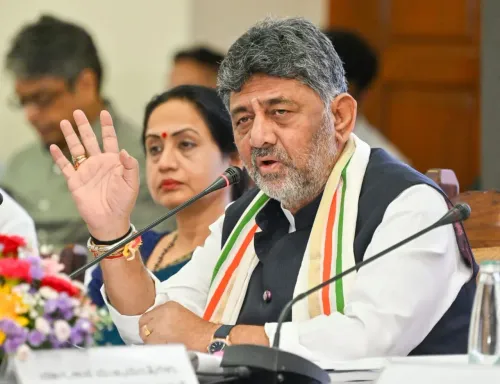
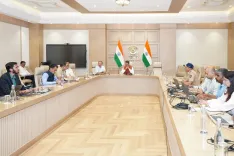
CM Shivakumar Chairs SCSP-TSP Council Meet at Vidhana Soudha
Synopsis
Karnataka Chief Minister D.K. Shivakumar chaired the state SCSP-TSP Development Council meeting at Vidhana Soudha on 12 November 2026, with Deputy CM G. Parameshwara, six cabinet ministers, Chief Secretary Dr. Shalini Rajneesh, and senior officials in attendance to review SC and ST welfare allocations.
Key Takeaways
Shivakumar chaired the SCSP-TSP Development Council meeting at Vidhana Soudha on 12 November 2026 .
Parameshwara and six cabinet ministers — including Satish Jarkiholi and K.H.
Muniyappa — attended the high-level review.
Shalini Rajneesh and CM's Political Secretary A.S.
Ponnanna represented the administrative leadership.
The SCSP-TSP Council oversees earmarked plan-fund allocations for Scheduled Caste and Scheduled Tribe communities under constitutional Articles 15(4) and 46 .
Outcomes from the review are expected to inform Karnataka's next budget cycle and welfare department directives.
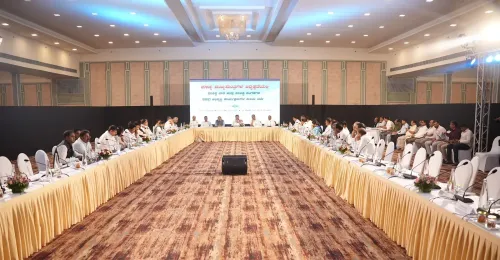
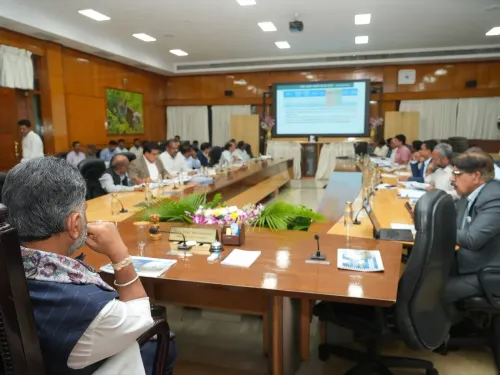
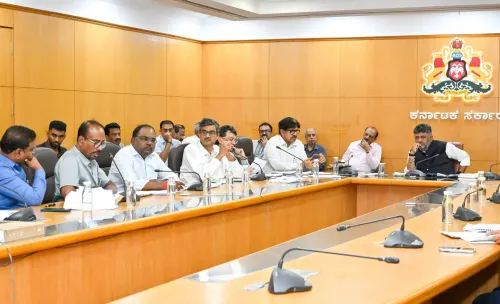
At Vidhana Soudha on Thursday, 12 November 2026, Karnataka Chief Minister D.K. Shivakumar convened a high-level meeting of the state's Scheduled Castes and Scheduled Tribes (SCSP-TSP) Development Council — a body whose decisions shape welfare allocations for millions of marginalised citizens across the state.
The Chief Minister's Office announced the meeting on X, stating that CM Shivakumar chaired the council session at Vidhana Soudha and held discussions on a range of issues related to SC and ST development. The gathering drew together the state's top political and administrative leadership.
Who Was in the Room
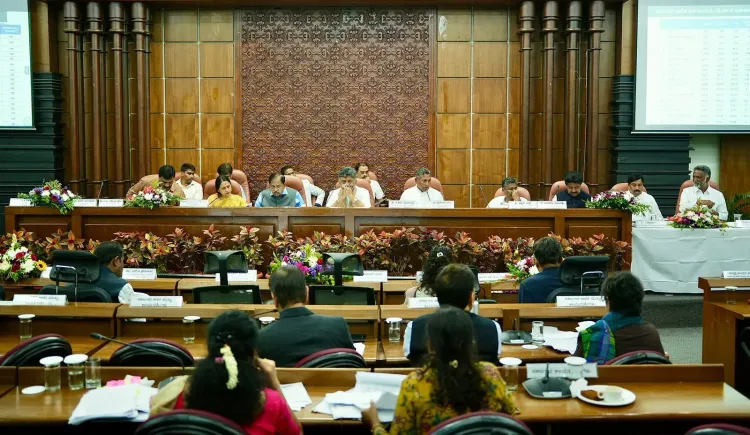
Deputy Chief Minister Dr. G. Parameshwara — a veteran Dalit leader in Karnataka's Congress dispensation — attended alongside a cluster of cabinet ministers: K.H. Muniyappa, Satish Jarkiholi, Basavantappa, T. Raghumurthi, Rudrappa Lamani, and P.M. Narendaswamy. The bureaucratic spine of the meeting was provided by Chief Secretary Dr. Shalini Rajneesh, a senior IAS officer, and the CM's Political Secretary A.S. Ponnanna, along with other senior officials.
The sheer seniority of the room signals this was not a routine departmental check-in. Convening the Deputy CM, six cabinet ministers, and the Chief Secretary together under the SCSP-TSP council umbrella points to a coordinated push to align departmental spending with mandated welfare targets.
What the SCSP-TSP Council Does — and Why It Matters
Karnataka's SCSP-TSP Development Council is the apex state body responsible for planning, monitoring, and reviewing the allocation of earmarked plan funds for Scheduled Caste and Scheduled Tribe communities. The framework traces its origins to central planning guidelines from the 1970s, and rests on constitutional obligations under Articles 15(4) and 46 of the Indian Constitution — provisions that direct states to promote the educational and economic interests of historically marginalised groups.
In practice, the council coordinates across departments to ensure that the proportional share of the state plan budget actually reaches SC and ST beneficiaries. Periodic review meetings like today's are the mechanism through which the government assesses fund utilisation, flags slippages, and issues course-correction directives ahead of budget cycles.
The Broader Pattern in Karnataka's Welfare Governance
Karnataka has historically maintained a structured council architecture for SCSP-TSP oversight — a model that places political accountability at the apex, rather than leaving welfare monitoring entirely to bureaucratic channels. By chairing the session himself, CM Shivakumar signals that SCSP-TSP compliance is a priority at the highest level, not a delegated formality.
Outcomes from today's discussions — any directives, revised targets, or departmental instructions — are likely to surface in Karnataka's next budget cycle and annual welfare reports. For the state's SC and ST communities, what gets decided in rooms like this translates directly into scholarships, housing schemes, skill programmes, and infrastructure on the ground.
The next critical moment to watch: whether today's review triggers fresh budget-level reallocations or inter-departmental orders that strengthen the state's constitutional commitments before the financial year closes.
Point of View
Shivakumar is making a visible show of political ownership over constitutionally mandated SC/ST welfare spending — a signal that matters as the Congress government approaches the second half of its term. Karnataka has long been a bellwether for how state governments operationalise SCSP-TSP obligations, and high-level reviews like this one tend to precede budget-season negotiations where welfare earmarks are contested across departments. The meeting also reinforces Dr. G. Parameshwara's institutional role as the face of Dalit welfare governance within the cabinet. Watch for whether today's discussions translate into binding departmental orders or remain a floor-level accountability exercise.
NationPress
12 Nov 2026
Frequently Asked Questions
What is the SCSP-TSP Development Council in Karnataka?
The SCSP-TSP Development Council is Karnataka's apex state body responsible for planning and monitoring earmarked budget allocations for Scheduled Caste and Scheduled Tribe communities, operating under a framework mandated since the 1970s and rooted in Articles 15(4) and 46 of the Indian Constitution.
Who chaired the SCSP-TSP meeting on 12 November 2026?
Karnataka Chief Minister D.K. Shivakumar chaired the SCSP-TSP Development Council meeting at Vidhana Soudha on 12 November 2026.
Who attended the Karnataka SCSP-TSP council meeting?
Deputy CM Dr. G. Parameshwara, cabinet ministers K.H. Muniyappa, Satish Jarkiholi, Basavantappa, T. Raghumurthi, Rudrappa Lamani, and P.M. Narendaswamy, Chief Secretary Dr. Shalini Rajneesh, and Political Secretary A.S. Ponnanna were present.
What does SCSP-TSP stand for in Karnataka government?
SCSP stands for Special Component Plan for Scheduled Castes, and TSP stands for Tribal Sub-Plan. Together, they refer to the constitutional framework that mandates state governments to earmark a share of plan funds for the development of SC and ST communities.
What decisions are expected after the Karnataka SCSP-TSP council meeting?
The meeting is expected to lead to departmental directives on fund utilisation, potential course-correction on welfare schemes, and inputs that could shape the state's next budget cycle with regard to SC and ST allocations.