Karnataka CM Shivakumar pitches US-Karnataka innovation corridor at Bengaluru quantum event
Synopsis
Karnataka CM Shivakumar used a quantum science exhibition to pitch a structured US-Karnataka innovation corridor — connecting classrooms, labs, and startups to global markets. With India's first Quantum City rising at Hesaraghatta and a new AI centre at IIIT Dharwad, the state is making a calculated bid to anchor US innovation capital in Karnataka's ecosystem.
Key Takeaways
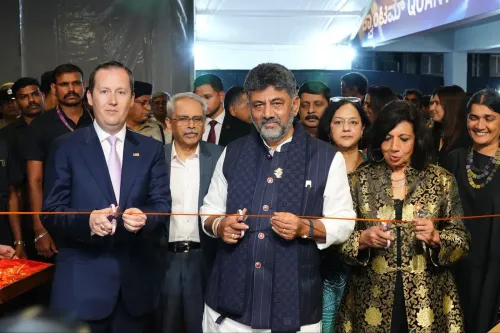
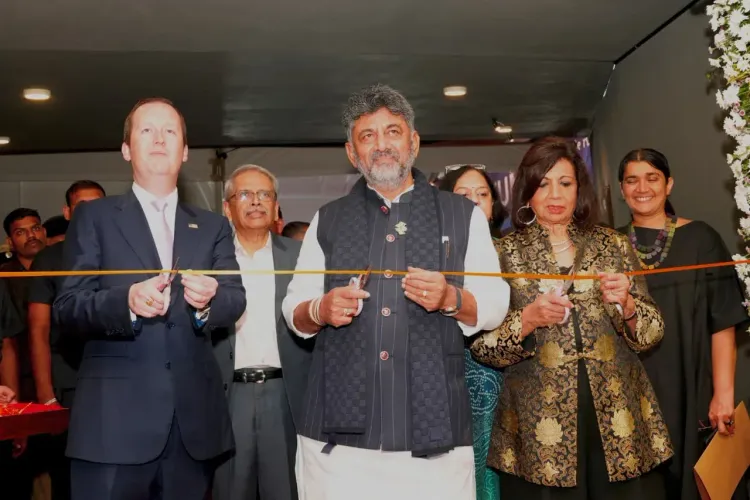
Shivakumar addressed the QUANTUM exhibition at Science Gallery Bengaluru on 7 August in the presence of US Ambassador Sergio Gor .
Bengaluru hosts over 1,000 US companies , 80,000 American citizens , 10,000 startups , and a tech workforce of more than one million .
Karnataka is building India's first Quantum City at Hesaraghatta , anchored by the Karnataka Quantum Mission .
A Centre of Excellence in Quantum AI and Computing has been established at IIIT Dharwad — the first such centre outside Bengaluru.
The state is developing Educational, Skill and Innovation Corridors with US hubs including Silicon Valley , Boston , Austin , and Pittsburgh .
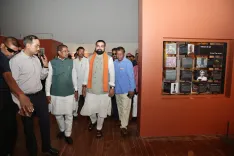
Karnataka Chief Minister D.K. Shivakumar on Friday, 7 August called for deeper collaboration between Karnataka and the United States in innovation, skilling, and quantum technology, speaking at the inauguration of the QUANTUM exhibition at Science Gallery Bengaluru in the presence of US Ambassador to India Sergio Gor. The Chief Minister used the platform to underscore Bengaluru's standing as a global technology hub and to formally seek American partnership across universities, research parks, and startup ecosystems.
Bengaluru's Tech Footprint
Shivakumar highlighted that Bengaluru is currently home to more than 1,000 US companies, 80,000 American citizens, 10,000 startups, and a technology workforce exceeding one million. These figures, he argued, make the city a natural anchor for any expanded US-India innovation partnership. The Chief Minister described this existing presence as a foundation, not a ceiling, for what bilateral collaboration could achieve.
Karnataka's Quantum Technology Push
At the heart of Shivakumar's address was the state's ambition in quantum technology. He pointed to the Karnataka Quantum Mission as the backbone of a growing ecosystem of startups and global technology firms. At Hesaraghatta, the state is constructing what it describes as India's first Quantum City — a dedicated cluster of research laboratories designed to accelerate applied quantum research.
Under the Local Economy Accelerator Program (LEAP), the government has established a Centre of Excellence in Quantum Artificial Intelligence and Computing at IIIT Dharwad — notably the first such centre outside Bengaluru, signalling an intent to decentralise innovation infrastructure beyond the state capital.
The Education and Innovation Corridor Proposal
Shivakumar outlined a structured proposal for what he called Educational, Skill and Innovation Corridors connecting Karnataka's universities and institutions with leading American academic and research bodies. The framework envisions joint research programmes, curriculum co-development, and industry-aligned learning pathways.
'Our objective is simple: to connect classrooms to laboratories, laboratories to startups, and startups to global markets,' he said. Karnataka is also seeking partnerships with Centres of Excellence, incubators, accelerators, and research parks in major US innovation hubs including Silicon Valley, Boston, Austin, and Pittsburgh.
What the Collaboration Could Yield
Shivakumar argued that such partnerships would give Karnataka's startups access to world-class mentorship, advanced research facilities, venture capital networks, and international markets, while simultaneously offering American innovators a foothold in Karnataka's talent pool and manufacturing base. The Chief Minister also congratulated Dr Kiran Mazumdar-Shaw, Science Gallery Founding Director Dr Jahnavi Phalkey, and their teams on establishing the institution and the exhibition.
Also present were IT, BT and Home Minister Priyank Kharge and Transport Minister Byrathi Suresh. With the US Ambassador's presence lending diplomatic weight to the occasion, Karnataka's quantum and innovation agenda now has a formal bilateral dimension — one that will be tested by how quickly institutional partnerships translate into funded programmes.
Point of View
Karnataka is positioning itself as the default US innovation partner in South Asia. But the gap between diplomatic optics and funded programmes is wide. The Hesaraghatta Quantum City and the IIIT Dharwad centre are real commitments, yet quantum technology commercialisation timelines are notoriously long. The real question is whether the Educational, Skill and Innovation Corridors produce verifiable outcomes — joint patents, enrolled students, placed graduates — or remain a framework on paper. Karnataka has the ecosystem; what it needs now is a measurement architecture that makes the corridor more than a talking point at the next bilateral event.
NationPress
8 Aug 2026
Frequently Asked Questions
What did Karnataka CM Shivakumar announce at the QUANTUM exhibition in Bengaluru?
CM D.K. Shivakumar called for expanded US-Karnataka partnerships in quantum technology, innovation, and skilling at the QUANTUM exhibition at Science Gallery Bengaluru on 7 August. He outlined plans for Educational, Skill and Innovation Corridors linking Karnataka's institutions with US universities and research parks in Silicon Valley, Boston, Austin, and Pittsburgh.
What is the Karnataka Quantum Mission?
The Karnataka Quantum Mission is the state government's initiative to build a quantum technology ecosystem anchored in Bengaluru, supporting startups and global technology companies working in the sector. It forms the backbone of Karnataka's broader quantum ambitions, including the planned Quantum City at Hesaraghatta.
Where is India's first Quantum City being built?
India's first Quantum City is being developed at Hesaraghatta in Karnataka, designed to serve as a cluster of research laboratories and innovation infrastructure for quantum science and technology.
What is the Centre of Excellence in Quantum AI at IIIT Dharwad?
Established under the Local Economy Accelerator Program (LEAP), the Centre of Excellence in Quantum Artificial Intelligence and Computing at IIIT Dharwad is the first such centre outside Bengaluru. It represents Karnataka's effort to decentralise its quantum research infrastructure beyond the state capital.
Who was present at the QUANTUM exhibition inauguration in Bengaluru?
US Ambassador to India Sergio Gor, IT, BT and Home Minister Priyank Kharge, Transport Minister Byrathi Suresh, biotech entrepreneur Dr Kiran Mazumdar-Shaw, and Science Gallery Founding Director Dr Jahnavi Phalkey were among the dignitaries present at the event.