CM Shivakumar Inaugurates Karnataka Parva 2026 in Bengaluru
Synopsis
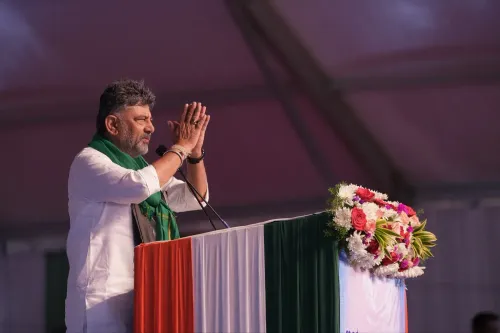
Chief Minister D.K. Shivakumar inaugurated Karnataka Parva - 2026 at Bengaluru Palace Grounds, a cultural and commercial festival organised by the state Minority Welfare, Haj and Waqf Department, showcasing local arts, crafts, cuisine, and small businesses before a high-profile gathering of ministers, lawmakers, and former cricket captain Mohammad Azharuddin.
Key Takeaways
Shivakumar inaugurated Karnataka Parva - 2026 at Bengaluru Palace Grounds on 26 September 2026 .
The event was organised by the Minority Welfare, Haj and Waqf Department of Karnataka.
The festival featured local arts, crafts, regional products, traditional foods, children's programmes, and cultural performances on a single platform.
Prominent attendees included Ministers U.T.
Khader and Rizwan Arshad , Legislative Council Chairman Saleem Ahmed , and Rajya Sabha members Mansoor Ali Khan and Dr.
Syed Naseer Hussain .
Former Indian cricket captain Mohammad Azharuddin and former parliamentarian Ramya were also present.
The Telangana Minister for Minority Welfare attended, reflecting cross-state interest in Karnataka's inclusive cultural festival model.
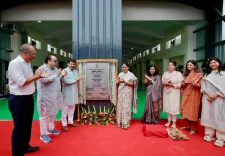
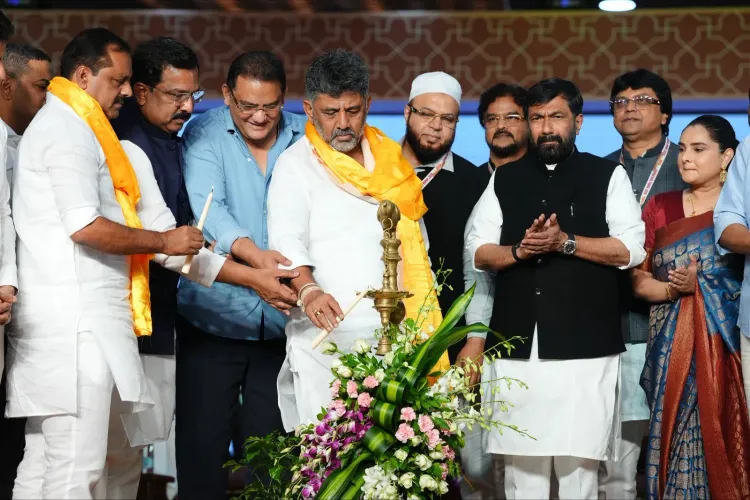
Bengaluru Palace Grounds came alive on Saturday, 26 September 2026, as Chief Minister D.K. Shivakumar inaugurated Karnataka Parva - 2026, a landmark cultural festival organised by the state's Minority Welfare, Haj and Waqf Department — bringing local artisans, small businesses, traditional cuisine, and community performers under one grand canopy at the heart of the city.
A single stage for Karnataka's plural heritage
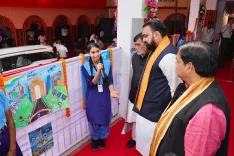
The Chief Minister's Office described the event as a showcase of 'ಕರ್ನಾಟಕದ ಸ್ಥಳೀಯ ಕಲೆ, ಕರಕುಶಲ' — Karnataka's local arts and crafts — alongside distinctive regional products, small-enterprise flavours, traditional foods, children's special programmes, and diverse cultural performances, 'all introduced on a single platform.' That breadth of programming was called out as the defining feature of this year's edition.
The Bengaluru Palace Grounds, one of the city's most iconic open-air venues, provided the backdrop for what the department positioned as an inclusive celebration of the state's cultural plurality, with minority communities, artisans, and local entrepreneurs at centre stage.
A high-profile gathering around the Chief Minister
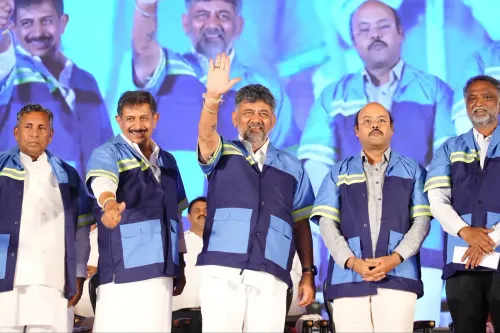
The inauguration drew a cross-section of political and public figures. Ministers U.T. Khader and Rizwan Arshad were present alongside Legislative Council Chairman Saleem Ahmed. Rajya Sabha members Mansoor Ali Khan and Dr. Syed Naseer Hussain attended, as did the Minister for Minority Welfare from Telangana, signalling inter-state interest in the model.
Perhaps the most eye-catching presence was former Indian cricket captain Mohammad Azharuddin, who joined former parliamentarian Ramya, State Guarantee Committee Vice-Chairman Mehroz Khan, and legislators Khaneez Fatima and Rahim Khan at the event.
Why Karnataka Parva fits a wider state strategy
State governments across India have increasingly used cultural festivals hosted by minority welfare departments as dual-purpose platforms — promoting regional heritage while giving local producers and small businesses direct market access and visibility. Karnataka has leaned on similar events to support grassroots entrepreneurship alongside community celebration.
Karnataka Parva - 2026 sits squarely in that tradition, but the scale of the guest list and the choice of the Palace Grounds signal an ambition that goes beyond a routine departmental programme. With artisans, food producers, children's workshops, and cultural troupes sharing the same stage as senior lawmakers and a celebrated cricketer, the event projects the Minority Welfare department as a mainstream driver of the state's cultural economy — not a peripheral one.
For Karnataka's minority communities and local entrepreneurs, the real dividend will come not from the inauguration itself, but from whether the networks, orders, and visibility generated at Palace Grounds translate into durable support through state budgets and welfare schemes in the months ahead.
Point of View
Karnataka's Congress government has an interest in demonstrating constructive minority welfare governance ahead of eventual assembly cycles. Whether the platform generates lasting economic uplift for artisans and small businesses — beyond a single high-profile inauguration — will determine its real political and social dividend.
NationPress
26 Sept 2026
Frequently Asked Questions
What is Karnataka Parva 2026?
Karnataka Parva - 2026 is a cultural and commercial festival organised by Karnataka's Minority Welfare, Haj and Waqf Department at Bengaluru Palace Grounds, showcasing local arts, crafts, regional food, small businesses, and cultural performances.
Who inaugurated Karnataka Parva 2026?
Chief Minister D.K. Shivakumar inaugurated Karnataka Parva - 2026 on 26 September 2026 at Bengaluru Palace Grounds.
Which department organised Karnataka Parva 2026?
The Minority Welfare, Haj and Waqf Department of the Government of Karnataka organised the event.
Was Mohammad Azharuddin at Karnataka Parva 2026?
Yes, former Indian cricket captain Mohammad Azharuddin attended the Karnataka Parva - 2026 inauguration at Bengaluru Palace Grounds.
Where is Bengaluru Palace Grounds located?
Bengaluru Palace Grounds is a large open-air venue in central Bengaluru, Karnataka, and one of the city's most prominent event spaces.