CM Shivakumar Lays Foundation for Lake, Infra Works in Hiriyur

Synopsis
Chief Minister D K Shivakumar laid foundation stones for lake rejuvenation and multiple development works in Hiriyur constituency, Chitradurga district, on 4 November 2026, targeting groundwater recharge in Karnataka's drought-prone central dry zone.
Key Takeaways
CM D K Shivakumar visited Hiriyur constituency in Chitradurga district on 4 November 2026 to inaugurate development works.
The official emphasis is on lake and tank rejuvenation as a core component of the announced projects.
Hiriyur lies in Karnataka's semi-arid central dry zone, where water-body restoration directly impacts groundwater levels and irrigation.
Foundation-stone ceremonies formally mark project commencement and fund-release commitments by the state government.
Specific project costs, scope, and completion timelines were not disclosed in the official announcement.
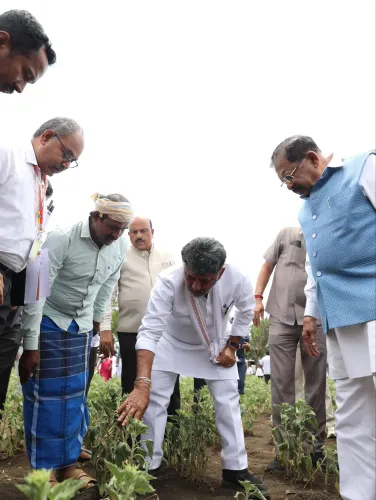
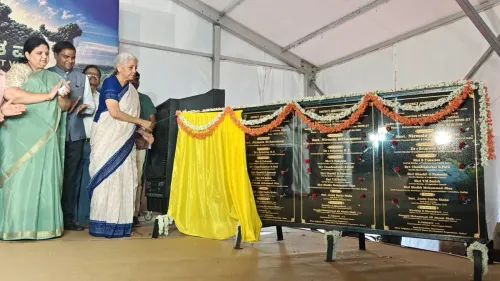
In the drought-prone heartland of central Karnataka, water is not a convenience — it is survival. Chief Minister D K Shivakumar travelled to Hiriyur constituency in Chitradurga district on Wednesday, 4 November 2026, to lay foundation stones for a set of development works, with lake rejuvenation at the centre of the agenda.
The Chief Minister's Office announced the event in Kannada, capturing the moment with the phrase 'ಕೆರೆಗಳಿಗೆ ಕಾಯಕಲ್ಪ, ಹಿರಿಯೂರಿನ ಅಭಿವೃದ್ಧಿಗೆ ಸಂಕಲ್ಪ' — loosely translated as 'Rejuvenation for the lakes, resolve for Hiriyur's development.' The phrasing signals that the centrepiece of the works is the restoration of local water bodies, alongside broader constituency infrastructure.
Why Hiriyur's Lakes Matter
Hiriyur sits in Chitradurga district, squarely within Karnataka's semi-arid central dry zone — a region that has historically battled groundwater depletion and erratic rainfall. Tank and lake networks in this belt are not scenic assets; they are the backbone of groundwater recharge and small-scale irrigation for farming communities. When those tanks silt up or fall into disrepair, the consequences ripple through every well and field in the surrounding area.
Karnataka governments across administrations have periodically launched desilting and rejuvenation programmes for such tanks, particularly in drought-classified districts. Foundation-stone ceremonies of this kind formally mark the release of funds and the official start of project timelines, putting the administration on record for delivery.
Shivakumar's Visit to the Constituency
D K Shivakumar, a senior Karnataka Congress leader, has held some of the state's most consequential portfolios over successive tenures, including energy and urban development. His presence at a constituency-level foundation-laying in Hiriyur underlines the political as well as administrative weight the state government is attaching to this round of district infrastructure. Hiriyur farmers and local residents are the direct stakeholders, with improved irrigation and groundwater recharge the promised payoff.
Exact project costs and detailed timelines were not disclosed in the official announcement. The sharpquestion now is whether subsequent state budget allocations and district plans will back the foundation stones with consistent funding — the gap between a shanku-sthapane (foundation-laying) and a completed, functional water body has historically been where such projects stall.
Point of View
Ground-level goodwill in rural constituencies where every monsoon failure sharpens memories of empty tanks. For Shivakumar personally, constituency-level outreach of this kind reinforces his image as an administrator who moves beyond Bengaluru's urban priorities. The real test, as with similar schemes in the past, will be whether funding flows consistently from announcement to completion.
NationPress
4 Nov 2026
Frequently Asked Questions
What did CM Shivakumar inaugurate in Hiriyur?
CM D K Shivakumar laid foundation stones for lake rejuvenation and various development works in Hiriyur constituency, Chitradurga district, on 4 November 2026.
Where is Hiriyur constituency located?
Hiriyur is an assembly constituency in Chitradurga district, situated in the central dry zone of Karnataka.
Why is lake rejuvenation important in Chitradurga?
Chitradurga falls in Karnataka's semi-arid belt where rainfall is erratic. Restoring and desilting tanks and lakes recharges groundwater and supports small-scale irrigation for local farmers.
What is a shanku-sthapane in Karnataka politics?
A shanku-sthapane is a foundation-stone laying ceremony that formally marks the start of a government project and the official release of funds, putting the administration on record for delivering the work.
What are the next steps after the Hiriyur foundation-laying?
The key milestones to watch are project-specific timelines, contractor appointments, and whether follow-up budget allocations in state or district plans sustain the announced works through to completion.