Sitharaman Lays Foundation for 4 Water Tank Rejuvenations in Kudligi
Synopsis
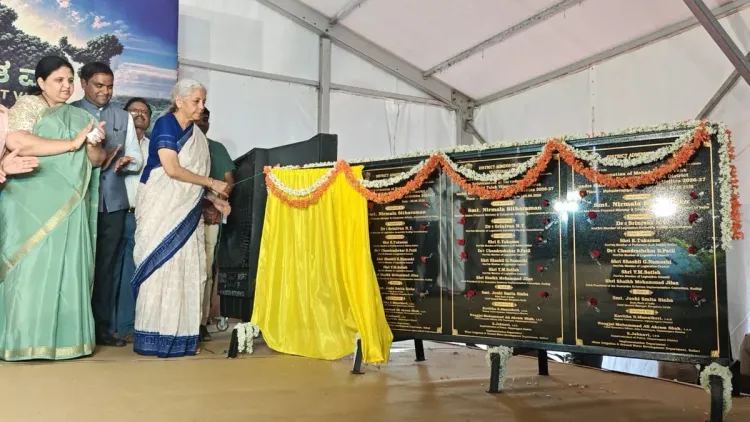
Union Finance Minister Nirmala Sitharaman laid the foundation stone for the rejuvenation of four water tanks in Kudligi, Vijayanagara district, Karnataka on June 5, 2026. The project aims to improve water availability and ease of living for local residents and farmers in the semi-arid taluk.
Key Takeaways
Union Finance Minister Nirmala Sitharaman laid the foundation stone for the rejuvenation of 4 water tanks in Kudligi, Karnataka on June 5, 2026 .
Kudligi is a semi-arid taluk in Vijayanagara district historically dependent on traditional tanks for irrigation and drinking water.
The project is intended to improve water availability and ease of living for local citizens and farming communities.
Tank rejuvenation in Karnataka builds on a policy lineage that includes the World Bank-supported Tank Rehabilitation Project of the early 2000s and the national Jal Shakti Abhiyan (2019).
Specific tank names, capacities, and funding sources have not been officially disclosed at this stage.
Progress on the four tanks and any related allocation in the 2026-27 water budget will be key indicators to watch.
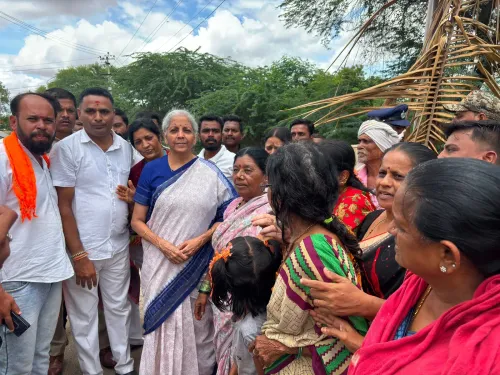
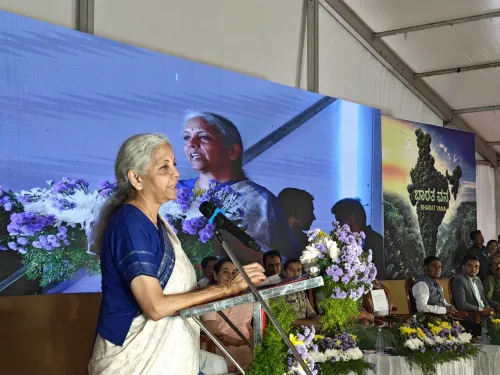
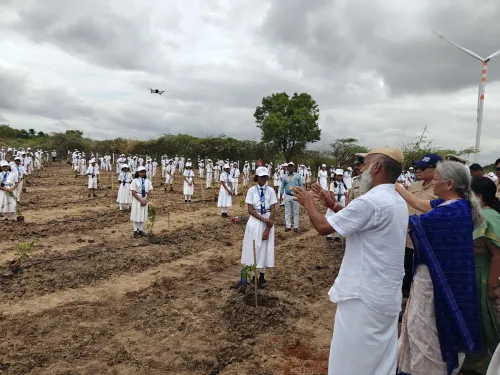
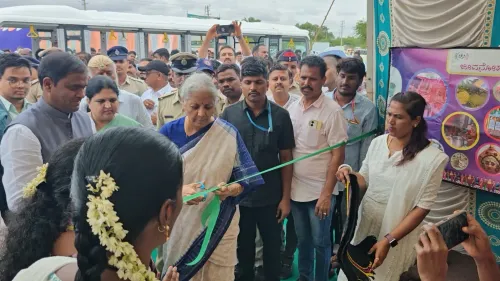
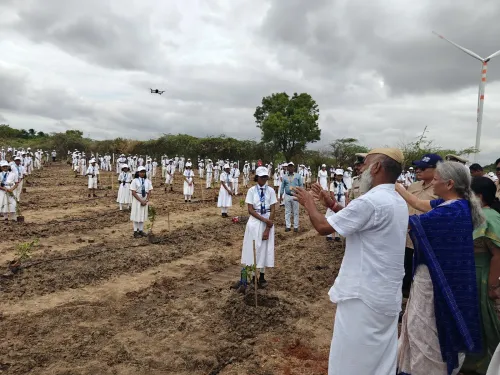
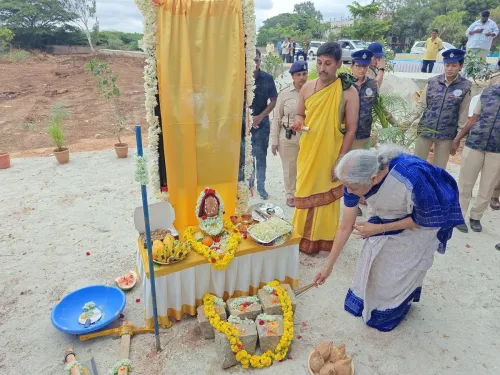
Union Finance Minister Nirmala Sitharaman on Friday, June 5, 2026, laid the foundation stone for the rejuvenation of four water tanks across Kudligi in Vijayanagara district, Karnataka, signalling a fresh push to restore traditional water-harvesting infrastructure in one of the state's semi-arid taluks.
The post, shared on her official X account, stated that the initiative 'will ensure better water availability for the citizens and improve ease of living.' In Kannada, the post read: ಶ್ರೀಮತಿ @nsitharaman ಅವರು ಕರ್ನಾಟಕದ ಕೂಡ್ಲಿಗಿಯ 4 ನೀರಿನ ಕೆರೆಗಳ ಪುನಶ್ಚೇತನಕ್ಕೆ ಶಂಕುಸ್ಥಾಪನೆ ನೆರವೇರಿಸಿದರು [Smt. Sitharaman laid the foundation stone for the rejuvenation of 4 water tanks in Kudligi, Karnataka].
Context
Kudligi is a taluk in Vijayanagara district, a predominantly semi-arid agricultural belt on the Deccan plateau that has historically relied on a network of traditional tanks for both drinking water and irrigation. Groundwater depletion and erratic rainfall in this region have made the upkeep of such structures a recurring civic concern for local farmers and residents.
The foundation-stone ceremony marks the formal start of civil works for the four tanks, though specific names, storage capacities, and funding sources for each structure have not been disclosed in the public record at this stage.
Policy Backdrop
Tank rejuvenation in Karnataka has a layered policy history. A World Bank-supported Tank Rehabilitation Project in the early 2000s helped restore hundreds of minor irrigation tanks across the state, establishing a template of desilting, bund strengthening, and catchment protection that subsequent programmes have largely followed.
At the national level, the Jal Shakti Abhiyan, launched in 2019, promoted systematic mapping and restoration of water bodies across India, providing a convergence framework under which central and state resources can be pooled for projects of this kind. Restoring minor irrigation tanks is widely seen as a cost-effective strategy to recharge groundwater and reduce dependence on borewells in rain-shadow districts.
Stakeholders and Impact
The primary beneficiaries of the Kudligi tank rejuvenation are local residents and farming communities who depend on surface water for domestic use and crop irrigation. Restored tanks can improve groundwater tables in surrounding areas, benefiting smallholder farmers who rely on open wells and shallow borewells during dry months.
As a senior BJP leader who represents Karnataka's interests at the Centre, Sitharaman's on-ground presence for the ceremony also carries political significance, underscoring the party's engagement with the state ahead of ongoing electoral cycles. Central ministers performing such foundation-stone events in contested states is a well-established pattern in Indian public works politics.
What's Next
Attention will now shift to the pace of physical progress on the four tanks — including the timelines for desilting, bund repair, and inlet-outlet restoration. Any subsequent budget allocation under the 2026-27 state or central water budget that earmarks funds specifically for Kudligi will be a key indicator of how quickly the works advance.
Broader monitoring of Karnataka's tank rejuvenation pipeline under centrally sponsored water schemes will also determine whether this foundation-stone event translates into sustained improvement in water availability for the region's citizens.
Point of View
A state the party has worked to consolidate at both the state and parliamentary level. The choice of water-tank rejuvenation — a grassroots, tangible infrastructure deliverable — reflects the Centre's broader strategy of pairing fiscal and macroeconomic messaging with on-ground welfare optics. Set against the backdrop of the Jal Shakti Abhiyan and decades of tank-rehabilitation cycles in Karnataka, the event signals continuity rather than a sharp policy departure. The real test will be whether the four Kudligi tanks move from foundation stone to functional restoration within a credible timeframe, which will determine how much political dividend the exercise ultimately yields.
NationPress
20 Sept 2026
Frequently Asked Questions
Why did Nirmala Sitharaman visit Kudligi in Karnataka?
Sitharaman visited Kudligi on June 5, 2026, to lay the foundation stone for the rejuvenation of four water tanks in the taluk, aimed at improving water availability and ease of living for local residents.
What is the significance of water tank rejuvenation in Kudligi?
Kudligi is a semi-arid agricultural taluk in Vijayanagara district that has historically depended on traditional tanks for drinking water and irrigation. Restoring these tanks can recharge groundwater and benefit farming communities.
What is the Jal Shakti Abhiyan and how does it relate to this project?
The Jal Shakti Abhiyan, launched in 2019, is a national programme that promotes water-body mapping and restoration across India. It provides a framework for pooling central and state resources for tank rejuvenation projects like those in Kudligi.
Who will benefit from the Kudligi water tank rejuvenation project?
Local residents and farmers in Kudligi taluk are the primary beneficiaries, as restored tanks improve surface water availability and help recharge groundwater used by smallholder farmers.
What are the next steps after the foundation stone was laid in Kudligi?
The key steps to watch are the commencement of physical works — desilting, bund strengthening, and inlet-outlet restoration — and any budget allocation under the 2026-27 state or central water budget for the Kudligi tanks.