Sitharaman Highlights Kudligi Agroforestry Scheme for Dryland Farmers
Synopsis
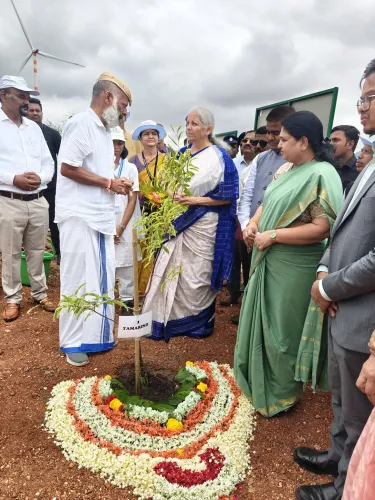
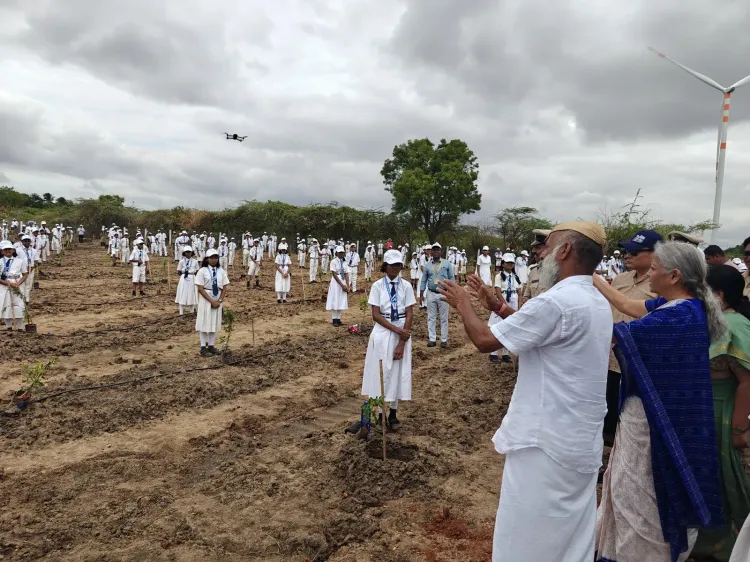
Union Finance Minister Nirmala Sitharaman on June 5 spotlighted the Kudligi Yojane, a dryland agroforestry initiative in Karnataka's Ballari district, citing its use of drip irrigation, mulching, and soil enrichment to conserve water, cut costs, and build long-term incomes for rainfed farmers.
Key Takeaways
Union Finance Minister Nirmala Sitharaman highlighted the Kudligi Yojane on June 5, 2026 .
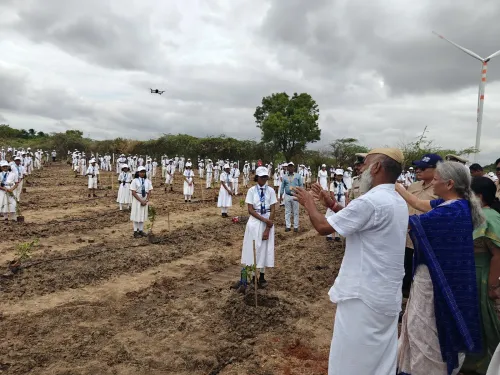
The scheme promotes tree-based agriculture tailored to dryland conditions in Kudligi taluk, Ballari district, Karnataka .
Key components include drip irrigation, mulching, soil enrichment, fencing, maintenance, and regular monitoring .
Goals include conserving water, improving soil health, reducing production costs, and creating long-term income for farmers.
The initiative aligns with the National Agroforestry Policy 2014 and Pradhan Mantri Krishi Sinchayee Yojana 2015 .
Primary beneficiaries are dryland farmers and Karnataka ryots in the semi-arid Ballari belt.
Union Finance Minister Nirmala Sitharaman on Friday, June 5, 2026 drew attention to the Kudligi Yojane, a tree-based farming initiative designed to address the specific challenges of dryland agriculture in Kudligi taluk, Ballari district, Karnataka. The minister shared details of the scheme on X, highlighting its multi-pronged approach to water conservation, soil health, and farmer income.
Context
The post, written in Kannada, describes the Kudligi Yojane as promoting 'tree-based agriculture suited to dryland conditions' (ಒಣಭೂಮಿಯ ಪರಿಸ್ಥಿತಿಗಳಿಗೆ ಸೂಕ್ತವಾದ ಮರ ಆಧಾರಿತ ಕೃಷಿ). Kudligi is a taluk in Ballari district, a semi-arid belt of northern Karnataka where rainfed farming dominates and groundwater availability is chronically limited.
Sitharaman outlined that the scheme incorporates drip irrigation, mulching techniques, soil enrichment, fencing, maintenance, and regular monitoring. Together, these components are intended to conserve water, improve soil health, reduce production costs, and create long-term income opportunities for farmers.
Policy Backdrop
The Kudligi Yojane fits within a longer arc of agroforestry and water-conservation policy in India. The National Agroforestry Policy 2014 was an early federal effort to integrate trees with cropland to boost ecological resilience and diversify smallholder incomes, particularly in rainfed zones.
The Pradhan Mantri Krishi Sinchayee Yojana (PMKSY), launched in 2015, expanded micro-irrigation infrastructure — including drip systems — across water-stressed districts. Semi-arid Karnataka, including the Ballari region, has been a focus area under such schemes given its vulnerability to rainfall variability and soil degradation.
As Finance Minister, Sitharaman has consistently used successive Union Budgets to emphasise agricultural sustainability and rural income diversification, making her engagement with a ground-level dryland farming initiative consistent with that policy posture.
Stakeholders and Impact
The primary beneficiaries of the Kudligi Yojane are dryland farmers and Karnataka ryots in the Ballari belt, many of whom depend on erratic monsoon rainfall and face rising input costs. Tree-based farming systems, when properly established, can provide perennial income streams through timber, fruit, or non-timber forest products alongside seasonal crops.
The scheme's emphasis on drip irrigation and mulching addresses two of the most acute constraints in the region: water scarcity and rapid moisture loss from exposed, degraded soils. Reduced production costs, a stated goal of the initiative, would directly improve net farm incomes for smallholders.
Broader ecological gains — improved soil organic matter, reduced runoff, and carbon sequestration through tree cover — align with state and central climate-adaptation targets for semi-arid agriculture.
What's Next
Attention will now turn to the state-level rollout and coverage of the Kudligi Yojane, including how many farmers are enrolled and what convergence, if any, is pursued with centrally sponsored schemes such as PMKSY or the Green India Mission. Any related provisions in the forthcoming Karnataka state budget or the next Union Budget will be closely watched by agricultural policy observers.
Sitharaman's decision to amplify a taluk-level agroforestry initiative on a national platform signals that dryland farming solutions from Karnataka's semi-arid districts may receive greater policy and financial attention in the months ahead.
Point of View
A region that has long been underserved by irrigation infrastructure. Framing the Kudligi Yojane around cost reduction and long-term income — rather than subsidy — reflects the BJP's consistent messaging on sustainable, self-reliant agriculture. The post also arrives ahead of potential budget cycles, suggesting the initiative could be a candidate for convergence with centrally sponsored schemes. For dryland farmers in northern Karnataka, the visibility this brings could translate into faster administrative and financial support.
NationPress
20 Oct 2026
Frequently Asked Questions
What is the Kudligi Yojane?
The Kudligi Yojane is a tree-based agroforestry scheme designed for dryland farming conditions in Kudligi taluk, Ballari district, Karnataka. It uses drip irrigation, mulching, soil enrichment, and fencing to conserve water, improve soil health, reduce costs, and create long-term income for farmers.
Why did Nirmala Sitharaman post about the Kudligi scheme?
Finance Minister Nirmala Sitharaman shared details of the Kudligi Yojane on June 5, 2026, to highlight its approach to dryland agriculture and its potential benefits for Karnataka farmers, consistent with her broader policy focus on agricultural sustainability and rural income support.
What is dryland farming and why is it a challenge in Karnataka?
Dryland farming refers to cultivation in areas with limited rainfall and no assured irrigation. In Karnataka's Ballari district, semi-arid conditions, erratic monsoons, and declining groundwater make farming highly vulnerable, which is why schemes like the Kudligi Yojane focus on water conservation and soil health.
How does drip irrigation help dryland farmers?
Drip irrigation delivers water directly to plant roots in small, controlled amounts, significantly reducing water use compared to flood irrigation. For dryland farmers in water-stressed areas, it is one of the most effective tools to conserve scarce water while maintaining crop and tree growth.
What central government schemes support agroforestry in India?
The National Agroforestry Policy 2014 and the Pradhan Mantri Krishi Sinchayee Yojana 2015 are key central initiatives that support tree-crop integration and micro-irrigation respectively, both aimed at improving farmer incomes and ecological resilience in rainfed and semi-arid regions.