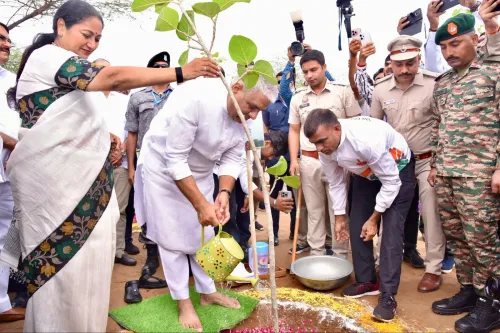
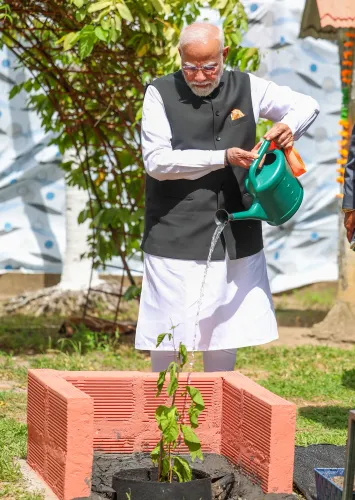
Sitharaman Launches Kudligi Organic Plantation in Karnataka
Synopsis
Union Finance Minister Nirmala Sitharaman launched the Kudligi Organic Horticulture Plantation Project in Karnataka on World Environment Day 2026, planting 50,000 dryland trees across 160 acres in phase one, with a second phase targeting 1 lakh trees by 2027 under PM Modi's Ek Ped Maa Ke Naam campaign.
Key Takeaways
Nirmala Sitharaman launched the Kudligi Organic Horticulture Plantation Project on World Environment Day, 5 June 2026 .
Phase one covers 160 acres with 50,000 trees in Kudligi, Vijayanagara district, Karnataka .
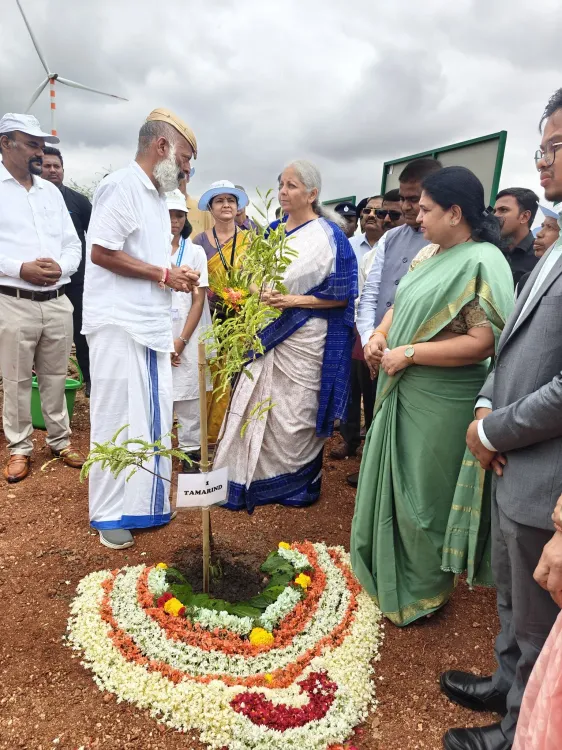
Species selected include tamarind, amla, moringa and custard apple — all dryland-suitable.
A second phase in 2027 will add another 50,000 trees , taking the total to 1 lakh trees .
The project advances PM Modi 's #EkPedMaaKeNaam nationwide tree-planting initiative.
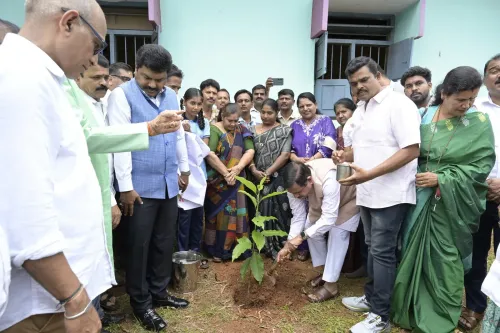
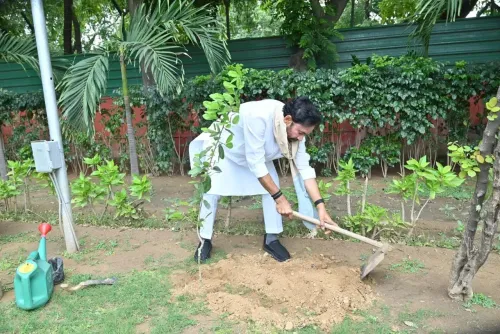
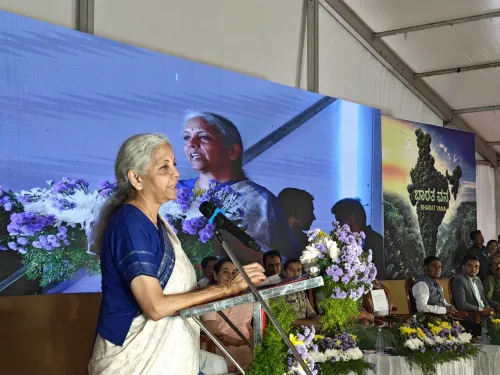
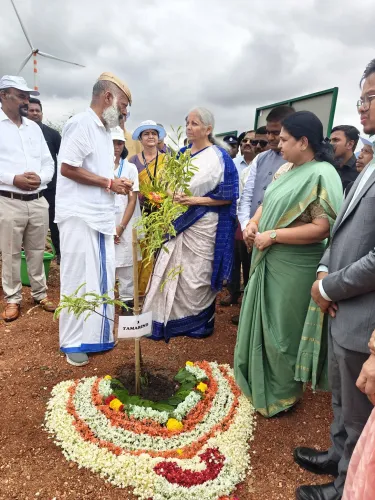
Union Finance Minister Nirmala Sitharaman on Friday, 5 June 2026 — World Environment Day — launched the Kudligi Organic Horticulture Plantation Project in Kudligi, Karnataka, advancing Prime Minister Narendra Modi's nationwide #EkPedMaaKeNaam tree-planting campaign.
Context
The project's first phase will cover 160 acres with 50,000 trees, all dryland-suitable species chosen for the semi-arid conditions of the region. Selected species include tamarind, amla, moringa, and custard apple — crops that can withstand low rainfall while supporting local livelihoods through organic horticulture.
A second phase is proposed for 2027, adding another 50,000 trees and taking the total plantation count to 1 lakh trees across the site.
Policy Backdrop
The #EkPedMaaKeNaam initiative was launched by Prime Minister Narendra Modi on World Environment Day 2024 to mobilise citizens to plant trees in honour of their mothers. The Kudligi project is positioned as a direct extension of that campaign at the local level.
The central government has increasingly sought to anchor state-level environmental interventions within citizen-participation frameworks such as Ek Ped Maa Ke Naam, aligning local plantation drives with nationally recognised branding and targets for expanding India's green cover.
Stakeholders and Impact
Kudligi is a town in Karnataka's Vijayanagara district, a predominantly dryland agricultural belt where water scarcity constrains conventional farming. The choice of species — tamarind, amla, moringa, and custard apple — reflects an effort to introduce climate-resilient, commercially viable trees that can benefit local farmers and rural communities over the long term.
Organic horticulture plantations of this scale can also contribute to soil health and ground-level biodiversity in semi-arid zones, providing ecological benefits beyond the immediate tree count.
What's Next
Attention will now turn to the execution of the first phase across 160 acres and whether survival rates and biodiversity outcomes are formally tracked. The 2027 second phase, which would double the tree count to 1 lakh, will serve as the key milestone for assessing the project's long-term viability and impact on Karnataka's semi-arid landscape.
Point of View
#EkPedMaaKeNaam — to give state-level initiatives national visibility. By deploying a senior Union Cabinet minister for a district-level plantation drive in Karnataka, the BJP signals continued outreach in a state where the party is in opposition. The choice of dryland-compatible, commercially useful species such as moringa and tamarind also suggests an attempt to frame environmental action in terms of farmer benefit rather than purely ecological obligation. Whether the project's second phase materialises on schedule will be a practical test of this political commitment.
NationPress
20 Oct 2026
Frequently Asked Questions
What is the Kudligi Organic Horticulture Plantation Project?
It is a phased tree-plantation initiative in Kudligi, Vijayanagara district, Karnataka, aiming to plant 1 lakh dryland-suitable trees across 160 acres. Phase one targets 50,000 trees and a second phase in 2027 will add another 50,000.
What is the Ek Ped Maa Ke Naam initiative?
Ek Ped Maa Ke Naam is a nationwide tree-planting campaign launched by Prime Minister Narendra Modi on World Environment Day 2024, encouraging citizens to plant trees in honour of their mothers.
Which trees are being planted in the Kudligi project?
The project focuses on dryland-suitable species: tamarind, amla (Indian gooseberry), moringa, and custard apple — all chosen for their resilience in semi-arid conditions and their value to local farmers.
Why was Kudligi chosen for this plantation project?
Kudligi is located in Karnataka's semi-arid Vijayanagara district, where dryland farming conditions make climate-resilient horticulture particularly relevant for local agricultural communities.
When will the second phase of the Kudligi plantation project happen?
The second phase, which will add another 50,000 trees to take the total to 1 lakh, is proposed for 2027.