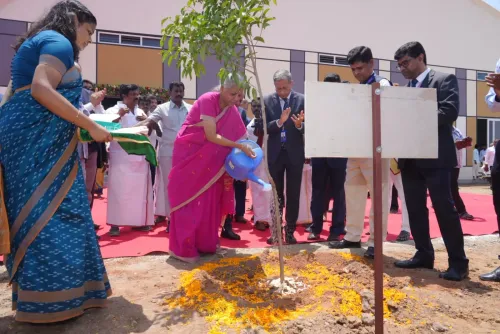
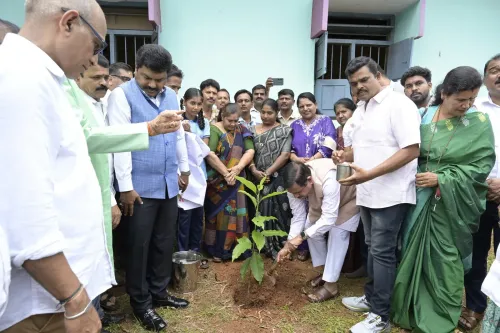
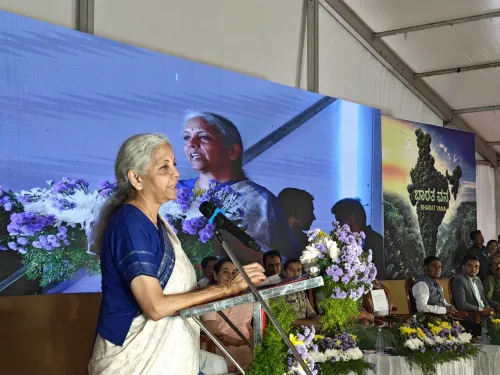
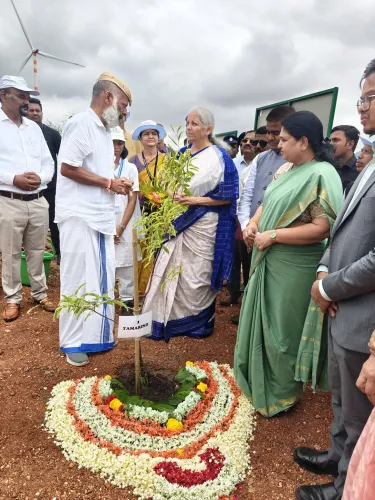
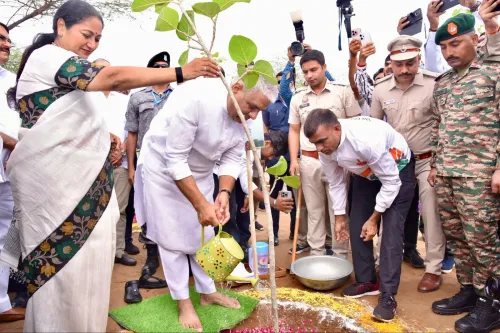
Sitharaman launches Koodligi tree plantation scheme on World Environment Day
Synopsis
Union Finance Minister Nirmala Sitharaman inaugurated the Koodligi Organic Horticulture Plantation Scheme in Karnataka on World Environment Day 2026, launching phase one with 50,000 drought-resistant trees across 160 acres as part of PM Modi's Ek Ped Maa Ke Naam campaign. A second phase in 2027 will add another 50,000 trees, taking the total to 1 lakh.
Key Takeaways
Union Finance Minister Nirmala Sitharaman launched the Koodligi Organic Horticulture Plantation Scheme in Karnataka on 5 June 2026 , World Environment Day.
Phase one covers 160 acres with a target of planting 50,000 trees of drought-resistant species.
Species selected include tamarind, Indian gooseberry, drumstick, and custard apple — all suited to semi-arid dryland conditions.
A second phase proposed for 2027 will add another 50,000 trees , bringing the cumulative target to 1 lakh trees .
The scheme is part of PM Narendra Modi 's national Ek Ped Maa Ke Naam afforestation campaign, launched on World Environment Day 2024.
The initiative targets dryland farming communities in Koodligi, Ballari district , northern Karnataka.
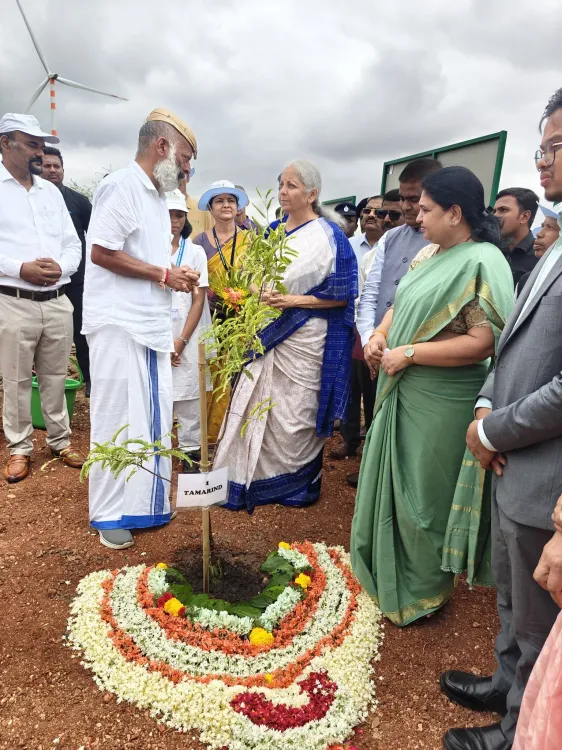
Union Finance Minister Nirmala Sitharaman on Friday, 5 June 2026 — World Environment Day — inaugurated the Koodligi Organic Horticulture Plantation Scheme in Karnataka, extending Prime Minister Narendra Modi's national #EkPedMaaKeNaam campaign to the state's dryland belt.
Context
Posting in Kannada, Sitharaman announced the launch of the scheme, describing its first phase as covering 160 acres with a target of planting 50,000 trees. The species selected are suited to arid and semi-arid conditions: tamarind (hunase), Indian gooseberry (nellikai), drumstick (nugge), and custard apple (sitaphala). The choice of drought-resistant horticulture species signals a dual focus on ecological restoration and livelihood support for dryland farming communities.
Policy Backdrop
The Ek Ped Maa Ke Naam ('One Tree in Mother's Name') campaign was launched by Prime Minister Modi on World Environment Day 2024, calling on citizens across India to plant trees as a tribute to their mothers. The initiative has since been adopted by central ministers and state governments as a vehicle for larger afforestation drives. The Koodligi scheme is one such state-level expression of the campaign, embedding it within a structured, phased plantation programme rather than a symbolic one-off gesture.
Koodligi (also spelled Kudligi) is a taluk in Ballari district, Karnataka — a region characterised by low annual rainfall and historically dependent on dryland agriculture. Central and state governments have long promoted horticulture in such zones as a means of improving both green cover and farmer incomes, and this scheme continues that lineage.
Stakeholders and Impact
The immediate beneficiaries are dryland farming communities in and around Koodligi, who stand to gain from improved soil health, shade cover, and eventual produce from fruit-bearing trees such as tamarind and Indian gooseberry. Rural communities across the semi-arid belt of northern Karnataka are the broader target group. The organic horticulture framing also suggests an intent to align with chemical-free farming practices, which could open market linkages for small and marginal farmers in the region.
The 160-acre first phase and its 50,000-tree target represent a concrete, measurable commitment — a departure from campaign-style plantation drives that have historically struggled with survival-rate accountability.
What's Next
A second phase has been proposed for 2027, with an additional 50,000 trees planned, bringing the scheme's cumulative target to 1 lakh trees. Progress on species survival rates, integration with Karnataka's horticulture department programmes, and the rollout of the 2027 phase will be the key metrics to watch. The scheme's success could serve as a replicable model for other semi-arid constituencies where BJP leaders seek to demonstrate environmental governance credentials ahead of future electoral cycles.
Point of View
Not merely a symbolic drive — embedding it within structured, phased plantation programmes with measurable targets. For Sitharaman, inaugurating an environment scheme in Karnataka carries political salience: the state is a key BJP battleground where the party has sought to expand its footprint beyond its traditional strongholds. The choice of dryland-suitable, fruit-bearing species also threads together ecological and agrarian messaging, positioning the scheme as a livelihood intervention as much as a green-cover initiative. Whether the 1-lakh-tree target translates into verifiable outcomes will determine if this model is scaled to other semi-arid constituencies.
NationPress
20 Oct 2026
Frequently Asked Questions
What is the Koodligi Organic Horticulture Plantation Scheme?
The Koodligi Organic Horticulture Plantation Scheme is a tree plantation initiative launched in Koodligi, Ballari district, Karnataka, targeting 1 lakh trees across dryland areas in two phases — 50,000 trees in the first phase covering 160 acres, and another 50,000 proposed for 2027.
Who launched the Koodligi plantation scheme and when?
Union Finance Minister Nirmala Sitharaman inaugurated the scheme on 5 June 2026, World Environment Day, as part of Prime Minister Narendra Modi's Ek Ped Maa Ke Naam national campaign.
What trees will be planted under the Koodligi scheme?
The scheme will plant drought-resistant, dryland-suitable species including tamarind, Indian gooseberry (amla), drumstick (moringa), and custard apple — all fruit-bearing trees suited to the semi-arid climate of northern Karnataka.
What is the Ek Ped Maa Ke Naam campaign?
Ek Ped Maa Ke Naam ('One Tree in Mother's Name') is a national tree plantation campaign launched by Prime Minister Narendra Modi on World Environment Day 2024, encouraging citizens and governments to plant trees as a tribute to mothers and to expand India's green cover.
What is the total tree planting target under the Koodligi scheme?
The scheme targets a total of 1 lakh (100,000) trees — 50,000 in the current phase across 160 acres, and another 50,000 proposed for planting in 2027.