CM DK Shivakumar releases Moily's prose epic Vol 4 in Mysuru
Synopsis
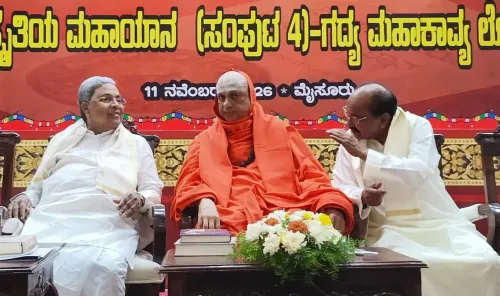
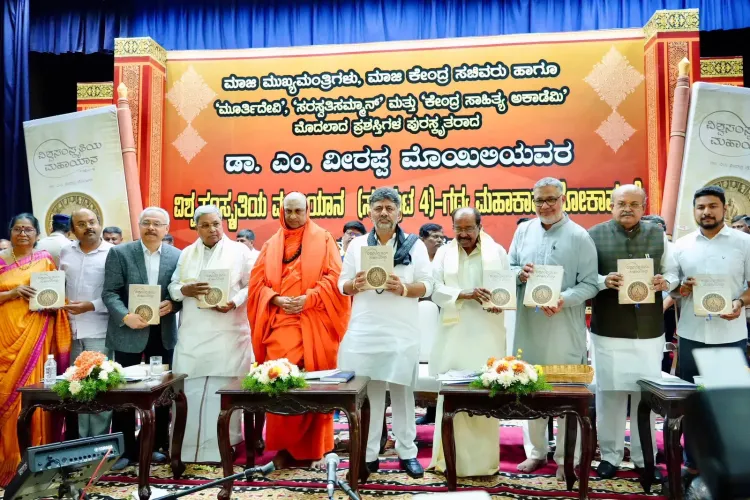
Chief Minister D.K. Shivakumar released the fourth volume of Saraswati Samman laureate and former CM Dr Veerappa Moily's prose epic 'Vishwa Sanskrithiya Mahayaana' in Mysuru, with the Suttur Math seer, ex-CM Siddaramaiah, and other senior leaders in attendance.
Key Takeaways
Shivakumar released Volume 4 of Dr Veerappa Moily's prose epic 'Vishwa Sanskrithiya Mahayaana' in Mysuru on November 11, 2026 .
Dr Moily is a former Chief Minister of Karnataka and a Saraswati Samman award recipient.
Jagadguru Shivarathri Deshikendra Mahaswamiji of Suttur Math attended the function.
Immediate former CM Siddaramaiah , Minister Dr Yatindra Siddaramaiah , and H.M.
Revanna were also present.
The event reflects Karnataka's tradition of political figures championing Kannada and multilingual literature at the highest level.
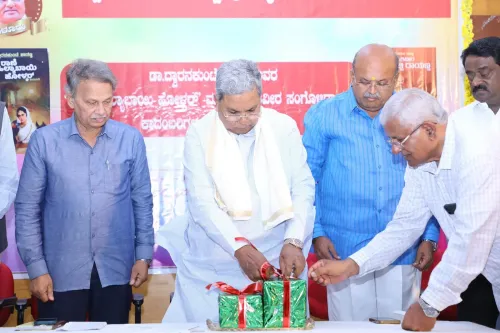
A prose epic spanning world civilisation got its fourth volume unveiled in Mysuru on Wednesday, November 11, 2026 — and the room brought together Karnataka's literary and political heavyweights in a rare, cross-party celebration of Kannada letters. The Chief Minister's Office of Karnataka announced that Chief Minister D.K. Shivakumar released the fourth volume of Dr M. Veerappa Moily's landmark prose epic 'Vishwa Sanskrithiya Mahayaana' ('The Grand Journey of World Culture') at a ceremony in the city.
A Saraswati Samman laureate's monumental series
Dr M. Veerappa Moily is no ordinary author-politician. A former Chief Minister of Karnataka (1992–1994) and a recipient of the prestigious Saraswati Samman — one of India's highest literary honours — Moily has spent years constructing an ambitious multi-volume prose epic that charts the arc of world culture and civilisation. Volume 4 of 'Vishwa Sanskrithiya Mahayaana' extends that journey further, underscoring his stature as one of the most prolific literary voices to emerge from Indian public life.
Suttur Math seer, two former CMs, and a minister on one dais
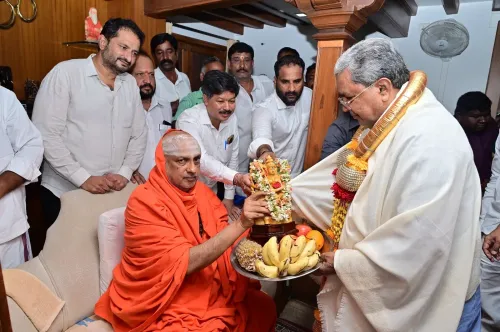
The event's guest list read like a Karnataka power atlas. Jagadguru Shivarathri Deshikendra Mahaswamiji of the revered Suttur Math graced the function alongside the author himself. Siddaramaiah, the immediate former Chief Minister, was present — a pointed signal that literary culture in Karnataka commands a cross-factional deference that cuts through political rivalry. Minister Dr Yatindra Siddaramaiah, Guarantee Implementation Committee chairman H.M. Revanna, and the Chief Minister's Political Secretary A.S. Ponnanna were also seated at the ceremony, along with legislators, elected representatives, and other dignitaries.
Karnataka's tradition of politics meeting the page
This gathering is not an anomaly — it reflects something deep in Karnataka's public culture. The state has long treated Kannada literature as a civic institution, not merely an artistic one. Politicians attending, releasing, or even authoring major literary works is a recognisable pattern here, rooted in the influence of movements like the Navya and Bandaya literary traditions and the annual Akhila Karnataka Sahitya Sammelana. Moily exemplifies that tradition: a man who governed the state and kept writing through it all.
With further volumes in the series anticipated, the question is whether the state will formalise recognition of the work — perhaps through a government literary award or an official translation project to carry it into other Indian languages. For now, the Mysuru ceremony placed Mahayaana's fourth instalment squarely at the intersection of political will and cultural ambition — which, in Karnataka, is exactly where such things belong.
Frequently Asked Questions
What is 'Vishwa Sanskrithiya Mahayaana' by Veerappa Moily?
'Vishwa Sanskrithiya Mahayaana' is a multi-volume prose epic by former Karnataka Chief Minister and Saraswati Samman laureate Dr M. Veerappa Moily, tracing the grand journey of world culture and civilisation. Volume 4 was released in Mysuru on November 11, 2026.
Who released Veerappa Moily's book Volume 4 in Mysuru?
Karnataka Chief Minister D.K. Shivakumar released the fourth volume at a ceremony held in Mysuru on November 11, 2026.
What is the Saraswati Samman award?
The Saraswati Samman is one of India's most prestigious literary honours, awarded annually to an outstanding work of literature published in any Indian language listed in the Eighth Schedule of the Constitution.
Who attended the Veerappa Moily book launch in Mysuru?
Among those present were Jagadguru Shivarathri Deshikendra Mahaswamiji of Suttur Math, former CM Siddaramaiah, Minister Dr Yatindra Siddaramaiah, Guarantee Implementation Committee chairman H.M. Revanna, and CM's Political Secretary A.S. Ponnanna.
When was Veerappa Moily Chief Minister of Karnataka?
Dr M. Veerappa Moily served as Chief Minister of Karnataka from 1992 to 1994.