Cabinet Approves Yuge Yugeen Bharat Museum at North-South Block
Synopsis
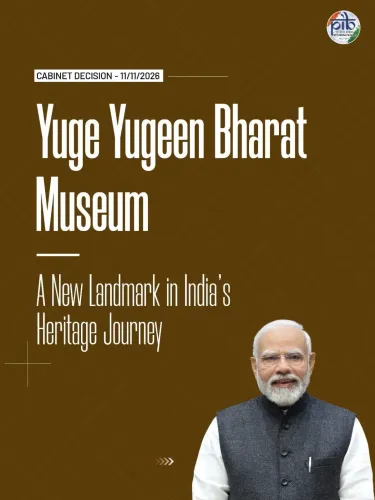
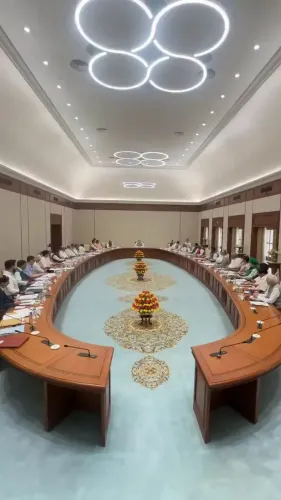
The Union Cabinet, chaired by PM Narendra Modi, approved the Yuge Yugeen Bharat Museum at New Delhi's North and South Block Complex on November 11, 2026. The museum will present an integrated narrative of India's tangible and intangible civilisational heritage, marking a cultural milestone in the Central Vista redevelopment.
Key Takeaways
The Union Cabinet on November 11, 2026 , approved development of the Yuge Yugeen Bharat Museum at the North and South Block Complex, New Delhi .
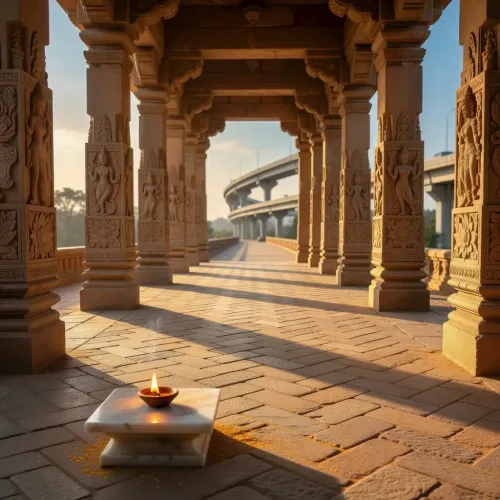
The museum will present an integrated narrative of India's tangible and intangible civilisational heritage .
North and South Blocks — historic colonial-era buildings on Raisina Hill — are being repurposed under the Central Vista redevelopment project , Cabinet-approved in 2020 .
The name Yuge Yugeen ('across the ages') signals an ambition to frame India as a continuous civilisation rather than only a modern state.
Key next steps include design finalisation, appointment of a curatorial body, construction phasing, and parliamentary budgetary approval.
India's most storied government address is about to get a cultural second life. The Union Cabinet, chaired by Prime Minister Narendra Modi, approved on Wednesday, November 11, 2026, the development of the Yuge Yugeen Bharat Museum at the iconic North and South Block Complex in New Delhi — a decision that will transform two of the capital's most recognisable colonial-era structures into a grand showcase of Indian civilisational heritage.
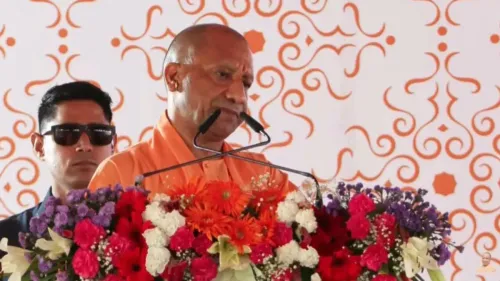
Union Minister Sarbananda Sonowal announced the Cabinet decision on X, noting that the museum 'will showcase continuity and diversity of Bharat's civilisational heritage through an integrated narrative of tangible and intangible cultural legacy.' The name itself signals ambition: Yuge Yugeen — across the ages — framing India not as a modern nation-state alone but as a civilisation with an unbroken thread running through millennia.
North and South Blocks: From Power Corridors to Cultural Canvas
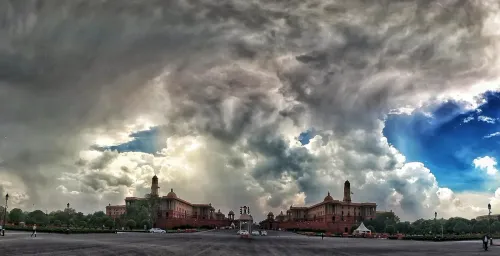
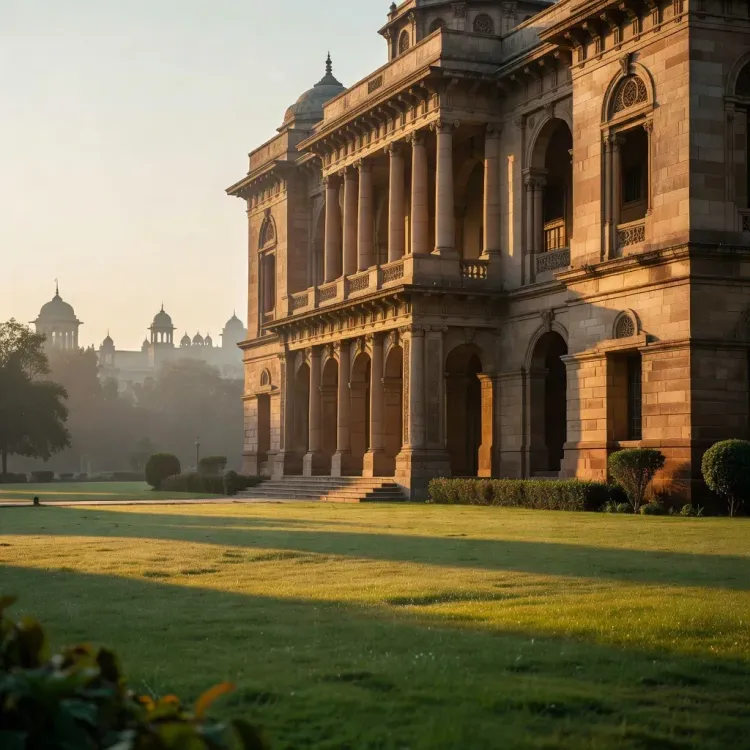
The North and South Blocks, flanking the Rajpath axis on Raisina Hill, have housed the offices of the Finance Ministry, Ministry of External Affairs, and Home Ministry for decades. Under the broader Central Vista redevelopment project — Cabinet-approved in 2020 — these heritage structures were always slated for adaptive reuse rather than demolition. The Yuge Yugeen Bharat Museum is the most explicit answer yet to the question: what comes next for these halls?
The scale of the spaces involved is formidable. The sandstone buildings, designed by Herbert Baker in the early twentieth century, offer vast galleries, colonnaded corridors, and subterranean vaults — a physical canvas that few museum projects anywhere in the world could match. Converting them into a heritage destination puts New Delhi in conversation with institutions like the Louvre or the Smithsonian: repurposed monumental architecture serving as the frame for national identity.
An Integrated Narrative — What 'Tangible and Intangible' Means in Practice
The Cabinet decision specifically mandates an 'integrated narrative of tangible and intangible cultural legacy' — language that points beyond artefacts and artefact-cabinets. Tangible heritage covers sculptures, manuscripts, architectural elements, coins, and material objects spanning India's archaeological record. Intangible heritage — music, oral traditions, performing arts, craft knowledge, ritual practices — is harder to display but equally central to the civilisational claim the museum seeks to make.
Combining both in a single interpretive framework is no small curatorial challenge. It will demand collaboration between archaeologists, archivists, performing-arts bodies, tribal cultural institutions, and technology designers capable of immersive digital display. The ambition, if executed well, could produce something genuinely unprecedented in South Asian public heritage presentation.
The Bigger Pattern: Heritage as State Priority Under Central Vista
This approval does not arrive in isolation. Since 2020, the Central Vista project has steadily repositioned the heart of New Delhi — a new Parliament building, a common Central Secretariat, upgraded Prime Minister's residence, and now a flagship museum — as an expression of India's civilisational self-image, not merely its administrative function. The Yuge Yugeen Bharat Museum is, in that sense, the cultural capstone of the entire redevelopment arc.
What to watch now: the timeline for design competition or commission, the curatorial body that will be entrusted with the narrative, the construction phasing alongside any remaining Central Vista works, and the budgetary allocation that Parliament will eventually need to ratify. Each of those steps will reveal how quickly — and how faithfully to its stated ambition — this Cabinet decision translates into stone, light, and story.
When it opens, the view from Raisina Hill will mean something different. India's most powerful address becomes its longest story.
Point of View
The government is raising the curatorial stakes considerably, inviting scrutiny of whose stories are told and how. The project's success will ultimately hinge on the curatorial body chosen and the inclusivity of the civilisational narrative it constructs. In the meantime, the decision deepens a pattern of heritage-as-statecraft that has defined cultural policy in New Delhi through the 2020s.
NationPress
11 Nov 2026
Frequently Asked Questions
What is the Yuge Yugeen Bharat Museum?
The Yuge Yugeen Bharat Museum is a Cabinet-approved museum project to be developed at the North and South Block Complex in New Delhi, designed to showcase the continuity and diversity of India's civilisational heritage through tangible and intangible cultural legacy.
Where will the Yuge Yugeen Bharat Museum be located?
The museum will be located at the North and South Block Complex on Raisina Hill, New Delhi — the historic sandstone buildings that previously housed key central government ministries.
When did the Cabinet approve the Yuge Yugeen Bharat Museum?
The Union Cabinet chaired by Prime Minister Narendra Modi approved the museum on Wednesday, November 11, 2026.
What is the Central Vista redevelopment project?
The Central Vista redevelopment is a large-scale project, approved by Cabinet in 2020, to redesign and repurpose the central spine of New Delhi — including a new Parliament building, a common secretariat, and adaptive reuse of North and South Blocks for heritage and cultural purposes.
What does 'tangible and intangible cultural legacy' mean for the museum?
Tangible legacy refers to physical artefacts such as sculptures, manuscripts, coins, and architectural elements, while intangible legacy covers living traditions like music, oral histories, performing arts, and craft knowledge — the museum aims to present both in a single integrated narrative.