CM Siddaramaiah: Constitution's ideals still unfulfilled
Synopsis
On Constitution Day in Mysuru, CM Siddaramaiah said India's founding ideals remain unfinished 77 years on, invoked Ambedkar and Ahinda, and urged people to make the Constitution's voice their own.
Key Takeaways
Karnataka Chief Minister Siddaramaiah spoke in Mysuru on 26 November 2026 at a Constitution Day awareness programme.
He said 77 years after adoption, constitutional ideals are still not fully realised and public awareness must be continuous.
He recalled that drafting took two years, 11 months and 18 days under B.R.
Ambedkar , with 395 articles in the original text.
He cited Article 17 (abolition of untouchability) and Article 14 (equality before law) as promises still short of social reality.
He contrasted the Constitution with the Manusmriti and invoked the Ahinda movement for Dalits, backward classes and minorities.
He praised Dalit Sangharsha Samiti's year-long awareness drive and pledged to join such campaigns.
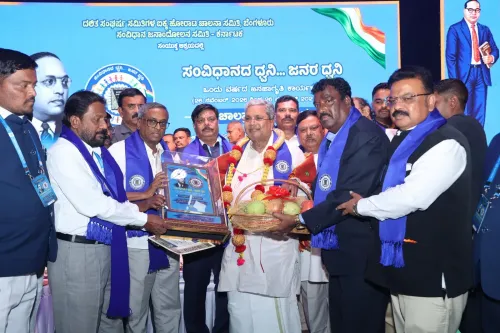
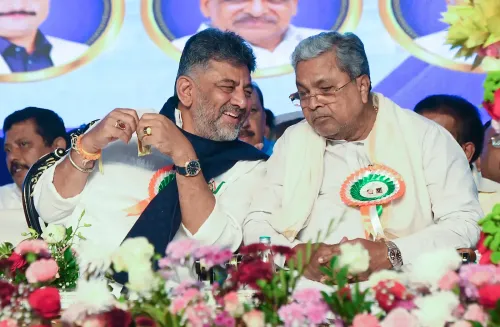
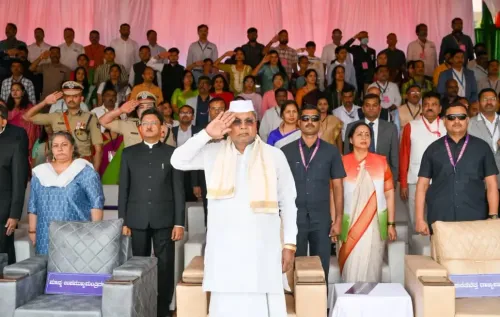
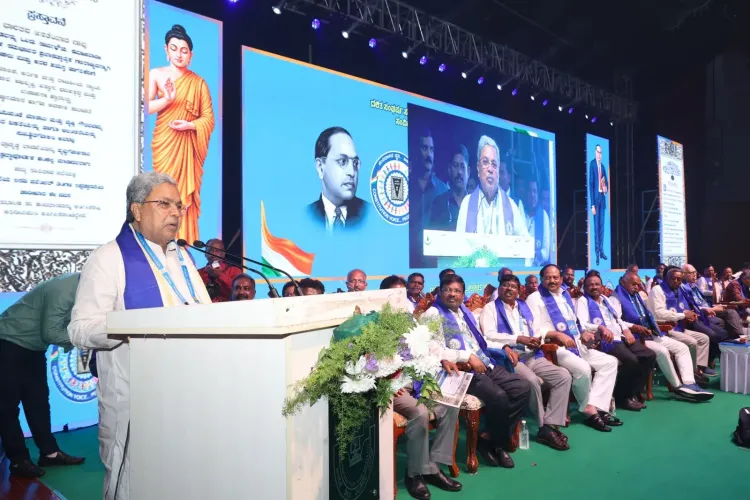
Karnataka Chief Minister Siddaramaiah told a Constitution Day gathering in Mysuru on Thursday that 77 years after India adopted its founding charter, the document's promises of equality still sit unfinished in everyday life. Speaking at the Karnataka State Open University convocation hall, he said the Constitution's ideals must reach every citizen — and that its voice must become the people's voice.
The programme, titled Samvidhana Dhvani – Janara Dhvani (Constitution's voice – people's voice), was organised by the Aikya Horata Chalana Samiti of Dalit Sangharsha Samitis as part of Constitution Day observances. In a long Kannada address posted on X, Siddaramaiah argued that society has changed since 26 November 1949, but that the gap between constitutional aspiration and social fact remains in plain sight.
Ambedkar's 395 articles and a living, unfinished text
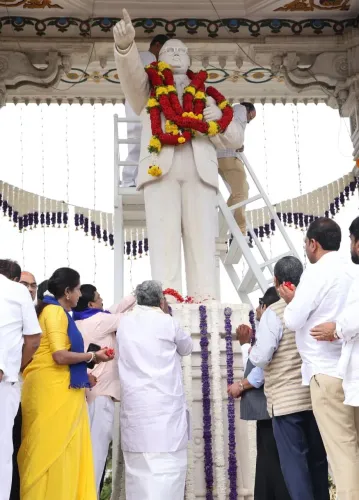
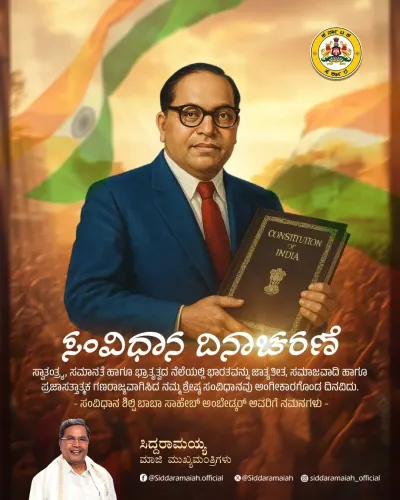
He reminded the audience that the Constitution was drafted over two years, 11 months and 18 days, with Babasaheb B.R. Ambedkar as chairman of the Drafting Committee. Drawing on scholarship, experience and a study of constitutions worldwide, Ambedkar, he said, gave India one of the finest founding documents in the world.
The original text carried 395 articles. Amendments have followed as society changed — and that capacity to amend, Siddaramaiah argued, is one of the Constitution's core strengths. Awareness, however, cannot be a one-day ritual. ‘The Constitution's ideals have not yet been fully realised. That reality is before our eyes,’ he said.
Six siblings, one education, and the Preamble in classrooms
During his earlier term as Chief Minister, when H.C. Mahadevappa served as Social Welfare Minister, the government organised programmes for students and youth to read the Preamble. Rights, he said, become real only when people understand the Constitution well enough to recognise injustice in the social order.
He then turned to his own household. There were six children at home. Only he received an education, became a lawyer, and later a minister and Chief Minister. Had anyone written on their foreheads that he alone should study while the other five were denied schooling? India, he argued, must step out of a mindset that explains rise and fall through fate or the doctrine of karma.
Ahinda, Article 17, and who stands with Manusmriti
People, he said, must identify who stands with the Constitution and who stands with the Manusmriti. Loyalty to Ambedkar's thought cannot stop at speeches; it must show in conduct. That is the logic, he recalled, behind the Ahinda movement he helped shape — a platform for social justice for minorities, backward classes and Dalits.
Article 17 abolishes untouchability. Has it vanished in practice? Can an equal society be built if it has not? Article 14 guarantees equality before the law, but that promise, he said, needs humanity to take root. Attempts to sow hatred must be watched. People must learn to love rather than hate. Only then, he argued, can the equal society Ambedkar dreamed of be built.
He praised the Dalit Sangharsha Samiti Aikya Horata Samiti for a year of constitutional awareness work, pledged his cooperation, and said he would join such programmes wherever possible. He congratulated every organisation carrying the campaign and wished that constitutional ideals reach every home.
Constitution Day in Mysuru, in his telling, was not a ceremonial recitation. It was a test: whether the republic will close the distance between the text on paper and the lives still waiting for it.
Point of View
Caste discrimination as unfinished business, and a pointed contrast between the Constitution and the Manusmriti. By invoking Ahinda and his path from a six-child household to the Chief Minister's office, he tied personal biography to education and social justice as correctives to inherited inequality. The speech also functions as political signalling in Karnataka, where debates over caste census, internal reservation and cultural codes remain live. The test is whether praise for Dalit Sangharsha Samiti turns into wider state-backed awareness work in schools and colleges.
NationPress
26 Nov 2026
Frequently Asked Questions
When was the Indian Constitution adopted?
The Indian Constitution was adopted on 26 November 1949, after a drafting process of two years, 11 months and 18 days. It came into force on 26 January 1950, and 26 November is observed as Constitution Day.
What did Karnataka CM Siddaramaiah say on Constitution Day?
He said that 77 years after adoption, constitutional ideals are still not fully realised. Speaking in Mysuru, he urged continuous public awareness, cited Articles 14 and 17, and asked people to distinguish those who stand with the Constitution from those who stand with the Manusmriti.
How many articles did the original Indian Constitution have?
The original Constitution had 395 articles. Siddaramaiah noted that amendments have been made over time to meet changing social needs, calling that flexibility a key strength of the document.
What is the Ahinda movement in Karnataka?
Ahinda is a Karnataka social-justice platform Siddaramaiah helped shape for minorities, backward classes and Dalits. In his Mysuru speech he described it as a vehicle to secure social justice for communities denied opportunity.
Where did Siddaramaiah speak on Constitution Day 2026?
He spoke at a Samvidhana Dhvani – Janara Dhvani programme organised by Dalit Sangharsha Samiti groups at the Karnataka State Open University convocation hall in Mysuru.