CM Siddaramaiah Flags Ethanol Over-Blending in Karnataka Tests
Synopsis
Karnataka's Department of Legal Metrology, under Mission Nikhara, found ethanol blending as high as 31.2% in petrol samples from major oil firms — far above the E20 ceiling. CM DK Shivakumar has issued four demands to the Union Government, including a compensation fund for affected vehicle owners and mandatory blending disclosure at petrol pumps.
Key Takeaways
Karnataka's Mission Nikhara inspections found ethanol levels up to 31.2 percent in petrol samples from major oil marketing companies — breaching the national E20 (20 percent) limit .
CM DK Shivakumar has formally demanded that the Union Government publicly disclose actual ethanol content in petrol supplied across India.
The state is calling for strict legal action against non-compliant oil companies and public release of petrol-pump-level audit reports.
Karnataka demands creation of an E20 Damage Compensation Fund to reimburse vehicle owners harmed by over-blended fuel.
Mandatory ethanol-level disclosure at every petrol station is among the demands, so consumers can choose compatible fuel for their vehicles.
India's ethanol blending programme, accelerated to a 20 percent target by 2025 , has seen blending levels rise from around 2 percent in 2014 to over 10 percent by 2022 , with quality-control concerns growing alongside.
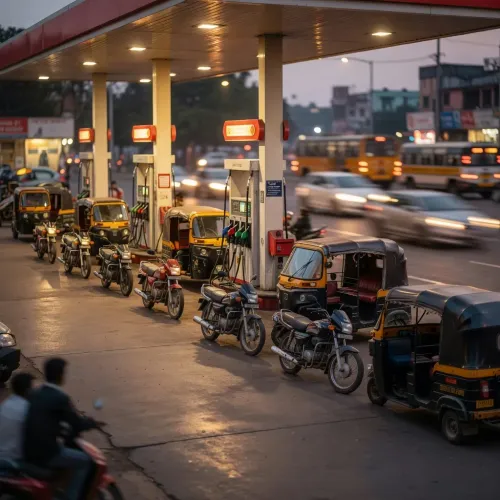
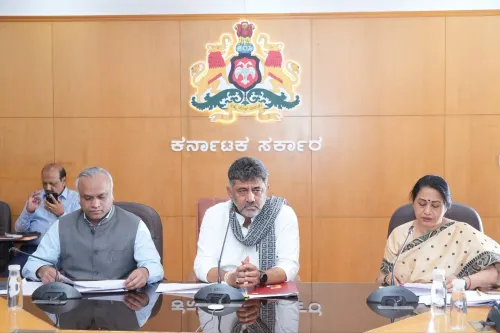
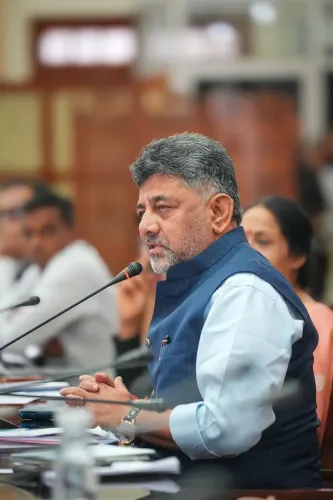
Petrol samples collected from major oil companies across Karnataka have recorded ethanol content as high as 31.2 percent — more than one-and-a-half times the nationally prescribed E20 limit of 20 percent. The Chief Minister's Office of Karnataka made the explosive disclosure on Friday, 6 November 2026, with Chief Minister DK Shivakumar demanding the Union Government take immediate corrective action and establish a compensation mechanism for affected vehicle owners.
Mission Nikhara's findings: what the lab results show
The revelations come from Mission Nikhara, an inspection drive run by Karnataka's Department of Legal Metrology under the direction of Minister Arshad Rizwan. Independent laboratory tests on petrol samples drawn from retail outlets linked to major oil marketing companies (OMCs) — which include public sector giants like IOC, BPCL and HPCL — found blending levels that, in the worst cases, nearly tripled the E20 ceiling. The state has not yet named the specific companies tied to the highest readings, but the breadth of the inspections across Karnataka suggests the problem is not isolated to a single outlet or region.
Excessive ethanol in petrol is not merely a regulatory footnote. Engines not calibrated for high-ethanol blends suffer measurable mileage loss, accelerated rubber-seal degradation and rising maintenance bills. For the millions of two-wheeler and small-car owners who depend on petrol as a daily expense, the financial sting is real and recurring.
The Centre's E20 programme and where accountability breaks down
India's National Policy on Biofuels, notified in 2018 and tightened in 2021, accelerated the ethanol blending target to 20 percent by 2025 — a programme designed to cut crude-oil imports, support sugarcane farmers and lower emissions. Blending levels climbed from roughly 2 percent in 2014 to over 10 percent by 2022, and the OMCs have largely been the vehicles of delivery. The policy logic is sound. The enforcement gap, Karnataka's tests now suggest, is not.
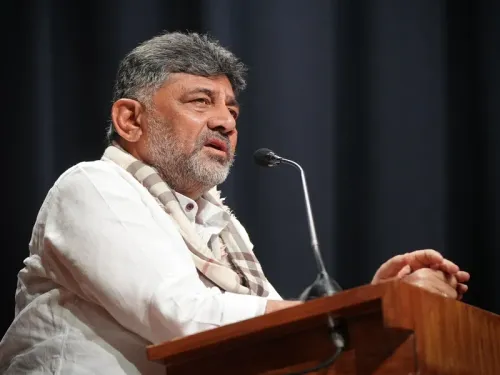
CM Shivakumar's statement leans into that contradiction directly: 'While the Union Government speaks of the benefits of ethanol blending and energy security, it cannot turn a blind eye to the violation of E20 norms.' The charge is that OMCs — which continue to report 'substantial profits' — are quietly passing the cost of non-compliant blending onto consumers who have no way of knowing what is in their tank.
Karnataka's four demands to New Delhi
The Chief Minister has laid out a pointed four-point demand list for the Ministry of Petroleum and Natural Gas. First: public disclosure of actual ethanol content in petrol supplied across the country. Second: strict legal action against OMCs found breaching prescribed limits, with petrol-pump-level audit reports made public. Third: creation of an E20 Damage Compensation Fund with a 'simple, time-bound mechanism' to reimburse affected vehicle owners. Fourth: mandatory display of ethanol blending levels at every petrol station, so consumers can choose fuel suited to their vehicles.
Taken together, the demands amount to a structural reform of how India monitors and communicates fuel quality at the last mile — the retail pump. Karnataka has signalled it will continue inspections regardless of the Centre's response.
A federal fault-line over fuel quality oversight
Karnataka is not the first state to push back against the pace and oversight framework of the national blending programme. As blending targets rose through the mid-2020s, state-level regulators across India began flagging mileage complaints and quality inconsistencies at retail outlets — a friction point between centrally-set petroleum standards and state consumer-protection mandates. What makes the Karnataka intervention sharper is the specific, quantified test data: a reading of 31.2 percent ethanol in a petrol sample is not a vague concern, it is a falsifiable number that demands a response from either the OMC or the regulator.
The Ministry of Petroleum has not yet responded publicly to the state's findings. That silence — or what follows it — will define whether Mission Nikhara becomes a footnote or a forcing function for national fuel-quality reform.
Point of View
Releasing hard lab numbers shifts the terrain from political rhetoric to regulatory evidence, making it harder for the Ministry of Petroleum to dismiss the challenge as partisan noise. The four-point demand list is also strategically sequenced — disclosure first, compensation last — meaning any partial concession still builds momentum. If the Centre does not respond, Karnataka has a readymade consumer-protection narrative heading into local electoral cycles.
NationPress
7 Nov 2026
Frequently Asked Questions
What is the E20 ethanol blending limit in India?
India's national standard caps ethanol blending in petrol at 20 percent (E20) , a target set under the National Policy on Biofuels and advanced to 2025. Karnataka's lab tests found some samples exceeding 31.2 percent , well above this ceiling.
What is Mission Nikhara in Karnataka?
Mission Nikhara is an inspection drive run by Karnataka's Department of Legal Metrology under Minister Arshad Rizwan . It conducts field inspections and independent laboratory tests to verify that fuel sold at petrol pumps meets prescribed quality and blending standards.
How does excess ethanol in petrol affect my vehicle?
Ethanol blended above your engine's calibrated tolerance can cause reduced mileage, accelerated degradation of rubber seals and fuel lines, and rising maintenance costs . Older vehicles and two-wheelers not designed for E20 or higher blends are particularly vulnerable.
What has CM DK Shivakumar demanded from the Union Government on fuel quality?
CM DK Shivakumar has demanded: public disclosure of actual ethanol content in petrol nationally; strict legal action against non-compliant oil companies with audit reports made public; an E20 Damage Compensation Fund for vehicle owners; and mandatory blending-level display at every petrol station.
Which oil companies are linked to the ethanol over-blending findings in Karnataka?
The Chief Minister's Office of Karnataka has indicated that samples were taken from outlets linked to major public-sector oil marketing companies . Specific company names have not been officially published in the initial disclosure; Karnataka has demanded that pump-level audit reports be made public.