CM Siddaramaiah Launches Praja Seva Department in Karnataka
Synopsis
Karnataka CM DK Shivakumar announced the Praja Seva Department after a cabinet meeting on 20 June 2026, creating a dedicated ministry and senior IAS post to centralise public grievances and mandate weekly district-level public interaction meetings.
Key Takeaways
The Praja Seva Department will be a new government body dedicated to hearing and resolving public grievances in Karnataka.
A separate minister will be assigned exclusive responsibility for the department.
A senior IAS officer will be appointed to review all complaints and report on their status.
Petitions submitted directly to the Chief Minister and cabinet ministers will be routed under this department.
District in-charge ministers must hold weekly Janasamdana public meetings in their assembly constituencies alongside local MLAs.
The announcement was made by CM DK Shivakumar following a cabinet meeting on 20 June 2026 .
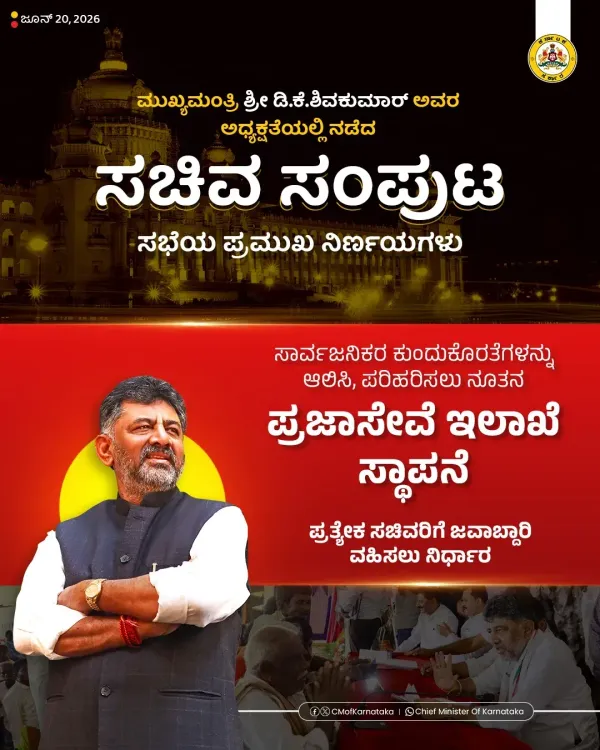
The Chief Minister's Office of Karnataka announced on Saturday, 20 June 2026 that the state government will establish a new department called Praja Seva Ilakhe (Praja Seva Department) to systematically hear and resolve public grievances, with a dedicated minister to be placed in charge of the new body.
The announcement was made by Chief Minister DK Shivakumar following a cabinet meeting, after which he briefed the media on the decisions taken. The post, in Kannada, states: 'A new Praja Seva Department is being launched to listen to and resolve the grievances of the public. A separate minister will be given responsibility for it.'
Context
The government's stated goal is to 'understand the hardships and feelings of the people and respond within the legal framework.' To anchor this mandate institutionally, a senior IAS officer will be appointed to the department to review all complaints and provide information on their status.
Crucially, petitions submitted directly to the Chief Minister and other ministers will also be brought under the umbrella of this new department, centralising a process that had previously been fragmented across multiple offices.
Policy Backdrop
Karnataka has a prior history of administrative reform in this space. The state enacted the Sakala Services Act in 2011, which mandated time-bound delivery of government services and established grievance redressal mechanisms. The Praja Seva Department represents a further layer of institutional oversight, this time with dedicated political accountability through a separate minister.
Across India, state governments have periodically created specialised units to centralise grievance handling and make administration more responsive. Karnataka's new department follows this broader pattern but adds a distinctive field-level component through weekly public meetings.
Stakeholders and Impact
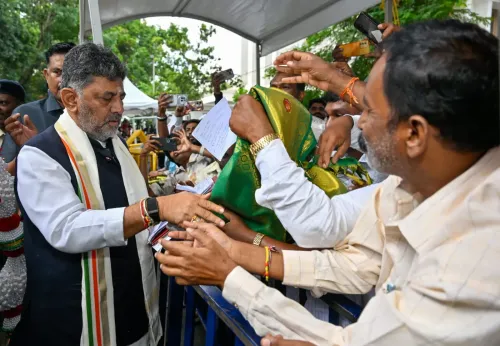
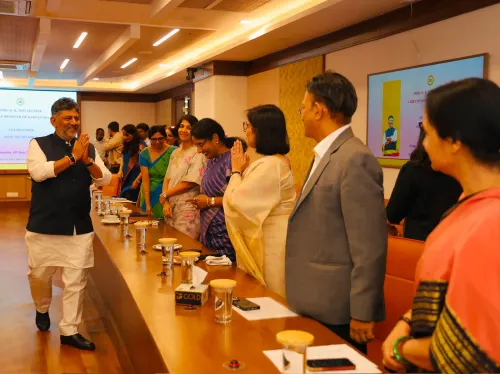
District in-charge ministers will be required to hold weekly Janasamdana (public interaction) meetings in assembly constituencies within their districts, alongside local legislators. These meetings will be conducted under the new department's framework, and the issues raised will subsequently be reviewed and acted upon.
For ordinary citizens, the reform means a single institutional point of contact for grievances — whether those petitions were originally addressed to the CM, a cabinet minister, or a local representative. Local MLAs are embedded in the weekly meeting structure, giving elected representatives a formal role in the redressal chain.
What's Next
The immediate milestones to watch are the appointment of the dedicated minister to head the Praja Seva Department and the nomination of the senior IAS officer who will oversee complaint review. Once both appointments are made, the rollout of weekly Janasamdana meetings across all assembly constituencies in the state is expected to follow.
If implemented at scale, the department could become a significant accountability mechanism for the Congress government in Karnataka, giving it a structured channel to demonstrate responsiveness to citizen concerns ahead of future electoral cycles.
Point of View
The administration is betting that centralisation will reduce the perception of unresponsiveness that plagues most state governments. The mandatory weekly Janasamdana meetings tie district in-charge ministers and local MLAs into a structured accountability loop — a design that could strengthen the Congress government's grassroots connect but will also create a measurable, public record of promises made and resolved. The real test will be whether the department is staffed and empowered to act, or becomes another layer of bureaucratic routing.
NationPress
21 Jun 2026
Frequently Asked Questions
What is the Praja Seva Department in Karnataka?
The Praja Seva Department is a newly announced government body in Karnataka designed to centralise the hearing and resolution of public grievances, including petitions previously sent directly to the Chief Minister and other ministers.
Who announced the Praja Seva Department?
Chief Minister DK Shivakumar announced the department on 20 June 2026 after a cabinet meeting, subsequently briefing the media on the decisions taken.
Who will head the Praja Seva Department?
A dedicated minister will be assigned responsibility for the department, and a senior IAS officer will be appointed to review complaints and provide status updates.
What are Janasamdana meetings under the new department?
Janasamdana meetings are weekly public interaction sessions that district in-charge ministers must hold in assembly constituencies within their districts, alongside local MLAs, to hear citizen grievances under the Praja Seva Department framework.
How is the Praja Seva Department different from existing grievance systems in Karnataka?
Unlike earlier mechanisms such as the Sakala Services Act of 2011, the Praja Seva Department adds dedicated political leadership through a separate minister, integrates petitions to the CM and all cabinet ministers, and mandates structured weekly field-level meetings, creating a more centralised and accountable redressal chain.