CM Siddaramaiah Pays Tribute to Chandra Shekhar Azad
Synopsis
Karnataka Chief Minister Siddaramaiah paid tribute to revolutionary freedom fighter Chandra Shekhar Azad on 23 July 2026, honouring his founding of the Hindustan Socialist Republican Association and his lifelong armed resistance against British colonial rule.
Key Takeaways
Karnataka CM Siddaramaiah paid tribute to Chandra Shekhar Azad on 23 July 2026 via a post on X.
Azad co-founded the Hindustan Socialist Republican Association (HSRA) in 1928 to coordinate armed resistance against British rule.
Siddaramaiah described Azad as a 'proud son of Mother India' who united patriotic youth to resist colonial oppression.
The Chief Minister credited crores of patriots like Azad for the freedom India enjoys today.
Azad died in a police encounter in Allahabad in 1931 , having vowed never to be captured alive by the British.
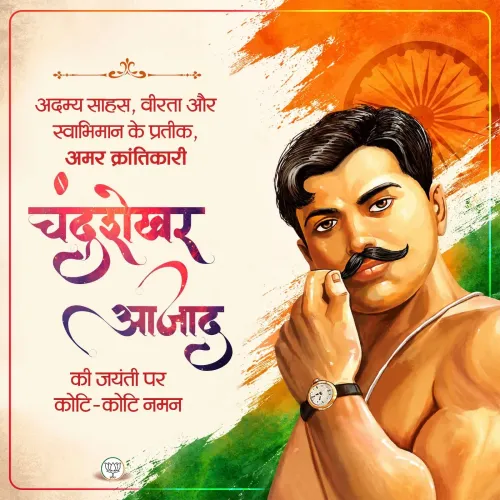
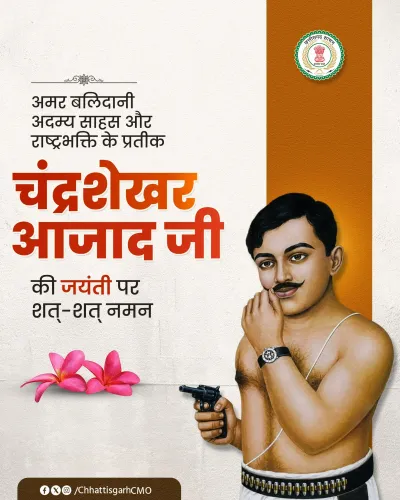
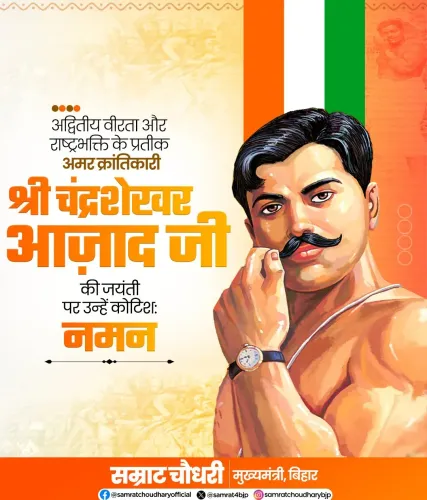
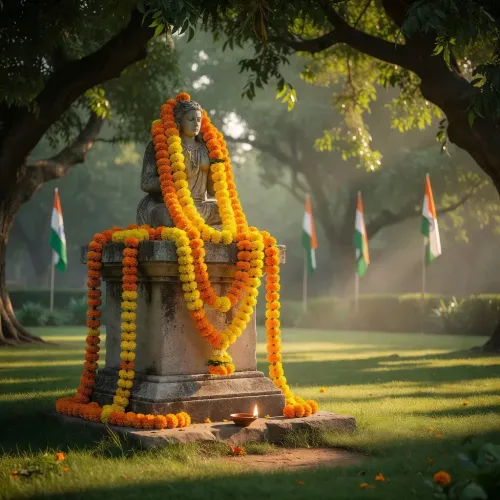
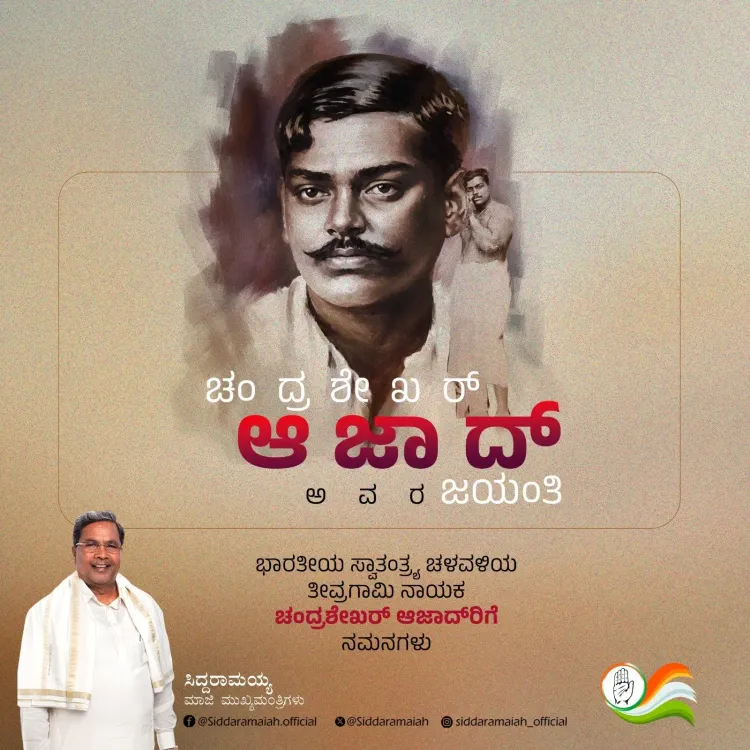
Karnataka Chief Minister Siddaramaiah on Thursday, 23 July 2026, paid tribute to revolutionary freedom fighter Chandra Shekhar Azad, honouring his lifelong resistance against British colonial rule and his role in uniting patriotic youth under the banner of armed struggle for India's independence.
Context
In his post, Siddaramaiah described Azad as a 'proud son of Mother India' (Bharatambeya hemmeyya putra) who 'tormented the British authoritarian empire throughout his life.' He recalled how Azad resolved to respond to British oppression 'in their own language' — through armed resistance — and brought together patriotic youth to breathe life into a revolutionary organisation.
The Chief Minister also wrote that 'the free life we enjoy today is the fruit of the sacrifice and martyrdom of crores of patriots like Chandra Shekhar Azad,' urging citizens to remember and bow before them.
Policy Backdrop
Chandra Shekhar Azad co-founded the Hindustan Socialist Republican Association (HSRA) in 1928, an organisation that advocated armed resistance and socialist ideals against British colonial rule. Azad remained one of its most prominent leaders, evading British capture for years before dying in a police encounter in Allahabad in 1931.
The HSRA coordinated several high-profile revolutionary actions during the independence movement and drew in a generation of young nationalists who rejected purely non-violent methods. Azad famously vowed never to be captured alive by the British — a pledge he kept until his death.
Stakeholders and Impact
Indian political leaders across parties regularly issue public tributes to independence-era revolutionaries on birth and death anniversaries. For Congress leaders in Karnataka, such commemorations serve to connect the party's governance narrative with the broader national history of anti-colonial sacrifice.
The tribute is directed particularly at Indian youth, echoing Azad's own legacy of mobilising young patriots. Siddaramaiah's post reinforces a recurring Congress theme: that contemporary freedoms are built on the sacrifices of revolutionary figures who chose confrontation over accommodation.
What's Next
As India approaches its independence anniversary in August, state governments and cultural bodies typically organise commemorative events honouring revolutionary figures such as Azad. Karnataka may see curriculum updates or state-level programmes that spotlight the contributions of armed revolutionaries alongside mainstream independence movement leaders.
Such tributes also signal the Congress party's intent to anchor its political identity in a broad reading of India's freedom struggle — one that includes both Gandhian non-violence and revolutionary resistance.
Point of View
Armed wing. By spotlighting the HSRA and Azad's confrontational resistance, the Karnataka CM signals that the Congress narrative of freedom is not limited to Gandhian non-violence. As national independence anniversaries approach, such posts also serve a political function: reinforcing the party's historical legitimacy at a time when ownership of India's freedom struggle is actively contested across the political spectrum.
NationPress
23 Jul 2026
Frequently Asked Questions
Why did Siddaramaiah pay tribute to Chandra Shekhar Azad?
Karnataka Chief Minister Siddaramaiah paid tribute to Chandra Shekhar Azad to honour the revolutionary freedom fighter's lifelong resistance against British colonial rule and his sacrifice for India's independence.
Who was Chandra Shekhar Azad?
Chandra Shekhar Azad was an Indian revolutionary who co-founded the Hindustan Socialist Republican Association in 1928 and led armed resistance against British rule until his death in a police encounter in Allahabad in 1931.
What was the Hindustan Socialist Republican Association?
The Hindustan Socialist Republican Association (HSRA) was a revolutionary organisation founded in 1928 that advocated armed resistance and socialist ideals against British colonial rule in India, with Azad as one of its central leaders.
When did Chandra Shekhar Azad die?
Chandra Shekhar Azad died in 1931 during a police encounter in Allahabad, having vowed never to be captured alive by the British — a pledge he kept until the end.
What did Siddaramaiah say about Chandra Shekhar Azad?
Siddaramaiah called Azad a 'proud son of Mother India' who tormented the British empire throughout his life, united patriotic youth, and whose sacrifice — along with crores of other patriots — made India's present freedom possible.