CM Soren Directs Revenue Dept on Land, AI, and Hiring
Synopsis
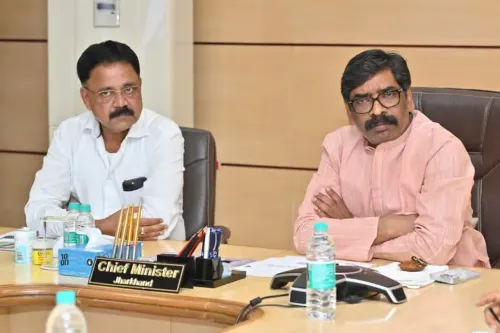
Chief Minister Hemant Soren chaired a Revenue, Tax and Registration Department meeting on June 1, 2026, directing officials to settle sairat and khas mahal land matters, digitise departmental work using AI, distribute pattas to landless people, and urgently fill vacant amin posts.
Key Takeaways
CM Hemant Soren chaired a Revenue, Tax and Registration Department meeting on June 1, 2026 .
Directives were issued on settling sairat and khas mahal land matters pending with the department.
Officials were instructed to pursue digitisation of departmental functions and integrate AI technology into workflows.
The government directed that pattas (land title documents) be issued to landless people in the state.
Vacant amin posts (land surveyors) are to be filled 'at the earliest' to ease ground-level land administration bottlenecks.
The directives align with the national Digital India Land Records Modernization Programme and Jharkhand's broader tribal land rights agenda.
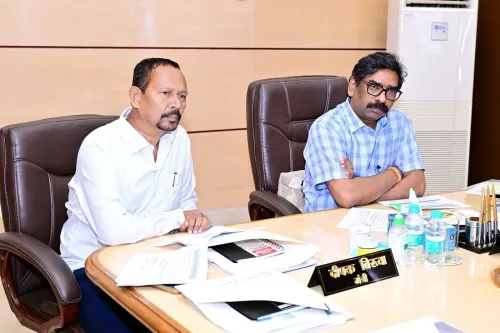
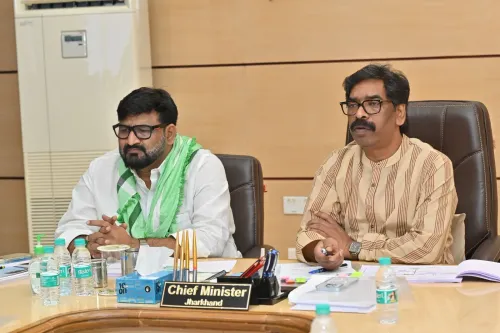
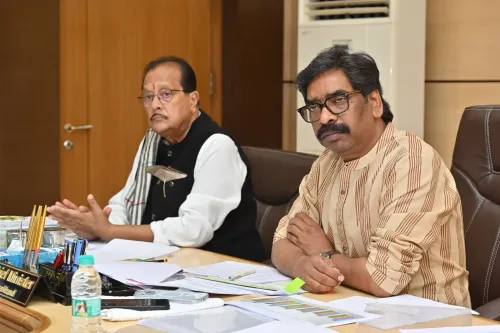
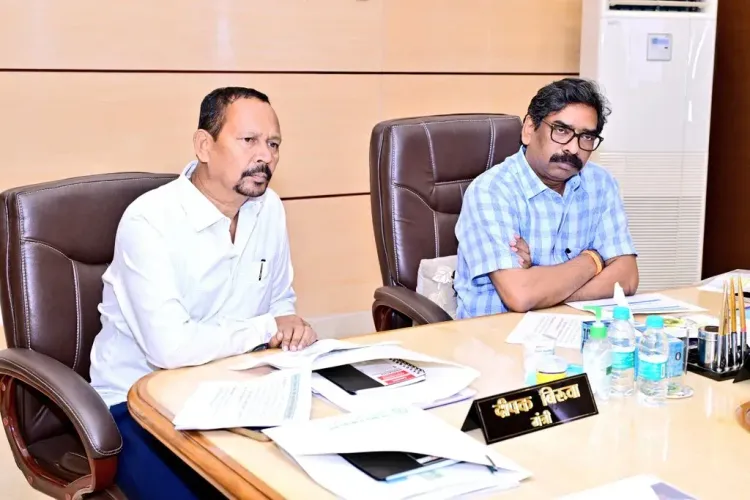
Jharkhand Chief Minister Hemant Soren on Monday, June 1, 2026, chaired a review meeting of the Revenue, Tax and Registration Department, issuing a series of directives covering land settlement, digital transformation, and staff recruitment. The instructions ranged from resolving pending matters related to sairat and khas mahal lands to deploying Artificial Intelligence in departmental workflows and expediting the filling of vacant amin posts.
In his post on X, CM Soren wrote: 'aaj rajaswa, kar aur nibandhan vibhag ki baithak mein adhikariyon ko sairat ki bandobasti tatha khas mahal bhoomi se jude vishay...' — 'Today, in the meeting of the Revenue, Tax and Registration Department, officers were given several directives including matters related to the settlement of sairat and khas mahal land, digitalization of the department's various functions and use of AI technology, granting land pattas to landless people, and filling vacant amin posts at the earliest.'
Context
Sairat refers to natural resources such as rivers, ponds, and forests that yield revenue, while khas mahal lands are government-owned properties managed directly by the state. Both categories have historically been contentious in Jharkhand, where tribal communities and landless populations have long sought formal settlement rights. The Chief Minister's directive to resolve pending bandobasti (settlement) matters signals a push to address long-standing administrative backlogs.
The instruction to issue pattas (land title documents) to landless individuals aligns with the state government's broader agenda of securing land rights for the most economically vulnerable, a cause closely tied to the Jharkhand Mukti Morcha's founding ideology of tribal and agrarian rights.
Policy Backdrop
Jharkhand's revenue administration has been undergoing incremental modernisation under the national Digital India Land Records Modernization Programme, launched in 2008, which mandates digitisation of land records across all states to reduce disputes and improve transparency. CM Soren's directive to accelerate digitisation and integrate AI technology into departmental processes places Jharkhand within a wider national trend of states adopting technology to overhaul revenue administration.
The use of AI for functions such as land mapping, mutation tracking, and fraud detection has been piloted in several Indian states, and Jharkhand's move to formally direct its revenue department to explore such tools marks a notable step in the state's administrative modernisation agenda.
Stakeholders and Impact
Landless families — many of them from tribal and marginalised communities — stand to benefit most directly from the patta distribution directive, as formal land titles provide legal security, access to credit, and protection from eviction. Revenue officials and field-level staff, including amins (land surveyors), are also central to this exercise, as they are responsible for ground-level measurement and verification of land parcels.
The directive to urgently fill vacant amin posts addresses a structural bottleneck: shortages in this cadre have historically delayed land surveys, mutation approvals, and dispute resolution across Jharkhand's districts. Faster recruitment is expected to accelerate the entire land administration pipeline.
What's Next
The outcomes of this meeting will be closely watched through progress reports on amin recruitments and the rollout of any AI-assisted land mapping pilots in Jharkhand's districts. The pace at which the department moves on khas mahal settlements and patta distribution will serve as a key indicator of the government's administrative resolve on land reform ahead of the next political cycle.
Point of View
Technology-forward governance image. The emphasis on AI and digitisation is consistent with a national trend but carries particular urgency in Jharkhand, where opaque land records have historically enabled encroachment on tribal holdings. Expediting amin recruitment is less glamorous but arguably more consequential — field-level staffing gaps have long been the silent saboteur of land reform in the state. Taken together, these directives suggest the Soren government is attempting to close the gap between policy intent and on-ground delivery ahead of a politically sensitive period.
NationPress
15 Sept 2026
Frequently Asked Questions
What is khas mahal land in Jharkhand?
Khas mahal refers to government-owned land managed directly by the state revenue department, including properties that historically generated income for the crown. In Jharkhand, disputes over khas mahal land frequently involve encroachments and competing claims from local communities.
What is a sairat in the context of Jharkhand land administration?
Sairat denotes natural resources — such as rivers, ponds, quarries, and forests — from which the government earns revenue through auctions or leases. The bandobasti (settlement) of sairat resources involves fixing terms of use and ensuring proper revenue collection.
What is a patta in India?
A patta is an official land title document issued by the state government that grants an individual formal ownership or occupancy rights over a piece of land. For landless and tribal communities, receiving a patta provides legal security and access to government schemes.
What does an amin do in revenue administration?
An amin is a field-level land surveyor in the Indian revenue system responsible for physically measuring plots, verifying boundaries, and assisting in mutation and settlement processes. Vacancies in this post directly slow down land record updates and dispute resolution.
How is AI being used in land administration in India?
Several Indian states are piloting AI tools for tasks such as automated land mapping using satellite imagery, detecting unauthorised mutations, and streamlining property registration. Jharkhand's Revenue Department has now been directed to explore similar AI-driven digitisation of its functions.