CM Soren: Tree Planting Alone Won't Save Jharkhand's Forests
Synopsis
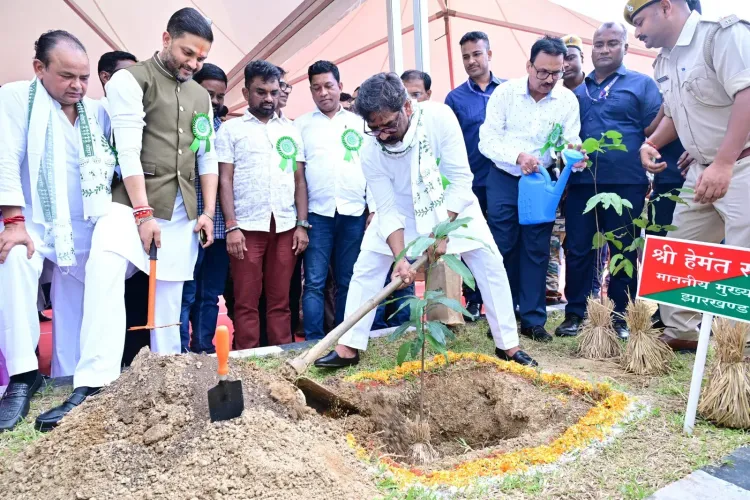
Chief Minister Hemant Soren on 11 August 2026 called for campaigns focused on post-planting tree care — fertilisation, nourishment, and individual ownership — arguing that plantation drives alone cannot protect Jharkhand's biodiversity and India's vast ecological heritage.
Key Takeaways
CM Hemant Soren on 11 August 2026 called for special campaigns covering fertilisation and sustained care of saplings, not just tree plantation.
He stressed that individual personal involvement is essential to protect the earth's biodiversity.
Jharkhand sits on the ecologically sensitive Chota Nagpur plateau and faces forest pressure from mining and industrial activity.
India's National Forest Policy 1988 set a 33 percent forest cover target that remains unmet, partly due to poor post-planting maintenance.
The Green India Mission (2008) similarly emphasises community participation for sustained forest cover — a principle Soren's remarks reinforce.
The call implicitly challenges the efficacy of one-day ceremonial plantation drives common across Indian states.
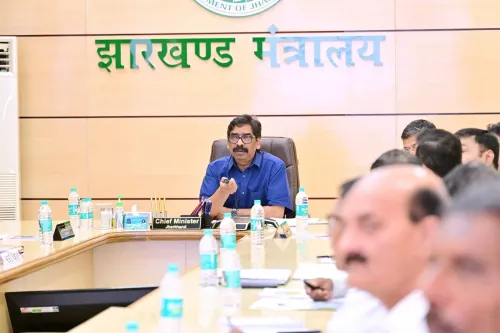
Planting a sapling is the easy part. Keeping it alive is where India's green ambitions have long stumbled — and on Tuesday, 11 August 2026, Chief Minister Hemant Soren of Jharkhand put that uncomfortable truth at the centre of a public call to action.
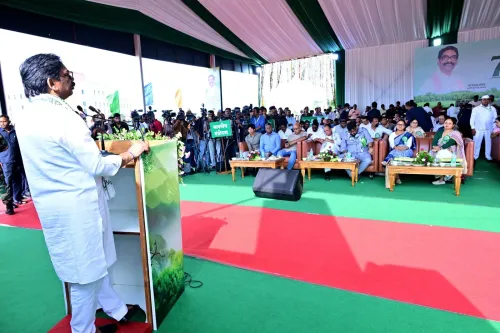
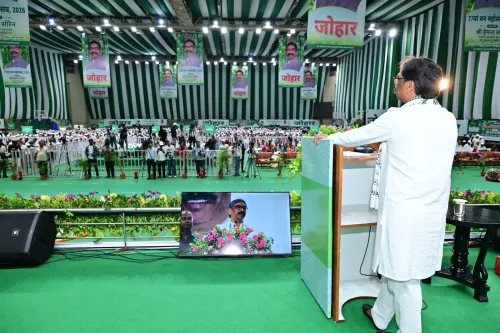
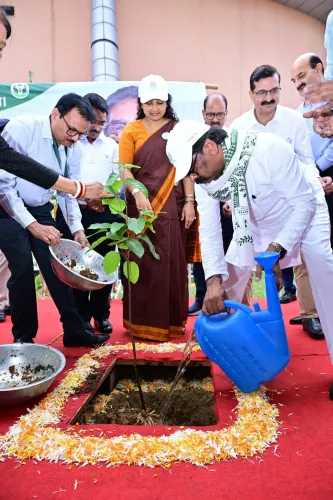
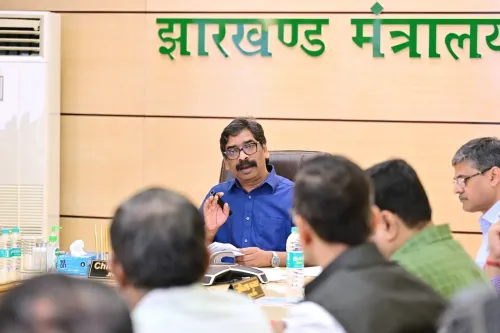
Quoted by the Chief Minister's Office of Jharkhand on X, Soren said: 'Special campaigns should be run not just for tree plantation but also for fertilising the plants, caring for them properly, and providing them nourishment. Until we connect with this mission personally, protecting this vast earth and its biodiversity will be extremely difficult.'
Why survival rates are the real test
India plants hundreds of millions of trees every monsoon season under national and state programmes — yet independent assessments have repeatedly flagged that a large share of saplings do not survive their first year. The gap between plantation targets and actual forest cover gains points to one persistent failure: post-planting care. Soren's remarks directly address this gap, calling for structured follow-up — fertilisation, watering, monitoring — rather than one-day ceremonial drives.
Jharkhand, spread across the Chota Nagpur plateau, holds some of eastern India's most ecologically significant forests and is home to a large tribal population whose livelihoods are tied to forest health. The state also faces sustained pressure from mining and industrial activity, making forest cover a live political and ecological issue, not an abstract policy goal.
Individual ownership, not just state machinery
The sharpest edge of Soren's message is the demand for personal responsibility. He is not asking citizens to wait for the forest department — he is asking them to own the outcome. That framing echoes the spirit of India's Green India Mission, launched under the National Action Plan on Climate Change in 2008, which explicitly calls for community participation to sustain forest cover rather than treating afforestation as a purely bureaucratic exercise. The National Forest Policy of 1988 set a target of 33 percent forest cover for India — a benchmark the country has yet to fully achieve nearly four decades on.
For Jharkhand, where tribal communities have historically been the most effective custodians of forest land, the call to individual engagement carries particular resonance. The Chief Minister is, in effect, asking those communities — and every citizen — to close the loop that government plantation drives routinely leave open.
The real measure of this call will come in whether the state backs it with revised maintenance guidelines, survival audits, and budget allocations in upcoming environment department reviews. Words plant no trees. But the right accountability framework might.
Point of View
While politically visible, have delivered limited ecological returns — a pattern common across Indian states. By invoking personal responsibility alongside state campaigns, he is attempting to shift the accountability frame from government targets to citizen ownership, which aligns with the community-stewardship model embedded in India's Green India Mission. For Jharkhand, where forests are both a tribal livelihood base and a contested resource frontier, this framing carries added political weight: it positions the JMM government as ecologically serious at a time when mining pressures on the state's forests remain a live controversy. The real test will be whether this rhetoric is followed by measurable survival-rate audits and revised budget priorities.
NationPress
11 Aug 2026
Frequently Asked Questions
What did CM Hemant Soren say about tree plantation in Jharkhand?
On 11 August 2026 , CM Soren said campaigns should go beyond planting trees to include fertilising, properly caring for, and nourishing saplings, and that personal involvement by every citizen is essential to protect biodiversity.
Why is tree survival rate a problem in India's afforestation drives?
A significant share of saplings planted in annual drives do not survive their first year due to inadequate follow-up care such as watering, fertilisation, and monitoring — a gap that limits actual forest cover gains despite large plantation targets.
What is the Green India Mission?
The Green India Mission is one of eight missions under India's National Action Plan on Climate Change , launched in 2008 , which promotes afforestation and community participation to achieve and sustain increased forest cover.
What is Jharkhand's forest and environment situation?
Jharkhand is an eastern Indian state on the Chota Nagpur plateau with significant forest areas, but these face sustained pressure from mining and industrial activity, making forest conservation a critical ecological and political issue.
What is India's forest cover target under the National Forest Policy?
India's National Forest Policy of 1988 set a target of 33 percent forest cover across the country, a benchmark that has not yet been fully achieved nearly four decades after the policy was enacted.