CM Sukhu: 1,000 More E-Buses in 6 Months, Zero Corruption Tolerated
Synopsis
CM Sukhvinder Singh Sukhu announced 1,000 additional electric buses for Himachal Pradesh within six months, citing tender results where buses exceeded the 180 km range spec, a 12-year free-maintenance clause, and a payment freeze threat to deter corruption, all aimed at making HRTC self-reliant.
Key Takeaways
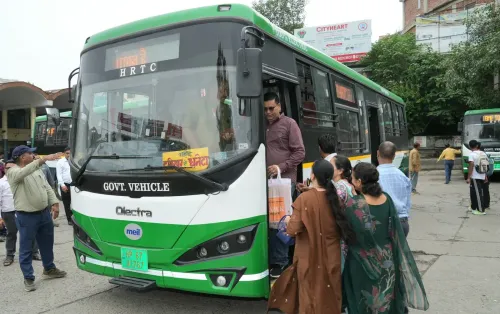
CM Sukhu announced 1,000 more electric buses will be added to Himachal Pradesh's fleet within the next six months .
The original budget commitment was for 300 electric buses ; the new target triples that ambition.
Two companies participated in the tender; their buses achieved 246 km and 276 km on a single charge, well above the mandated 180 km minimum .
Supplying companies will maintain the electric buses free of charge for 12 years — a first for Himachal's public transport fleet.
Payment for the buses has not yet been released ; the government will freeze payment entirely if any corruption is detected.
The overarching goal is to make HRTC financially self-reliant while advancing environmental conservation in the state.
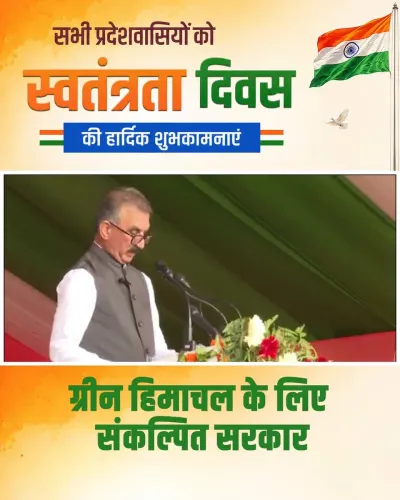
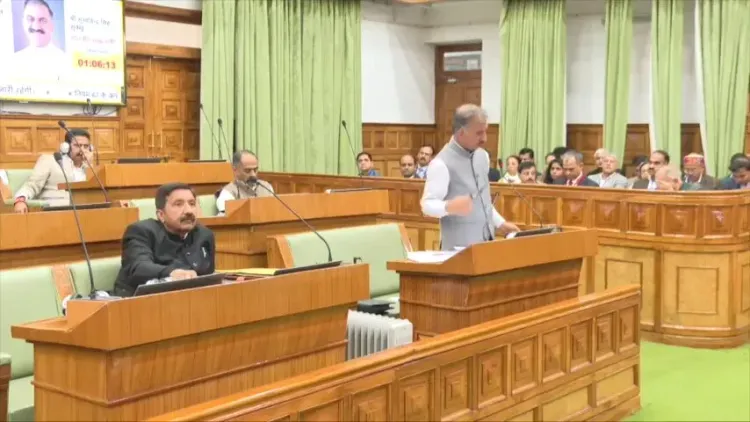
Himachal Pradesh Chief Minister Sukhvinder Singh Sukhu has thrown down a clear marker on the state's electric bus programme: 1,000 additional electric buses will arrive within the next six months, and not a single rupee will be paid to suppliers if corruption surfaces anywhere in the process. The announcement, made on 20 November 2026, raises the ambition of a fleet electrification drive that began with a promise of just 300 buses in the state's earlier budget.
Range that beat the brief — by miles
The tender set a baseline that would challenge any manufacturer: a minimum range of 180 kilometres on a single charge, a standard designed to keep buses viable across Himachal's demanding hill routes. Two companies entered the race. Their buses, when tested, didn't merely clear the bar — they demolished it, clocking 246 km and 276 km respectively on a single charge. That margin matters enormously in a state where a bus breaking down on a mountain pass is not an inconvenience but a crisis.
12 years of free maintenance — a first for Himachal
What makes this procurement structurally different from every previous bus purchase in the state, as CM Sukhu explained, is the maintenance clause. Historically, no outside company maintained Himachal's bus fleet — the burden fell entirely on HRTC, the Himachal Road Transport Corporation. Under the new terms, the supplying companies will service these electric buses free of charge for 12 years. For a cash-strapped state transport body, that shifts the lifecycle cost calculation dramatically.
Payment freeze as a corruption firewall
CM Sukhu was blunt about accountability: payments for the buses have not yet been released. The unspent payment is not a bureaucratic delay — it is a deliberate lever. 'If a corruption case surfaces anywhere, we will freeze the entire payment,' he stated. It is a rare public articulation of financial pressure as a governance tool, and it signals that the administration intends to watch this procurement closely as buses move from the factory to Himachal's roads.
HRTC's road to self-reliance
The larger vision Sukhu outlined is about more than green buses. He framed the entire electric mobility push as a twin agenda — environmental conservation alongside revenue strengthening — with the explicit goal of making HRTC self-reliant. India's state road transport corporations have long struggled with mounting losses driven by diesel costs, ageing fleets, and thin fare revenues. If the 12-year maintenance-free model and the lower per-kilometre running cost of electric buses hold up in practice, HRTC could become a rare STC that stops bleeding red ink. That is the bet CM Sukhu is publicly placing — and the next six months of procurement will be the first real test of whether it pays off.
Point of View
If enforced, represents a genuine structural shift in how state transport corporations manage lifecycle costs, a persistent vulnerability across India's loss-making STCs. The payment-freeze warning is unusual in its directness and positions Sukhu as a reformer willing to weaponise financial levers against procurement corruption. Whether the 1,000-bus target within six months is achievable, and whether the terrain-tested range figures hold in full commercial operation, will determine if this becomes a replicable model — or another ambitious announcement outpaced by delivery gaps.
NationPress
20 Nov 2026
Frequently Asked Questions
How many electric buses is Himachal Pradesh planning to buy?
CM Sukhu announced plans to add 1,000 more electric buses within the next six months, on top of the initial commitment of 300 electric buses announced in the state's earlier budget.
What is the range of Himachal Pradesh's new electric buses on a single charge?
The tender required a minimum range of 180 km per charge . The two participating companies' buses achieved 246 km and 276 km respectively on a single charge during evaluation.
What is the maintenance arrangement for HRTC's new electric buses?
The supplying companies will provide free maintenance for 12 years — a first for Himachal Pradesh's public transport fleet, where previously no external company maintained state buses.
What happens if corruption is found in the electric bus procurement?
CM Sukhu stated that payment for the buses has not yet been released and that the government will freeze the entire payment if any corruption case surfaces in the procurement process.
What is the goal behind HRTC's electric bus expansion?
The stated goals are twofold: advancing environmental conservation in Himachal Pradesh and strengthening the state's revenue position, with the ultimate aim of making HRTC financially self-reliant .