CM Assam Office: Boiler Safety Workshop Held in Guwahati
Synopsis
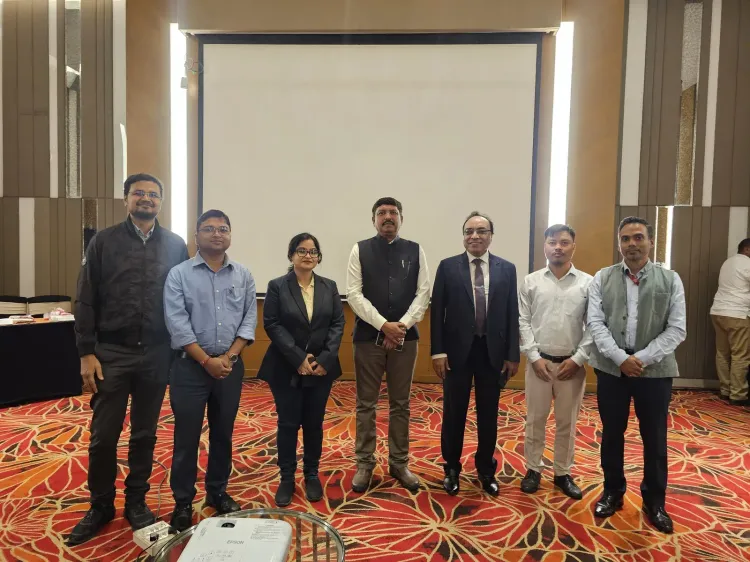
On 20 November 2026, the National Productivity Council and DPIIT hosted a one-day boiler safety workshop in Guwahati, drawing engineers and owners from 18 Assam industries — including IOCL, NRL, OIL, APGCL and NTPC — alongside officials from the Inspectorate of Boilers, Assam.
Key Takeaways
A one-day boiler safety and maintenance workshop was held in Guwahati on 20 November 2026 .
The event was organised by the National Productivity Council and sponsored by DPIIT .
Participants came from 18 industries , including IOCL, NRL, OIL, APGCL and NTPC .
Officials from the Inspectorate of Boilers, Assam — the state's regulatory authority — also attended.
The workshop aligns with India's statutory boiler safety framework under the Indian Boilers Act, 1923 .
The CMO framed the event as part of Assam's commitment to safer industries and worker protection .
High-pressure boilers power some of Assam's most critical industrial installations — and on 20 November 2026, the state took a focused step to make sure they stay that way. The Chief Minister's Office of Assam announced that a one-day workshop on the safe and efficient operation and maintenance of boilers was held in Guwahati, organised by the National Productivity Council (NPC) and sponsored by the Department for Promotion of Industry and Internal Trade (DPIIT).
Eighteen industries, one safety agenda
The workshop brought together boiler engineers, attendants and owners from 18 industries — a cross-section that included public-sector heavyweights such as Indian Oil Corporation Limited (IOCL), Numaligarh Refinery Limited (NRL), Oil India Limited (OIL), Assam Power Generation Corporation Limited (APGCL) and NTPC. Officials from the Inspectorate of Boilers, Assam — the state's statutory authority for boiler licensing and enforcement — also participated, reinforcing the regulatory dimension of the event.
The gathering reflected a deliberate convergence of operators, engineers and inspectors under one roof. That combination — those who run the boilers, those who maintain them, and those who inspect them — is precisely the triangle that determines whether safety frameworks translate from paper to plant floor.
A century-old law, a present-day imperative
The legal backbone for India's boiler safety regime stretches back to the Indian Boilers Act, 1923, complemented by the Indian Boiler Regulations, 1950 — a framework that governs registration, inspection, and safe operation across the country. For Assam, with its dense concentration of oil refineries, gas processing units and thermal power plants, compliance with this framework is not abstract bureaucracy. A failure in a high-pressure system can be catastrophic.
The National Productivity Council, an autonomous body under DPIIT, has long run capacity-building programmes that align state-level industrial practices with national safety and productivity standards. Workshops of this kind are part of a steady rhythm of central-ministry sponsorship aimed at keeping state operators current on best practices.
Assam's industrial safety push
The CMO's framing — 'Safe Boilers, Safe Workers, Prosperous Assam' — links worker protection directly to economic ambition, a signal that the state views industrial safety not as a compliance burden but as a foundation for growth. Assam's oil, gas and power sectors employ thousands and anchor the region's industrial economy; any disruption from safety failures ripples far beyond the plant gate.
Possible next steps include follow-up audits by the Inspectorate of Boilers and updated state-level protocols for boiler maintenance — the downstream action that turns a one-day workshop into lasting change.
The message from Guwahati is straightforward: when the people who run, maintain and regulate Assam's boilers sit in the same room, the state's industrial safety culture gets a little harder to ignore.
Point of View
With DPIIT using the NPC as a delivery mechanism to align Assam's boiler operators with national standards. For a state whose economic backbone — oil refining, gas processing, thermal power — runs on high-pressure systems, such capacity-building carries real risk-mitigation value beyond symbolic optics. The CMO's public amplification of the event signals that the Himanta Biswa Sarma administration is keen to brand industrial governance as a pillar of its 'prosperous Assam' narrative. Whether one-day workshops translate into measurable safety outcomes will depend on what follow-up inspection and enforcement action the Inspectorate of Boilers takes in the months ahead.
NationPress
20 Nov 2026
Frequently Asked Questions
What was the boiler safety workshop held in Guwahati about?
The workshop, held on 20 November 2026 , focused on the safe and efficient operation and maintenance of boilers. It was organised by the National Productivity Council and sponsored by DPIIT , bringing together engineers, attendants and owners from 18 Assam industries.
Which companies participated in the Guwahati boiler workshop?
Participants came from 18 industries , including IOCL, NRL (Numaligarh Refinery Limited), OIL (Oil India Limited), APGCL (Assam Power Generation Corporation Limited) and NTPC , along with officials from the Inspectorate of Boilers, Assam.
What is the National Productivity Council and what does it do?
The National Productivity Council (NPC) is an autonomous body under DPIIT that conducts training and productivity improvement programmes across Indian industries, including safety-related capacity building workshops sponsored by central ministries.
What law governs boiler safety in India?
Boiler safety in India is governed by the Indian Boilers Act, 1923 , together with the Indian Boiler Regulations, 1950 , which establish the national framework for boiler registration, inspection and safe operation.
What is the Inspectorate of Boilers in Assam?
The Inspectorate of Boilers, Assam is the state's statutory regulatory authority responsible for enforcing boiler safety norms and licensing under central legislation. Its officials participated in the 20 November workshop.