CM Bhupendra Patel Wraps 72-Hour Dahod Tour at Gujarat-MP Border Village
Synopsis
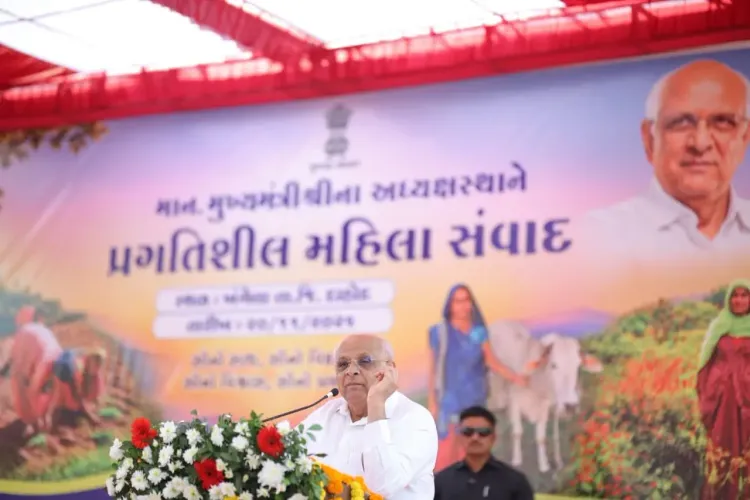
Chief Minister Bhupendra Patel ended a 72-hour stay in Dahod's tribal Garbada villages by dialoguing with rural women at border village Khangela, touring Sakhi Mandal stalls, and urging a shift toward natural farming under the Viksit Bharat vision.
Key Takeaways
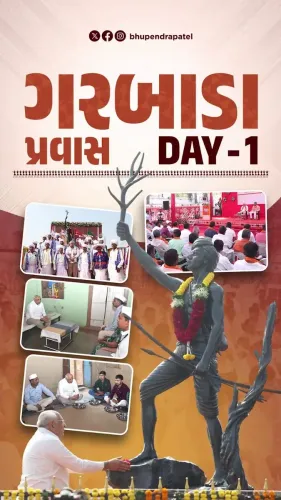
CM Bhupendra Patel completed a 72-hour immersion tour across tribal villages in Garbada block, Dahod district , concluding on November 20, 2026 .
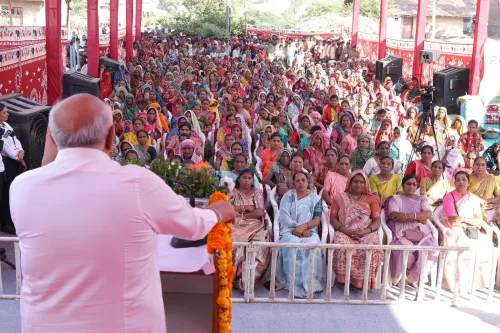
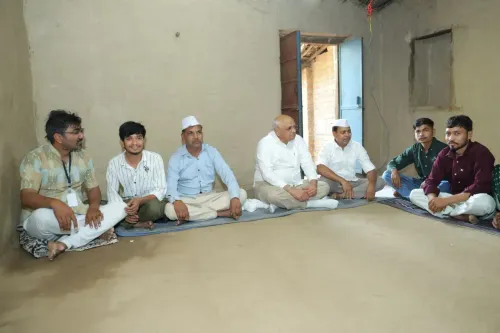
The final stop was Khangela village on the Gujarat-Madhya Pradesh border , where CM Patel held a dialogue with rural women on self-reliance.
Progressive women presented their own self-reliance stories directly to the Chief Minister; he also visited Sakhi Mandal exhibition stalls.
CM Patel gave special emphasis to shifting tribal farmers toward natural farming as a priority in tribal areas.
The tour was framed around welfare scheme delivery under PM Narendra Modi , with the CM noting rising public trust and expectations in tribal regions.
The visit aligns with the Vanbandhu Kalyan Yojana framework and the broader Viksit Bharat / Viksit Gujarat development vision.
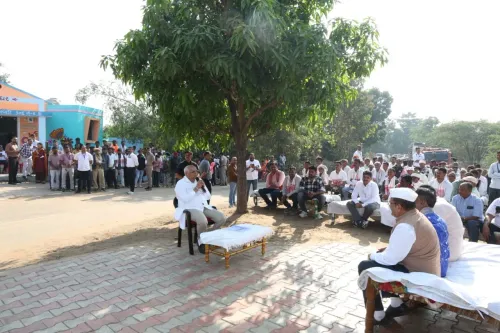
At the very edge of Gujarat — where the state meets Madhya Pradesh in the tribal heartland of Dahod district — Chief Minister Bhupendra Patel sat with rural women in the border village of Khangela on Friday, November 20, 2026, closing out a 72-hour ground-level immersion in the Garbada block villages that is rare even by the standards of outreach politics.
Speaking after three days of living among tribal communities, the Chief Minister's Office of Gujarat shared that CM Patel said the experience gave him 'ek alag j santosh' — a satisfaction of a different kind altogether. He credited the development works and welfare schemes reaching tribal areas under Prime Minister Narendra Modi for a visible shift: people's trust in the government has grown, and so have their expectations — both rising together, a sign that delivery is being felt on the ground.
Khangela's Women Tell Their Own Story
The final day's highlight was not a speech from a podium but a conversation. Progressive women from the village presented their own accounts of self-reliance before the Chief Minister — a deliberate format that inverted the usual dynamic of a government visit. CM Patel also toured the stalls put up by Sakhi Mandals — Gujarat's network of women's self-help groups — where members displayed products from their micro-enterprises, putting economic agency on direct view.
Sakhi Mandals operate as collectives that pool resources, access micro-credit, and run small-scale production units. In tribal districts like Dahod, these groups have become a critical channel for translating welfare scheme intent into household-level income, often bridging the gap that formal banking and employment structures leave behind.
Natural Farming Push in Tribal Eastern Gujarat
The Chief Minister used the Khangela dialogue to press a specific economic pivot: a shift toward natural farming in tribal areas. The emphasis was deliberate — Dahod's predominantly Scheduled Tribe population has historically practised low-input agriculture, and the state sees that existing culture as a foundation to formalise and scale rather than replace. The push aligns with both the central government's broader natural farming mission and Gujarat's own rural economy goals.
The tour also wove in the larger Viksit Bharat and Viksit Gujarat framework — the dual national-state vision of developed India — invoking it not as a slogan but as a collective resolve, calling on communities to work alongside government to realise it. The Vanbandhu Kalyan Yojana, launched in 2014 to improve socio-economic conditions in tribal regions, forms the policy spine beneath this kind of outreach: getting senior government figures into the field to check whether that spine is actually holding weight.
What a 72-Hour Stay Signals
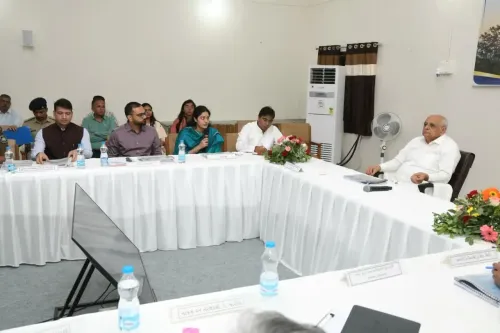
Three days in Garbada's villages is not a standard inspection tour. It signals an administrative intent to bypass the filtered reports that reach state capitals and make direct contact with last-mile realities. For Dahod — a district that sits at a state border and therefore at the edge of multiple bureaucratic jurisdictions — that signal carries particular weight. The question the tour leaves open is what policy adjustments, budget allocations, or scheme expansions follow once CM Patel is back in Gandhinagar.
Watch for natural farming pilot announcements in Dahod and neighbouring eastern Gujarat districts, and for any Sakhi Mandal support expansions in the next state budget cycle. The outreach was vivid. The delivery will be in the numbers that follow.
Point of View
Culminating at a border village, is a calculated piece of ground-level politics: it lets the Chief Minister claim unmediated contact with last-mile welfare delivery and builds a personal narrative of accessibility that is distinct from press-conference governance. The push for natural farming in Scheduled Tribe areas is also worth reading as a convergence of ecological branding and cost-of-input economics — framing an existing practice as a government-backed aspiration. The dual invocation of Viksit Bharat and Viksit Gujarat ties state-level outreach to the central government's developmental lexicon, reinforcing political alignment ahead of any forthcoming budget or election cycle. The real test, as always, is whether the symbolic intensity of the visit translates into measurable scheme expansion or funding commitments in Dahod's villages.
NationPress
20 Nov 2026
Frequently Asked Questions
Why did CM Bhupendra Patel visit Dahod district?
CM Bhupendra Patel conducted a 72-hour outreach tour of tribal villages in Dahod's Garbada block to review welfare scheme delivery, engage with rural women, and promote natural farming in the region.
What is Khangela village and where is it located?
Khangela is a remote village on the Gujarat-Madhya Pradesh border, located in the tribal Dahod district of eastern Gujarat.
What are Sakhi Mandals in Gujarat?
Sakhi Mandals are women's self-help groups in Gujarat that pool resources, access micro-credit, and run small-scale enterprises to promote economic self-reliance among rural and tribal women.
What is the Vanbandhu Kalyan Yojana?
The Vanbandhu Kalyan Yojana is a central government scheme launched in 2014 to improve the socio-economic conditions of tribal communities across India, including through infrastructure, education, and livelihood support.
What did CM Patel say about natural farming in tribal areas?
CM Patel emphasised the importance of shifting tribal farmers toward natural farming during his Dahod visit, positioning it as a key development priority for Scheduled Tribe regions in Gujarat.