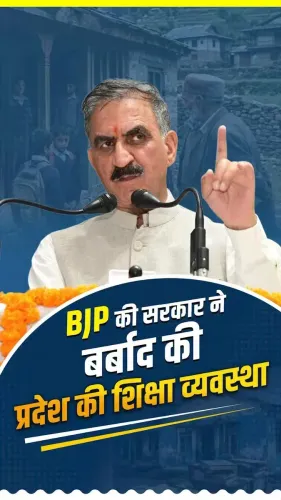
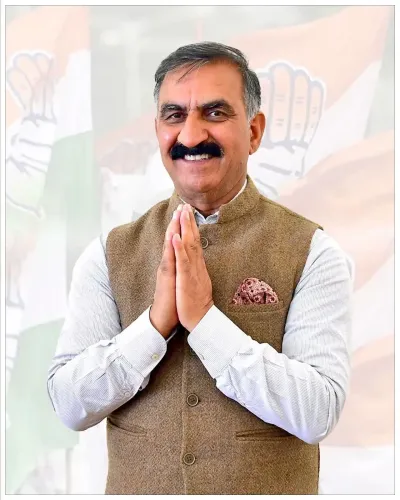
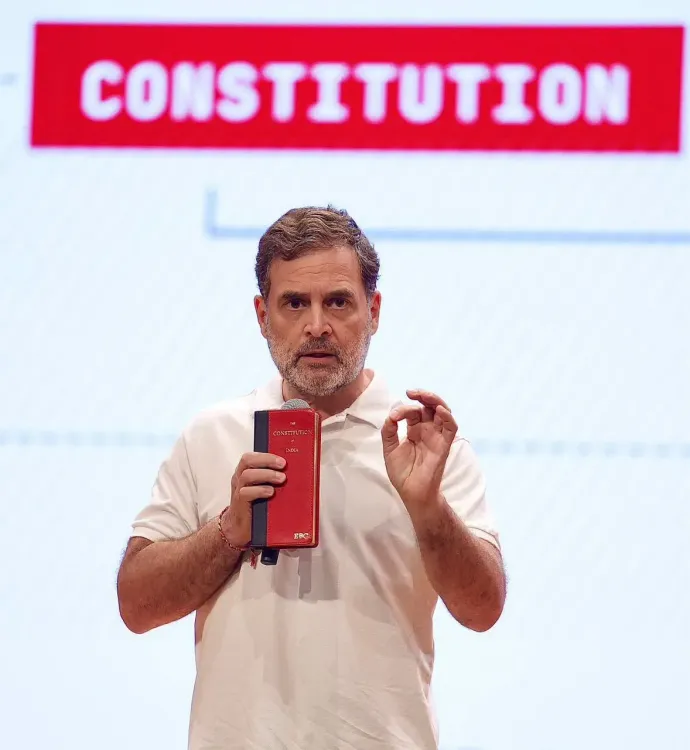
CM Sukhu backs Rahul Gandhi's call for CEC Gyanesh Kumar's resignation
Synopsis
HP Chief Minister Sukhvinder Singh Sukhu backed Rahul Gandhi's call for Chief Election Commissioner Gyanesh Kumar's resignation on September 24, 2026, arguing that questioning constitutional institutions is a democratic duty when their impartiality is in doubt.
Key Takeaways
CM Sukhvinder Singh Sukhu publicly endorsed Rahul Gandhi's demand for Chief Election Commissioner Gyanesh Kumar's resignation on September 24, 2026 .
Sukhu framed the demand as a constitutional obligation, not partisan politics, arguing citizens' voting rights must never be compromised.
Rahul Gandhi has questioned the Election Commission of India's functioning and electoral processes — including EVM use — consistently since 2019 .
The post marks a coordinated Indian National Congress posture, with a sitting Chief Minister amplifying the Leader of Opposition's institutional challenge.
Sukhu called for preserving 'the dignity of the Constitution, the autonomy of institutions, and electoral transparency' as the real strength of democracy.
A formal response from the Election Commission or the central government, and potential parliamentary debate on electoral reforms, are the key developments to watch.
A sharp political challenge to the Election Commission of India landed on Thursday, September 24, 2026, as Himachal Pradesh Chief Minister Sukhvinder Singh Sukhu threw his weight behind Leader of Opposition Rahul Gandhi's demand for the resignation of Chief Election Commissioner Gyanesh Kumar — framing it not as partisan point-scoring, but as a constitutional duty.
Writing in Hindi, CM Sukhu declared: 'लोकतंत्र की बुनियाद संविधान, नागरिक अधिकारों और स्वतंत्र संवैधानिक संस्थाओं पर टिकी है' ('The foundation of democracy rests on the Constitution, citizens' rights, and independent constitutional institutions'). When serious questions arise about those institutions' impartiality and autonomy, he wrote, demanding answers from those in power becomes a democratic obligation — not an option.
Rahul Gandhi's sustained challenge to electoral institutions
Rahul Gandhi has, for several years, kept the functioning of the Election Commission of India squarely in the public conversation — from concerns over Electronic Voting Machines to the independence of constitutional appointments. Sukhu's post frames that persistence approvingly: 'He has continuously placed before the country issues relating to the electoral system, constitutional institutions, and citizens' right to vote.'
The core argument Gandhi has advanced, and which Sukhu now amplifies, is unambiguous: 'लोकतंत्र में अंतिम शक्ति जनता के पास है' — 'In a democracy, ultimate power rests with the people' — and no compromise of any kind is acceptable on the freedom and dignity of their vote.
Why the CEC resignation demand matters now
The most pointed element of the post is its direct naming of Chief Election Commissioner Gyanesh Kumar. Sukhu states that Gandhi has raised 'serious questions' about Kumar's role and is demanding his resignation. The Election Commission is a constitutionally entrenched body; calls for a sitting CEC's exit from a senior opposition leader backed by a sitting Chief Minister carry significant institutional weight.
The Indian opposition has periodically contested the Commission's neutrality — particularly around national and state election cycles and the process of senior appointments. Those debates have historically intensified precisely when political stakes are highest. Congress's coordinated posture here — a state Chief Minister publicly amplifying the Leader of Opposition — signals this is a calibrated party position, not an isolated remark.
The constitutional argument Sukhu is making
Sukhu closes with a line that doubles as a political manifesto: 'संविधान की मर्यादा, संस्थाओं की स्वायत्तता और चुनावी पारदर्शिता बनी रहे — यही लोकतंत्र की असली शक्ति है' ('Let the dignity of the Constitution, the autonomy of institutions, and electoral transparency be preserved — this is the real strength of democracy'). It is a framing designed to place the onus of defence squarely on the ruling establishment: either vindicate the Commission's independence, or explain why you will not.
Whether the Election Commission or the central government responds formally — and what shape any parliamentary debate on electoral reforms now takes — will determine how far this moment travels beyond a social media post.
Point of View
Not just party-spokesperson weight. The direct naming of Chief Election Commissioner Gyanesh Kumar escalates a long-running critique of the Election Commission from structural to personal — a significant ratchet. Historically, such coordinated pressure campaigns have forced either a public defence of the institution or accelerated calls for legislative reform of the appointment process. The BJP-led central government's response — or silence — will itself become a political data point that Congress will likely use heading into the next electoral cycle.
NationPress
24 Sept 2026
Frequently Asked Questions
Why is Rahul Gandhi demanding Chief Election Commissioner Gyanesh Kumar's resignation?
Rahul Gandhi has raised serious questions about the role and conduct of Chief Election Commissioner Gyanesh Kumar , arguing that the impartiality and autonomy of the Election Commission of India are under threat. He has framed the resignation demand as necessary to protect free and fair elections and citizens' voting rights.
What did CM Sukhu say about the Election Commission?
Himachal Pradesh Chief Minister Sukhvinder Singh Sukhu stated that when serious questions arise about constitutional institutions' neutrality, demanding accountability becomes a democratic duty. He backed Gandhi's call for CEC Gyanesh Kumar's resignation and called for preserving the Constitution's dignity, institutional autonomy, and electoral transparency.
Who is Gyanesh Kumar and what is his role?
Gyanesh Kumar serves as the Chief Election Commissioner of India , the constitutional authority responsible for superintending and overseeing free and fair elections across the country.
Has Congress raised concerns about the Election Commission before?
Yes. Rahul Gandhi and the Indian National Congress have questioned the Election Commission's functioning and the use of Electronic Voting Machines in multiple statements and protests since 2019 , framing such concerns as essential to protecting democratic norms.
What happens next after the resignation demand?
Key developments to watch include any formal response from the Election Commission of India or the central government, and whether parliamentary discussions on electoral reforms gain momentum following this coordinated opposition demand.