CM Sukhu: Critical Care Upgrade Top Priority for HP
Synopsis
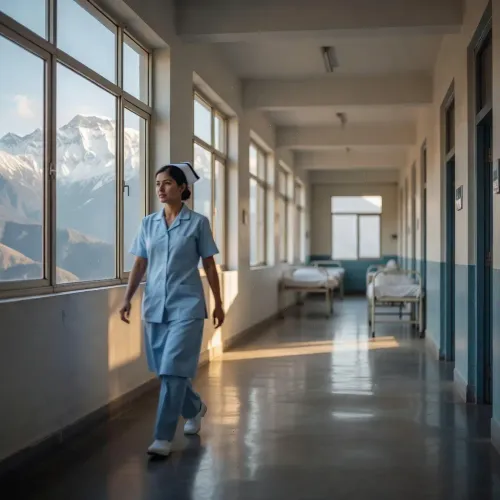
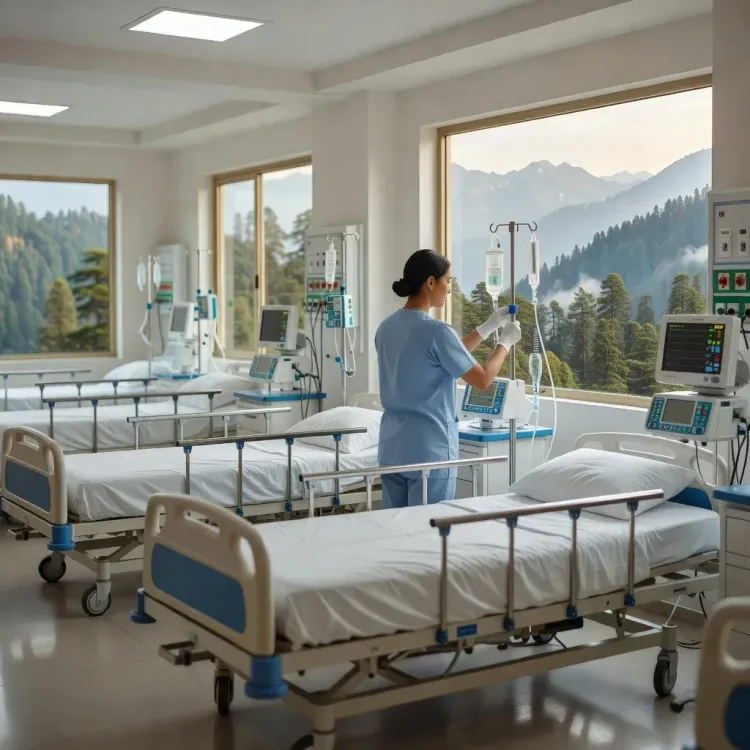
Chief Minister Sukhvinder Singh Sukhu has reaffirmed that strengthening modern health infrastructure, especially critical care facilities, is Himachal Pradesh's top priority, signalling continued investment in district-level tertiary care for the state's dispersed and underserved population.
Key Takeaways
CM Sukhu declared strengthening modern health infrastructure the state's 'topmost priority' in a post on June 21, 2026 .
Critical care facilities were specifically highlighted as a means to deliver better treatment to patients across Himachal Pradesh .
The state participates in the central PM-ABHIM scheme, which funds ICU beds and diagnostic infrastructure at district hospitals.
Ayushman Bharat PM-JAY is already active in the state, covering secondary and tertiary care for low-income families.
Terrain and population dispersal make healthcare delivery a persistent challenge, with many patients currently referred outside the state for critical care.
Budget allocations and tender notices for the 2026-27 fiscal year will be the key test of this stated priority.
The Chief Minister's Office of Himachal Pradesh, on behalf of Chief Minister Thakur Sukhvinder Singh Sukhu, declared on Sunday, June 21, 2026 that strengthening modern health infrastructure — with a specific emphasis on critical care facilities — remains the state government's highest priority.
In the post, Chief Minister Sukhu stated: 'Aadhunik swasthya awasanrachna ka sudridhikaran hamari sarvochch prathamikta hai' ('Strengthening modern health infrastructure is our topmost priority'), adding that advanced facilities such as critical care would ensure better treatment for patients across the state.
Context
The statement comes as Himachal Pradesh grapples with longstanding challenges in delivering secondary and tertiary healthcare to a dispersed population spread across difficult mountain terrain. Residents of remote districts have historically been forced to travel to larger cities — often outside the state — for specialised treatment, placing a financial and logistical burden on families.
Since assuming office in December 2022, the Sukhu government had publicly committed to upgrading district and sub-divisional hospitals as an immediate governance priority. Sunday's post signals a reiteration and reinforcement of that commitment.
Policy Backdrop
Himachal Pradesh participates in the central government's Pradhan Mantri Ayushman Bharat Health Infrastructure Mission (PM-ABHIM), launched in 2021, which provides states with funding to add ICU beds, oxygen infrastructure, and diagnostic blocks at district hospitals. The state has also implemented Ayushman Bharat PM-JAY, the national health insurance scheme, to cover secondary and tertiary care costs for low-income families.
Post-COVID, Indian states have broadly accelerated the creation of critical-care capacity. Himachal Pradesh's emphasis on this segment mirrors similar policy directions taken by other hill states and north-eastern states seeking to reduce patient referrals to distant metros and tertiary centres.
Stakeholders and Impact
The most direct beneficiaries of expanded critical care infrastructure would be rural patients in remote districts of Himachal Pradesh, who currently face acute shortages of ICU beds, ventilators, and trained critical-care staff. District hospital personnel would also stand to gain through upgraded equipment and improved working conditions.
Families relying on Ayushman Bharat PM-JAY coverage stand to benefit most, as critical-care admissions represent some of the highest out-of-pocket costs in the Indian healthcare system. Reducing referral rates to cities such as Chandigarh or Delhi would also ease pressure on patients and caregivers.
What's Next
Observers will watch the 2026-27 Himachal Pradesh state budget for specific allocations towards new ICU blocks, medical gas pipelines, and equipment procurement in remote districts. Tender notices for critical-care infrastructure projects in underserved sub-divisions would serve as a concrete indicator of how the government translates this stated priority into action.
If the state accelerates infrastructure roll-out under PM-ABHIM and aligns it with Ayushman Bharat coverage, Himachal Pradesh could emerge as a model for other hill states seeking to build self-sufficient tertiary-care capacity without depending on metropolitan referral chains.
Point of View
Where terrain limits healthcare access, critical care expansion is both a genuine policy need and a politically resonant promise. The invocation of 'modern infrastructure' signals alignment with central schemes like PM-ABHIM, suggesting the state is positioning itself to draw down central funds while branding the outcomes as its own initiative. The real test will come when capital expenditure figures in the state budget either validate or undercut this stated priority.
NationPress
21 Jun 2026
Frequently Asked Questions
What did CM Sukhu say about health infrastructure in Himachal Pradesh?
Chief Minister Sukhvinder Singh Sukhu stated that strengthening modern health infrastructure is the state government's topmost priority, with critical care facilities specifically cited as a means to improve patient treatment across Himachal Pradesh.
What is critical care infrastructure in the context of Indian hospitals?
Critical care infrastructure refers to Intensive Care Units (ICUs), ventilators, oxygen supply systems, and trained specialists that handle life-threatening conditions. Many district hospitals in hill states like Himachal Pradesh lack adequate critical care capacity, forcing patients to travel to larger cities.
How is the central government supporting hospital upgrades in Himachal Pradesh?
Himachal Pradesh participates in the Pradhan Mantri Ayushman Bharat Health Infrastructure Mission (PM-ABHIM), launched in 2021, which provides funding to states for adding ICU beds, diagnostic blocks, and oxygen infrastructure at district-level hospitals.
What is Ayushman Bharat PM-JAY and does it cover critical care?
Ayushman Bharat PM-JAY is a national health insurance scheme that covers secondary and tertiary hospitalisation costs for low-income families. Himachal Pradesh has implemented it, and expanded critical care facilities in the state would make the scheme more effective by reducing costly out-of-state referrals.
Why is healthcare delivery difficult in Himachal Pradesh?
Himachal Pradesh has a dispersed population across mountainous terrain, making it logistically and financially difficult to build and staff hospitals in remote areas. Patients often travel to cities like Chandigarh or Delhi for specialised treatment, which the state government aims to reduce through local infrastructure upgrades.