CM Sukhu extends Dussehra greetings from Devbhoomi HP
Synopsis
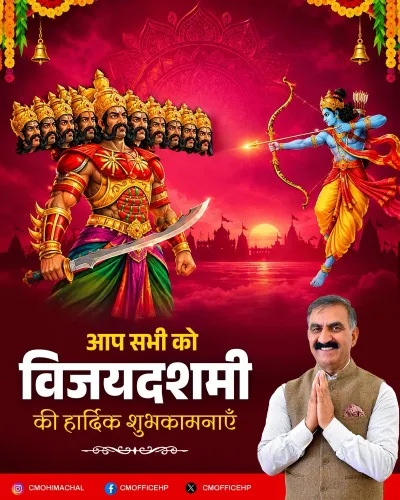
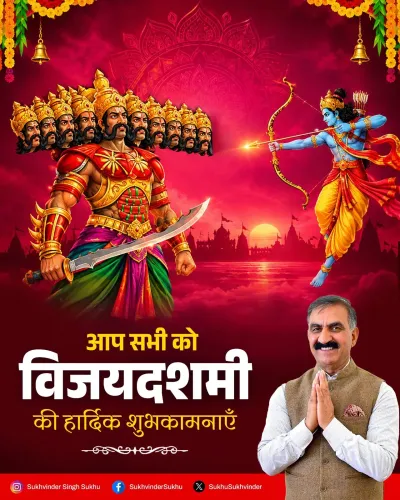
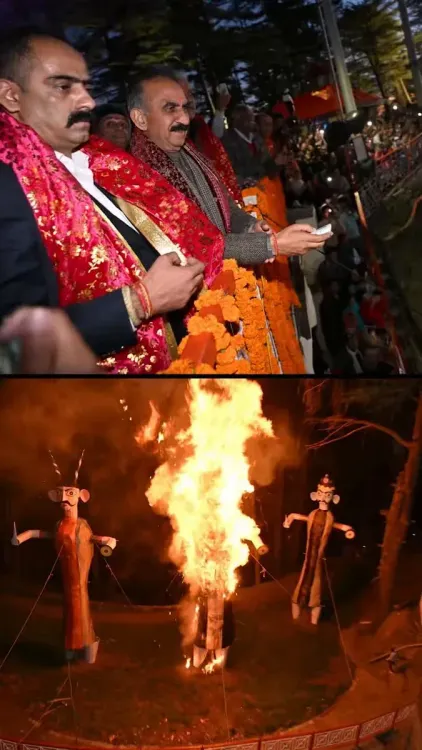
On Dussehra 2026, Himachal Pradesh Chief Minister Sukhvinder Singh Sukhu extended heartfelt greetings, invoking the name of Lord Ram and celebrating the state's identity as Devbhoomi — the land of gods — while emphasising faith in truth, dharma, and Sanatan tradition.
Key Takeaways
CM Sukhvinder Singh Sukhu posted Dussehra greetings on 20 October 2026 .
He invoked Lord Ram and described the festival as a symbol of faith in truth, dharma, and Sanatan tradition.
Himachal Pradesh is officially known as Devbhoomi — the land of gods — owing to its dense network of temples and sacred sites.
Dussehra marks the victory of Lord Ram (Maryada Purushottam) over Ravana.
Sukhu leads the Indian National Congress government in Himachal Pradesh, having taken office in 2022 .
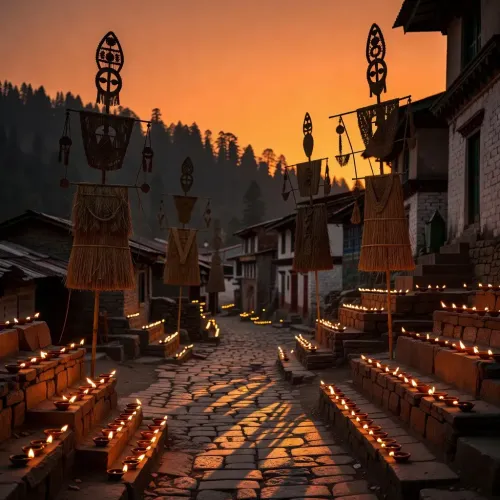
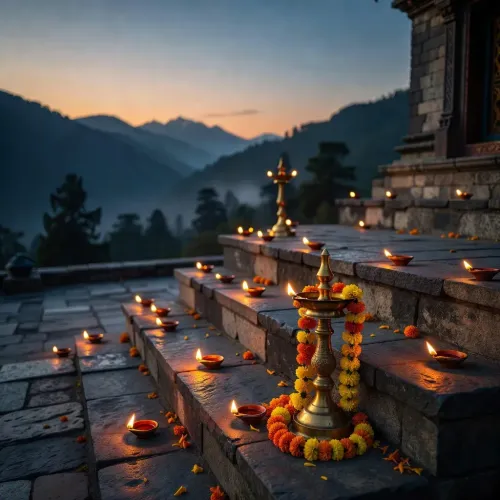
The echo of Lord Ram's name rings across the hills of Himachal Pradesh this Dussehra — and Himachal Pradesh Chief Minister Sukhvinder Singh Sukhu marked the occasion with a message of devotion, invoking the state's identity as Devbhoomi (the land of the gods).
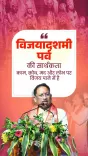
Posting on Tuesday, 20 October 2026, Chief Minister Sukhu wrote in Hindi: 'दशहरा के पावन अवसर पर देवभूमि हिमाचल में प्रभु श्रीराम के नाम की गूँज है' — 'On the auspicious occasion of Dussehra, the name of Lord Shri Ram reverberates across Devbhoomi Himachal.' He described the festival as a symbol of 'unwavering faith in truth and dharma, and the glory of Sanatan tradition.'
Dussehra and Himachal's deep-rooted Sanatan identity
Dussehra commemorates the victory of Lord Ram — revered as Maryada Purushottam, the ideal upholder of righteousness — over the demon king Ravana. Celebrated with processions, effigy burnings, and temple festivities across the country, the festival carries particular resonance in Himachal Pradesh, a state whose very official identity is built around its extraordinary density of temples and sacred sites. The moniker Devbhoomi is not merely promotional — it reflects a lived cultural fabric woven through every district of the hill state.
Why a Congress CM's Ram invocation matters politically
Chief Minister Sukhu leads the Indian National Congress government in Himachal, a party that has historically been cautious about overt religious signalling. His warm, full-throated invocation of Lord Ram and Sanatan tradition on a major Hindu festival signals the Congress's continued effort to reclaim cultural ground in a state where Hindu heritage is not peripheral but central to daily life. Across India, chief ministers of all parties routinely issue festival greetings on social platforms — but the language chosen, and the deity invoked, are never accidental in the current political climate.
Point of View
Where the Devbhoomi tag is a source of genuine local pride, ignoring major Hindu festivals is not an option for any party in power. What's worth watching is whether this kind of festival communication increasingly becomes the Congress's default register in hill states as it tries to hold Himachal and eye other culturally similar electorates.
NationPress
21 Oct 2026
Frequently Asked Questions
What did Himachal Pradesh CM Sukhu say on Dussehra 2026?
CM Sukhvinder Singh Sukhu extended Dussehra greetings on 20 October 2026, describing the festival as a symbol of unwavering faith in truth and dharma, and invoking the name of Lord Ram across Devbhoomi Himachal.
Why is Himachal Pradesh called Devbhoomi?
Himachal Pradesh is called Devbhoomi — meaning 'land of the gods' — because of its exceptionally large number of temples, sacred shrines, and deep-rooted Hindu and folk religious traditions spread across its districts.
What is Dussehra and why is it celebrated?
Dussehra is an annual Hindu festival celebrating the victory of Lord Ram over the demon king Ravana, symbolising the triumph of good over evil, truth over falsehood, and dharma over adharma.
Who is Sukhvinder Singh Sukhu?
Sukhvinder Singh Sukhu is the Chief Minister of Himachal Pradesh and an Indian National Congress leader who assumed office in December 2022 after the Congress won the state assembly elections.
How do Indian chief ministers typically mark Dussehra?
Indian chief ministers across all parties customarily post festival greetings on social media, attend local Dussehra processions and effigy-burning events, and issue statements connecting the festival's themes to governance or cultural identity.