CM Sukhu equips IGMC Shimla with 3T MRI, 256-slice CT
Synopsis
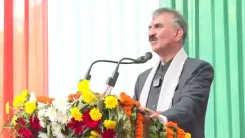
Chief Minister Sukhvinder Singh Sukhu announced that IGMC Shimla has been equipped with a Three Tesla MRI, a 256-slice CT scanner, and advanced ultrasound and X-ray machines, replacing equipment up to 19 years old to bring training standards on par with AIIMS Delhi.
Key Takeaways
IGMC Shimla previously operated a 19-year-old MRI and 15-year-old ultrasound and X-ray machines , hampering modern clinical training.
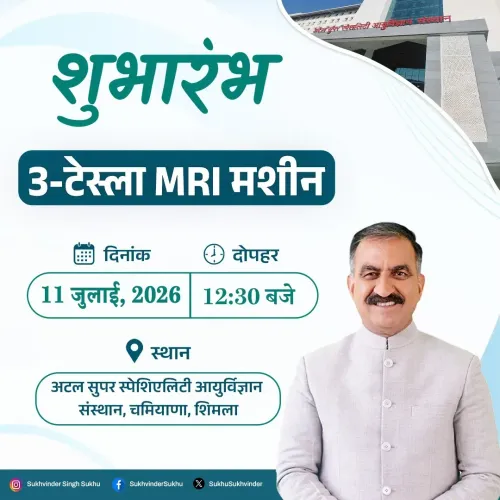
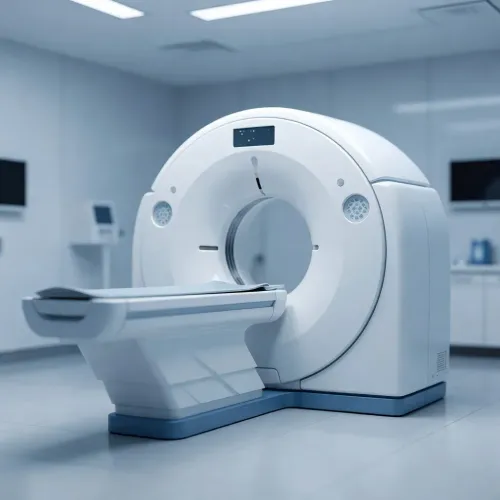
The Himachal Pradesh government has now installed a Three Tesla (3T) MRI and a 256-slice CT scan machine at IGMC.
State-of-the-art ultrasound and X-ray units have also been added as part of the same upgrade.
The explicit benchmark cited by CM Sukhu is AIIMS, New Delhi — India's premier public medical training institute.
Primary beneficiaries are PG students and radiographers at IGMC, Himachal Pradesh's oldest government medical college.
Utilisation rates and faculty training programmes will be the key indicators of whether the hardware upgrade delivers lasting institutional impact.
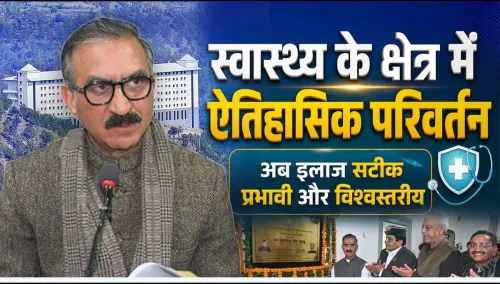
For years, postgraduate students and radiographers at Indira Gandhi Medical College (IGMC), Shimla trained on a 19-year-old MRI and 15-year-old ultrasound and X-ray machines — hardware so dated it left graduates ill-equipped for the standards demanded at modern institutions. Himachal Pradesh Chief Minister Sukhvinder Singh Sukhu announced on Tuesday, 27 October 2026 that his government has now provisioned IGMC with a suite of cutting-edge diagnostic equipment, closing a gap that had quietly undermined the state's flagship medical college for over a decade.
What IGMC has now — and what it was missing
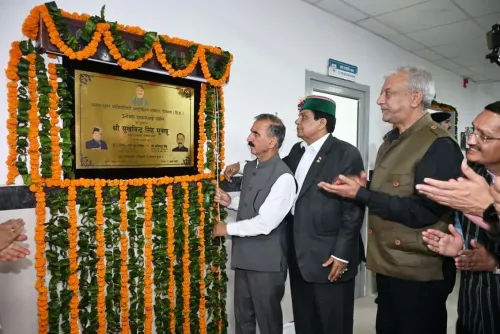
The new additions include a Three Tesla (3T) MRI scanner, a 256-slice CT scan machine, and state-of-the-art ultrasound and X-ray units. CM Sukhu framed the upgrade in direct terms: with ageing equipment, it was simply 'mushkil' — difficult — for PG students and radiographers to learn modern techniques or prepare for contemporary clinical challenges. A 3T MRI delivers significantly sharper neurological and musculoskeletal imaging than the 1.5T systems that remain standard in many district hospitals, while a 256-slice CT enables faster, more detailed cardiovascular and trauma scans.
The stated benchmark for this upgrade is AIIMS, New Delhi — India's gold standard for public medical training. The government's explicit goal is to ensure IGMC-trained graduates can work fluently with the same technology they would encounter at a premier central institute.
IGMC's place in Himachal's health ecosystem
IGMC is the oldest and most prominent government medical college in Himachal Pradesh, anchoring specialist healthcare for a largely hilly, underserved state. Its radiology department is the primary training ground for radiographers across the region. When its diagnostic hardware lags, the ripple effect reaches not just the college — it shapes the diagnostic competence of an entire generation of state-trained medical professionals.
Indian states have periodically upgraded diagnostic equipment in government medical colleges to match central-institute standards, with funding typically flowing from state health budgets and central medical-education infrastructure schemes. Himachal Pradesh's move aligns with that broader pattern, but the AIIMS-Delhi benchmark signals an ambition that goes beyond routine maintenance.
Who benefits — and what to watch next
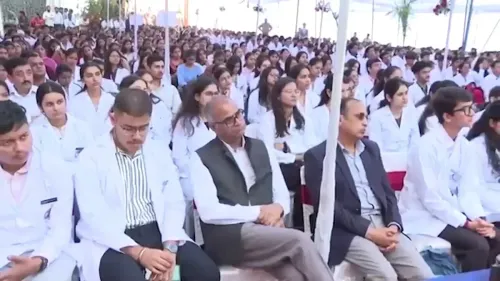
The immediate beneficiaries are PG students and radiographers currently enrolled at IGMC. Hands-on exposure to 3T MRI and 256-slice CT during training translates directly into clinical confidence upon graduation — and, in a state where specialist retention is a persistent challenge, better-trained graduates are marginally more likely to stay and practice locally.
The real test will come in utilisation: whether the new scanners are staffed, maintained, and integrated into the curriculum effectively. Utilisation reports and any follow-on announcements on faculty training will indicate whether this hardware investment translates into durable institutional capability.
Shimla's medical college just got a hardware leap spanning two decades in a single announcement. Whether the software — the faculty, the curriculum, the institutional culture — keeps pace is the question that will determine whether these machines change careers, or merely make for good photographs.
Point of View
A framing that simultaneously sets a high bar and makes the announcement legible to a broad public. For CM Sukhu, whose Congress government has had to navigate fiscal constraints in Himachal Pradesh, a visible infrastructure upgrade in the state's premier medical college serves a dual purpose: genuine educational improvement and a tangible governance deliverable ahead of future electoral cycles. The deeper policy question is whether equipment modernisation alone can address the structural issues — faculty shortages, curriculum gaps, retention incentives — that have historically kept state medical colleges behind central institutes. If IGMC follows through with faculty development and utilisation protocols, this could become a replicable model for other hill-state medical colleges facing the same technology-lag problem.
NationPress
27 Oct 2026
Frequently Asked Questions
What new equipment has been installed at IGMC Shimla?
IGMC Shimla has been equipped with a Three Tesla (3T) MRI scanner, a 256-slice CT scan machine, and advanced ultrasound and X-ray units, replacing equipment that was up to 19 years old.
Why was the IGMC Shimla equipment upgrade needed?
The college's previous MRI was 19 years old and its ultrasound and X-ray machines were 15 years old, making it difficult for PG students and radiographers to learn modern diagnostic techniques or meet the standards required at advanced hospitals.
Who will benefit from the new equipment at IGMC?
Postgraduate medical students and radiographers training at IGMC Shimla are the primary beneficiaries, gaining hands-on experience with technology comparable to what is available at AIIMS Delhi.
What is IGMC Shimla?
Indira Gandhi Medical College and Hospital (IGMC) in Shimla is the oldest and most prominent government medical college in Himachal Pradesh, serving as the state's main hub for specialist healthcare and medical training.
What did CM Sukhu say about the IGMC equipment upgrade?
CM Sukhvinder Singh Sukhu stated that training on 19-year-old MRI and 15-year-old equipment was difficult and limiting, and that the new installations aim to give IGMC students training on par with AIIMS Delhi.