CM Sukhu: Hotel Earnings to Serve Himachal's People

Synopsis
Chief Minister Sukhvinder Singh Sukhu has pledged that all earnings from a state-owned hotel will be used entirely for the welfare of Himachal Pradesh's people, signalling accountability over public tourism assets.
Key Takeaways
CM Sukhvinder Singh Sukhu declared on 1 November 2026 that every paisa from a specific hotel's earnings will go toward public welfare.
The statement was posted by the Chief Minister's Office of Himachal Pradesh on X.
The phrase used — devtulya janta ('godlike people') — carries strong cultural weight in Himachali political language.
The specific hotel referenced has not been publicly identified in available official records.
Himachal Pradesh's economy depends heavily on tourism, with state corporations managing several revenue-generating properties.
The pledge sets a public accountability benchmark that Opposition and civil groups can track against future budget disclosures.
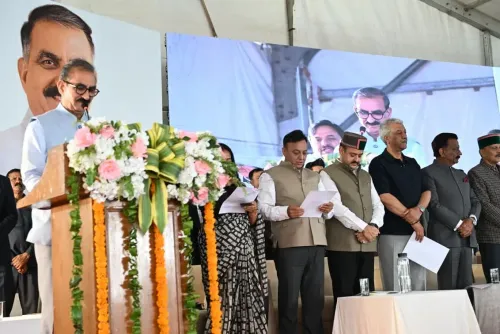
Every last rupee earned from a state-owned hotel will flow back to the people of Himachal Pradesh — that is the pledge Chief Minister Thakur Sukhvinder Singh Sukhu made on Sunday, 1 November 2026, in a post from the Chief Minister's Office of Himachal Pradesh on X.
The statement, in Hindi, reads: 'Is hotel se hone wali kamai ki pai-pai ka upyog Himachal ki devtulya janta ke hit mein kiya jayega.' — 'Every single paisa earned from this hotel will be used for the benefit of the godlike people of Himachal.' The phrase devtulya janta — literally 'people who are like gods' — is a culturally weighted expression in Himachali political discourse, invoking the deep reverence for citizens embedded in the state's hill-temple tradition.
A State Where Tourism Revenue Is Public Business
Himachal Pradesh has long treated tourism as a pillar of its economy, with state-run properties — hotels, rest houses, and heritage lodges — managed through government corporations. Receipts from these assets flow into government accounts, and elected governments periodically make public commitments about how those funds are directed. CM Sukhu's declaration follows that pattern, placing an explicit accountability marker on whichever hotel is referenced in the post.
The specific property has not been publicly identified in available official records, but the signal is clear: the Sukhu administration is framing state-asset revenue not as a budget line item but as a direct public trust. That framing matters in a state where the Congress government, in power since December 2022, has staked credibility on welfare delivery to ordinary hill residents.
Welfare Signalling in a Fiscally Stretched State
Himachal Pradesh carries one of the higher per-capita debt burdens among Indian states, making every rupee of non-tax revenue politically significant. When a chief minister publicly earmarks hotel income for public welfare, the message travels two ways: it reassures citizens that public assets are not being captured for other purposes, and it sets a benchmark against which future budget documents can be measured. Advocacy groups and the Opposition will now watch for whether tourism corporation accounts eventually reflect a formal allocation tied to this commitment.
If the administration follows through with a budget or departmental notification naming the hotel and specifying the welfare outlay, this statement becomes the opening move in a verifiable accountability chain. If it does not, it becomes a talking point for rivals. The clock, as they say, is ticking.
Point of View
Converting a hotel's income into a welfare promise costs nothing today while building a narrative of responsible stewardship. The real test is whether the commitment surfaces in a treasury notification or budget document; if it does not, the Opposition has a ready-made accountability cudgel. Either way, the statement reflects a broader pattern of Indian state governments deploying public-asset rhetoric as a welfare-signalling instrument.
NationPress
1 Nov 2026
Frequently Asked Questions
What did CM Sukhu say about the hotel in Himachal Pradesh?
CM Sukhvinder Singh Sukhu pledged that every single paisa earned from a specific state-owned hotel will be used exclusively for the welfare of the people of Himachal Pradesh.
Which hotel is CM Sukhu referring to in his statement?
The Chief Minister's statement did not name the specific hotel, and the property cannot be identified from currently available official public records.
How long has Sukhvinder Singh Sukhu been Chief Minister of Himachal Pradesh?
Sukhvinder Singh Sukhu has been Chief Minister of Himachal Pradesh since December 2022, representing the Indian National Congress.
Why does tourism revenue matter for Himachal Pradesh's government finances?
Himachal Pradesh relies heavily on tourism as a core economic activity, and state-run hotels and tourism properties generate non-tax revenue that contributes to government receipts — significant for a state with a relatively high per-capita debt burden.
What does 'devtulya janta' mean in CM Sukhu's statement?
'Devtulya janta' translates to 'people who are like gods' — a culturally resonant phrase in Himachal Pradesh that political leaders use to express deep reverence for citizens.