CM Sukhu: HP Govt Committed to Relief, Rehabilitation

Synopsis
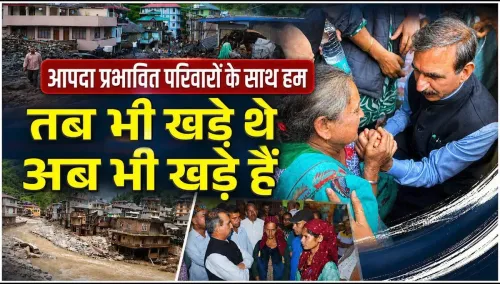
Chief Minister Sukhvinder Singh Sukhu on 3 July 2026 reaffirmed the Himachal Pradesh government's resolve to help disaster-affected residents return to normal life through sustained relief, rehabilitation and reconstruction, in a statement shared by the Chief Minister's Office.
Key Takeaways
CM Sukhvinder Singh Sukhu stated the government's consistent aim is to help affected people return to normal life 'as soon as possible'.
The Himachal Pradesh government has provided continuous support through relief, rehabilitation and reconstruction .
Himachal Pradesh is a Himalayan state highly vulnerable to monsoon-related floods, landslides and cloudbursts.
India's disaster response operates under the National Disaster Management Act, 2005 and the federal NDMA framework.
CM Sukhu has led the state since December 2022 and has overseen multiple disaster relief operations.
State budget allocations for rehabilitation and pre-monsoon preparedness guidelines remain key areas to watch.
The Chief Minister's Office of Himachal Pradesh, on Friday, 3 July 2026, shared a statement from Chief Minister Thakur Sukhvinder Singh Sukhu reaffirming the state government's commitment to helping disaster-affected residents return to normal life at the earliest through sustained relief, rehabilitation and reconstruction efforts.
Context
In the statement, CM Sukhu said: 'Hamara prayas hamesha yahi raha hai ki prabhavit log jald se jald samanya jeevan ki or lautein' ('Our endeavour has always been to ensure that affected people return to normal life as soon as possible'). He added that the government had stood steadfastly with those affected through relief, rehabilitation and reconstruction. Himachal Pradesh is among India's most disaster-prone states, regularly battered by floods, cloudbursts and landslides, particularly during the monsoon season.
Policy Backdrop
India's disaster management framework is anchored in the National Disaster Management Act, 2005, which established the National Disaster Management Authority (NDMA) to coordinate relief and reconstruction across states. State governments operate under this federal framework, drawing on both state and central funds for rehabilitation work. Himachal Pradesh has maintained continuity in disaster response across successive administrations, with emphasis on rapid normalisation of affected communities.
CM Sukhu, who has led the state since December 2022, has overseen multiple relief operations following natural calamities in the Himalayan state. His government has consistently positioned relief and reconstruction as priority commitments, especially ahead of and during monsoon periods when the risk of landslides and flash floods rises sharply.
Stakeholders and Impact
The primary beneficiaries of these measures are disaster-affected residents across Himachal Pradesh — including those displaced by floods, landslides and cloudbursts. Restoration of homes, infrastructure and livelihoods forms the core of the rehabilitation mandate. The government's stated resolve to maintain continuous support signals that ongoing reconstruction work remains active across affected districts.
Local communities in vulnerable Himalayan zones depend heavily on timely state intervention, as monsoon damage can isolate villages and disrupt supply chains for extended periods. Effective rehabilitation directly determines how quickly residents can resume agricultural and economic activity.
What's Next
With the monsoon season underway, attention will turn to state budget allocations for ongoing rehabilitation works and any fresh guidelines the government may issue to bolster preparedness. The Sukhu administration's emphasis on rapid normalisation suggests continued prioritisation of disaster-relief spending in the near term. Observers will watch whether the government announces specific scheme extensions or new funding tranches for reconstruction in the coming weeks.
Point of View
Rehabilitation and reconstruction,' the administration signals continuity with India's established federal disaster-response vocabulary while also positioning itself as proactively compassionate. In a state where annual monsoon damage shapes electoral sentiment, such public commitments serve both a governance and a political purpose. The statement's timing — early July — aligns with the period when monsoon intensity typically peaks in the Himalayas, making the messaging strategically timed.
NationPress
3 Jul 2026
Frequently Asked Questions
What did CM Sukhu say about disaster relief in Himachal Pradesh?
CM Sukhvinder Singh Sukhu stated that the government's constant endeavour has been to help disaster-affected people return to normal life as quickly as possible, and that the state has stood with them through relief, rehabilitation and reconstruction.
Which disasters affect Himachal Pradesh most?
Himachal Pradesh is frequently impacted by monsoon-driven floods, cloudbursts and landslides, which can displace communities, damage infrastructure and disrupt livelihoods across the Himalayan state.
What is India's legal framework for disaster relief?
India's disaster management is governed by the National Disaster Management Act, 2005, which established the National Disaster Management Authority to coordinate relief, rehabilitation and reconstruction at the national and state levels.
When did Sukhvinder Singh Sukhu become Chief Minister of Himachal Pradesh?
Sukhvinder Singh Sukhu became Chief Minister of Himachal Pradesh in December 2022 and has since overseen the state's response to several natural calamities.
What should Himachal Pradesh residents expect from the government during monsoon 2026?
Based on CM Sukhu's statement, residents can expect continued government support through relief and reconstruction programmes, with possible announcements on budget allocations and fresh preparedness guidelines as the monsoon season progresses.