CM Sukhu: HP Mining Revenue Up 70% in 3 Years
Synopsis
CM Sukhvinder Singh Sukhu reviewed Himachal Pradesh's mining wing in Shimla, highlighting a 70% rise in mineral revenue to Rs 340 crore by FY 2025-26. He flagged that unchanged limestone royalty rates since 2014 are hurting state revenues and vowed to raise the issue with the central government.
Key Takeaways
Himachal Pradesh mineral revenue grew from Rs 200 crore (FY 2021-22) to Rs 340 crore (FY 2025-26) — a rise of nearly 70 percent .
The central government has not revised limestone royalty rates since 2014 , adversely affecting state revenue.
CM Sukhvinder Singh Sukhu has pledged to raise the royalty revision demand prominently with New Delhi.
Departments were directed to ensure scientific and environment-friendly mineral extraction.
Strict action ordered against illegal mining and regulatory violations.
Industry Minister Harshvardhan Chauhan attended the Shimla review meeting.
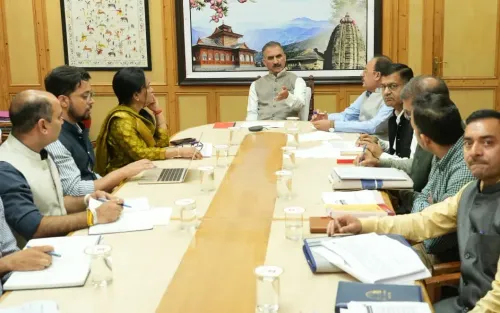
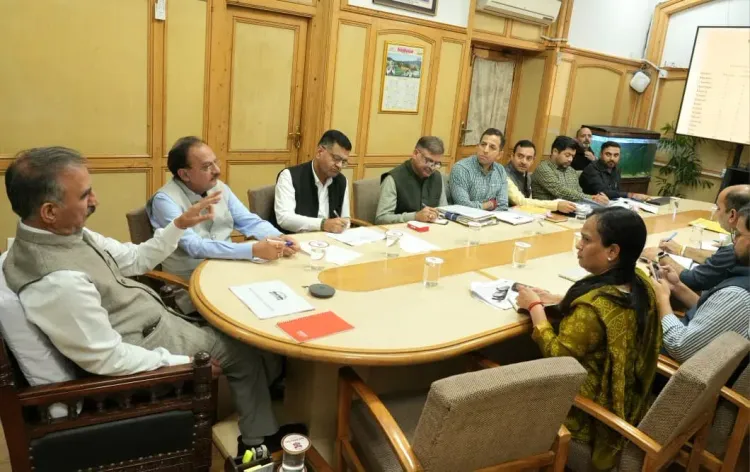
Himachal Pradesh Chief Minister Sukhvinder Singh Sukhu chaired a review of the state's mining wing in Shimla on Wednesday, July 29, 2026 — and the numbers tell a sharp story: mineral revenue has climbed nearly 70 percent in three years, yet a decade-old freeze on limestone royalty rates is quietly bleeding the state's coffers.
From Rs 200 Crore to Rs 340 Crore — and Still Leaving Money on the Table
Revenue from major and minor minerals stood at Rs 200 crore in FY 2021-22. By FY 2025-26, that figure has risen to Rs 340 crore — a gain that reflects tighter enforcement and expanded extraction. Industry Minister Harshvardhan Chauhan was present at the meeting alongside senior departmental officers.
But the headline growth obscures a structural problem. The central government has not revised limestone royalty rates since 2014 — a freeze of over a decade that directly suppresses what Himachal Pradesh earns from one of its most abundant mineral resources. Sukhu made clear the state will push back: the matter will be raised 'prominently' to secure what he called the state's 'rightful share.'
The Limestone Royalty Standoff With New Delhi
Under the Mines and Minerals (Development and Regulation) Act, royalty rates on major minerals — including limestone — are set by the central government, leaving states dependent on New Delhi's revision schedule. Himachal Pradesh is not alone in this bind; several mineral-rich states have periodically pressed the Ministry of Mines for upward revisions to augment non-tax revenues.
With limestone royalty rates unchanged since 2014, the real value of what the state collects has eroded steadily against inflation and rising extraction volumes. Sukhu's decision to surface this at a formal departmental review signals the state intends to escalate the demand through official channels.
Crackdown on Illegal Mining — Orders on the Table
The review meeting was not only about revenue arithmetic. Sukhu issued pointed directives to departments: mineral extraction must follow scientific and environment-friendly methods; illegal mining must face 'effective curbs'; and violators must be met with strict action. The combination of revenue ambition and enforcement discipline is a signal that the state is tightening its grip on a sector that has historically leaked value through unregulated activity.
Illegal mining along river beds and hillside quarries has long been a challenge in Himachal Pradesh, carrying both ecological and fiscal costs. Stricter enforcement, if sustained, could push official revenue figures even higher in the years ahead.
Himachal Pradesh has the momentum in its mining revenue story — what it needs now is a revision from New Delhi to match that momentum with rates that reflect the last twelve years of economic reality.
Point of View
Pushing back against a central government controlled by a rival party on a resource-revenue grievance also serves the Congress government's broader narrative of standing up for state rights. Watch whether this becomes a formal representation to the Ministry of Mines or remains rhetorical.
NationPress
29 Jul 2026
Frequently Asked Questions
How much has Himachal Pradesh's mining revenue grown in the last three years?
Mineral revenue in Himachal Pradesh grew by nearly 70 percent, rising from Rs 200 crore in FY 2021-22 to Rs 340 crore in FY 2025-26, according to CM Sukhu's review meeting.
Why is Himachal Pradesh demanding a revision of limestone royalty rates?
The central government has not revised limestone royalty rates since 2014. HP argues this decade-long freeze is reducing the state's earnings from one of its key minerals and wants New Delhi to update the rates.
Who sets mineral royalty rates in India?
Under the Mines and Minerals (Development and Regulation) Act, the central government sets royalty rates for major minerals like limestone. States collect the royalties but cannot revise the rates on their own.
What action did CM Sukhu order on illegal mining in Himachal Pradesh?
CM Sukhu directed departments to impose effective curbs on illegal mining and take strict action against anyone violating mining regulations, alongside ensuring scientific and environment-friendly extraction methods.
Who attended the Himachal Pradesh mining review meeting in Shimla?
Industry Minister Harshvardhan Chauhan and other senior officials attended the mining wing review chaired by CM Sukhvinder Singh Sukhu in Shimla on July 29, 2026.