Himachal cloudbursts linked to reservoir evaporation, CM Sukhu cites ₹3,500 crore resilience plan

Synopsis
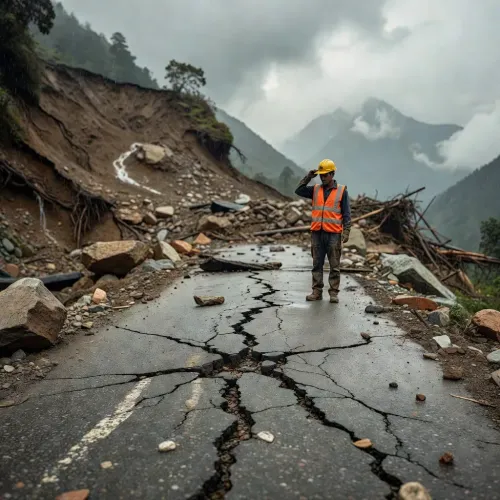
Himachal Pradesh CM Sukhvinder Sukhu has drawn a direct line between large dam reservoirs and the state's worsening cloudburst crisis — and backed it with a ₹3,500 crore resilience infrastructure plan. With 23,000 homes destroyed and 51 lives lost in 2023 alone, the state is betting on institutional reform and rebuilt infrastructure to blunt the next disaster.
Key Takeaways
CM Sukhvinder Sukhu linked rising cloudbursts in Himachal Pradesh to climate change and enhanced evaporation from large dam reservoirs.
The government announced a ₹3,500 crore disaster resilience infrastructure programme to minimise future losses.
The 2023 disaster damaged around 23,000 houses completely and claimed 51 lives ; nearly 75,000 tourists were stranded.
Post-2023, compensation for fully damaged houses was raised from ₹1.30 lakh to ₹8 lakh .
Former NITI Aayog member Dr V.K.
Paul called for a multi-dimensional, multi-stakeholder policy approach to disaster resilience.
Sukhu warned other Indian states may face similar climate impacts in the coming years.
Himachal Pradesh Chief Minister Sukhvinder Sukhu on Friday, 10 July said that the rising frequency of cloudbursts across the state is linked to climate change and heightened evaporation from reservoirs formed by large dams. Speaking at a workshop in Shimla, Sukhu announced a ₹3,500 crore disaster resilience infrastructure programme aimed at strengthening the state's capacity to absorb and recover from natural disasters.
Key Developments
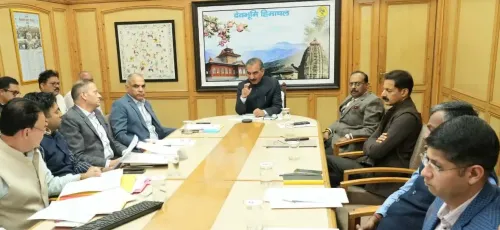
The Chief Minister made the remarks at the valedictory session of the workshop titled 'Towards Resilience Infrastructure Planning in the Western Himalaya'. He described Himachal Pradesh as increasingly vulnerable to natural disasters owing to its mountainous terrain and difficult geographical conditions. The ₹3,500 crore outlay, he said, is intended to minimise losses from future calamities by building infrastructure capable of withstanding extreme weather events.
Lessons from the 2023 Disaster
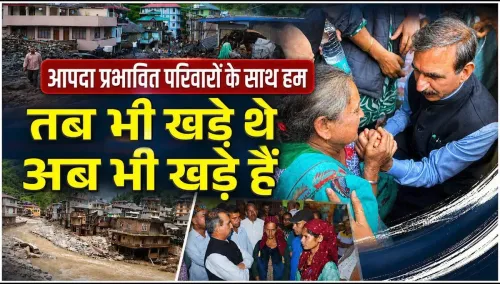
Sukhu recalled the 2023 disaster as a defining moment for the state's emergency response framework. The calamity damaged approximately 23,000 houses completely and claimed 51 lives, while nearly 75,000 tourists were stranded across the state. The government coordinated a large-scale evacuation and restored essential services on a war footing. He specifically acknowledged Revenue Minister Jagat Singh Negi and legislator Sanjay Awasthi, who personally led rescue operations to evacuate around 300 stranded tourists from the high-altitude lake Chandratal.
In the aftermath, the government revised its relief policy, raising compensation for fully damaged houses from ₹1.30 lakh to ₹8 lakh — a more than sixfold increase. Sukhu said the institutional learning from 2023 enabled a more effective response during the 2025 disaster, resulting in comparatively lower losses despite the severity of the situation.
What the Government Said
Chief Secretary K.K. Pant emphasised that the government's objective goes beyond reconstruction — the focus is on building infrastructure that can withstand future climate shocks. He also stressed the importance of institutional capacity building for effective disaster management. Sukhu warned that while Himachal Pradesh is on the frontline of climate impacts today, other Indian states 'are also likely to experience similar impacts in the coming years', calling for bold policy decisions and changes in development practices.
Expert Perspective
Former NITI Aayog member Dr V.K. Paul described the 2023 disaster as a wake-up call, noting that global warming has intensified the developmental challenges Himachal Pradesh has historically faced due to its terrain. He called for a multi-dimensional policy approach involving all stakeholders, arguing that disaster resilience cannot be delivered by any single department or institution alone.
With the monsoon season intensifying and climate patterns growing less predictable, Himachal Pradesh's ₹3,500 crore bet on resilience infrastructure will be closely watched as a potential model for other Himalayan states.
Point of View
It should be backed by peer-reviewed hydro-meteorological data, not just policy assertion. More immediately, the ₹3,500 crore resilience plan is ambitious, but Himachal Pradesh has a history of infrastructure being rebuilt to the same pre-disaster standards that failed in the first place. The real test is whether 'resilience infrastructure' translates into higher engineering specifications and land-use reform, or simply becomes a rebadged reconstruction budget. The sixfold jump in house compensation is a meaningful welfare step, but without stricter zoning to keep settlements out of high-risk zones, it risks subsidising repeated exposure to disaster.
NationPress
9 Oct 2026
Frequently Asked Questions
Why are cloudbursts increasing in Himachal Pradesh?
According to Chief Minister Sukhvinder Sukhu, the rise in cloudbursts is linked to climate change and enhanced evaporation from reservoirs created by large dams. He made these remarks at a workshop on resilience infrastructure planning in Shimla on 10 July.
What is Himachal Pradesh's ₹3,500 crore disaster resilience plan?
The Himachal Pradesh government has announced an estimated ₹3,500 crore outlay to develop disaster resilience infrastructure across the state. The plan aims to strengthen the state's capacity to withstand natural disasters and minimise losses from future calamities.
How bad was the 2023 disaster in Himachal Pradesh?
The 2023 disaster damaged approximately 23,000 houses completely and claimed 51 lives. Nearly 75,000 tourists were stranded across the state, requiring a large-scale coordinated evacuation effort by the government.
How did Himachal Pradesh change its disaster relief compensation after 2023?
Following the 2023 disaster, the state government increased compensation for fully damaged houses from ₹1.30 lakh to ₹8 lakh — a more than sixfold rise. CM Sukhu described this as a historic change in the state's relief policy.
Who is at risk from similar climate impacts in the future?
CM Sukhu warned that while Himachal Pradesh is currently on the frontline, other Indian states are also likely to experience similar climate impacts in the coming years. Former NITI Aayog member Dr V.K. Paul echoed this, calling for a national multi-stakeholder approach to disaster resilience.