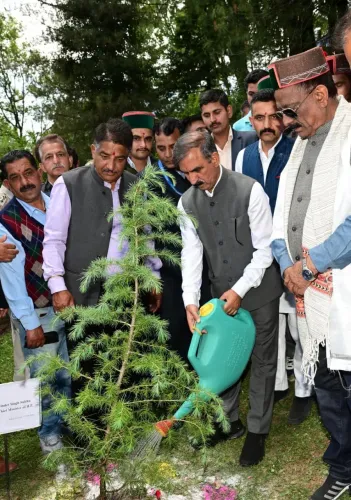
CM Sukhu Pledges Land Rights for Every Displaced Family in HP
Synopsis
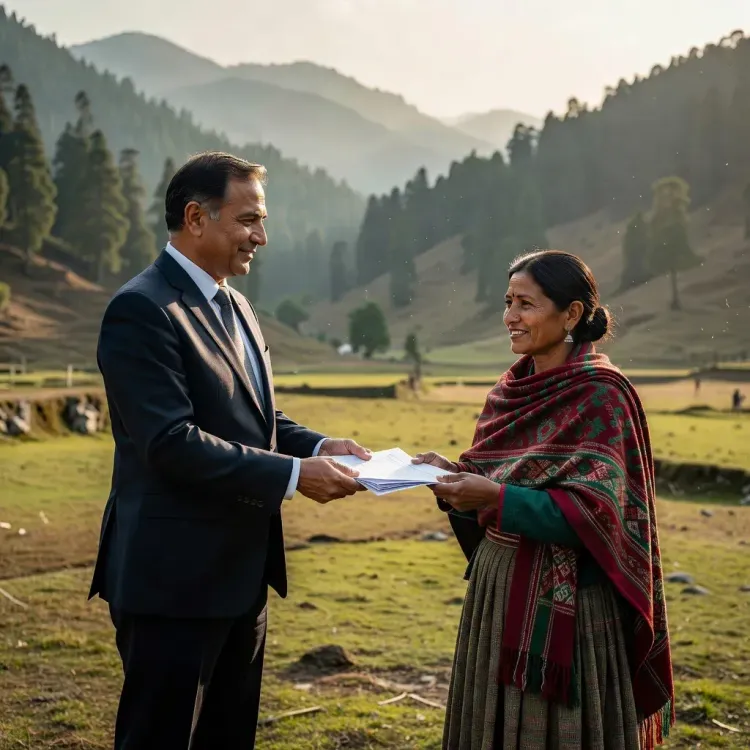
Chief Minister Sukhvinder Singh Sukhu has reaffirmed that the Himachal Pradesh government will ensure every displaced family receives land rights, framing secure land tenure as a matter of dignity and a rights-based entitlement rather than mere relief.
Key Takeaways
The Chief Minister's Office of Himachal Pradesh posted on 20 July 2026 reaffirming CM Sukhu's pledge that no displaced family will remain landless.
CM Thakur Sukhvinder Singh Sukhu framed land ownership as the foundation of 'honour, security, and a new beginning' for displaced households.
The commitment aligns with the Right to Fair Compensation and Transparency in Land Acquisition, Rehabilitation and Resettlement Act, 2013 .
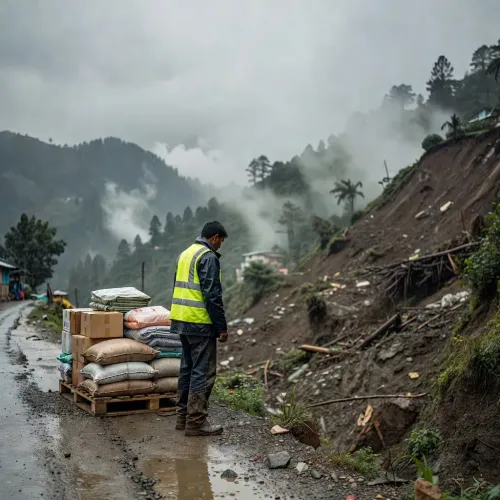
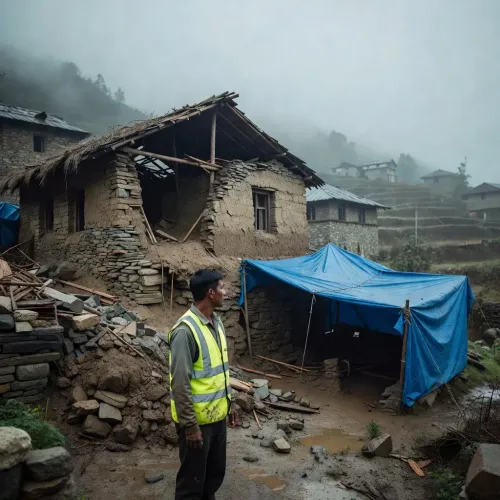
Himachal Pradesh is highly vulnerable to landslides and floods, which regularly displace rural families and strip them of agricultural land.
Progress on land distribution is expected to be reviewed in the next Himachal Pradesh Legislative Assembly session.
Formal land titles would give displaced families access to credit, welfare schemes, and legal security of tenure.
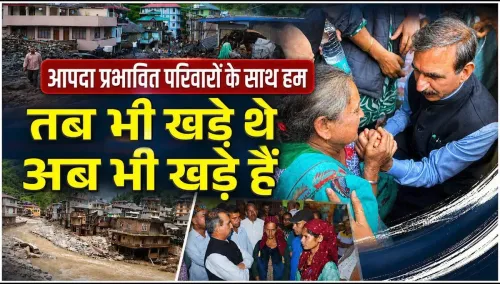
The Chief Minister's Office of Himachal Pradesh, on behalf of Chief Minister Thakur Sukhvinder Singh Sukhu, reaffirmed on Monday, 20 July 2026 the state government's commitment to ensuring that no displaced family in the hill state remains landless, framing land ownership as a foundation for dignity, security, and a fresh start.
Quoting the Chief Minister directly, the post stated: 'ऐसे में यह भूमि उनके सम्मान, सुरक्षा और नए जीवन की सशक्त शुरुआत का आधार बनेगी' ('In such a situation, this land will become the foundation of their honour, security, and a strong beginning to a new life'). The statement went on to assert that the government's 'continuous endeavour is that no displaced family remains landless' and that 'every family gets the right to their own land — this is our commitment.'
Context
Himachal Pradesh is among India's most disaster-prone states, regularly battered by landslides, cloudbursts, and flash floods — particularly during the monsoon season. These events displace thousands of rural households, many of whom lose not just their homes but their agricultural land, which is often their sole economic asset. The Sukhu-led Congress government, in office since December 2022, has repeatedly highlighted rehabilitation of displaced communities as a core welfare priority.Policy Backdrop
The pledge aligns with the framework established by the Right to Fair Compensation and Transparency in Land Acquisition, Rehabilitation and Resettlement Act, 2013, which set national norms for providing land or equivalent compensation to families uprooted by development projects or natural calamities. Himachal Pradesh has historically operated within its own land revenue and rehabilitation rules, which govern the allotment of government land to landless and displaced households. Formalising occupancy rights for vulnerable rural families has been a recurring theme in state policy since the post-independence era, reflecting the central importance of land tenure in agrarian hill economies.Stakeholders and Impact
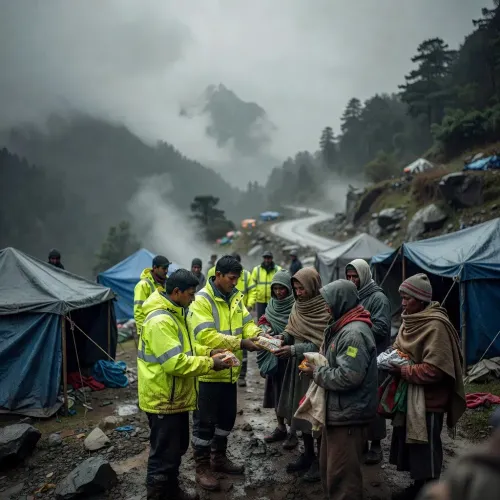
The primary beneficiaries of this commitment are displaced families across Himachal Pradesh — those rendered homeless or landless by infrastructure projects, river-bank erosion, or repeated natural disasters. For these households, a formal land title carries significance beyond economic value: it enables access to institutional credit, government welfare schemes, and legal security of tenure. The emphasis on land as a vehicle for 'honour and security' signals that the government is framing this not merely as a relief measure but as a rights-based entitlement. Civil society groups and opposition parties are likely to watch implementation closely, particularly the pace at which revenue records are updated and titles formally transferred.What's Next
Progress on the land distribution drive is expected to surface during the next session of the Himachal Pradesh Legislative Assembly, where opposition members may seek specifics on the number of families covered, the quantum of land allotted, and any proposed amendments to the state's land revenue rules. The government's ability to translate this commitment into verifiable land titles will be a key measure of its welfare agenda as it moves through the second half of its term. A clear implementation roadmap — including district-wise targets and a grievance redressal mechanism — will determine whether the pledge becomes a lasting policy achievement or remains an aspirational statement.Point of View
The administration is attempting to align routine rehabilitation work with a broader social-justice narrative — one that resonates strongly in a state where land is both livelihood and identity. The pledge, however, will be tested by the state's fiscal constraints and the administrative complexity of updating revenue records in remote, mountainous terrain. How swiftly the government can produce verifiable outcomes — land titles in hand, not just promises on record — will shape its credibility on welfare delivery going into the next electoral cycle.
NationPress
20 Oct 2026
Frequently Asked Questions
What did CM Sukhu say about displaced families in Himachal Pradesh?
CM Sukhvinder Singh Sukhu stated on 20 July 2026 that no displaced family in Himachal Pradesh should remain landless, calling land ownership every family's right and the foundation of their honour and security.
Which law governs land rights for displaced families in India?
The Right to Fair Compensation and Transparency in Land Acquisition, Rehabilitation and Resettlement Act, 2013 sets national norms for providing land or compensation to families displaced by development projects or disasters.
Why are so many families displaced in Himachal Pradesh?
Himachal Pradesh is highly prone to landslides, cloudbursts, and flash floods, which regularly destroy homes and agricultural land, particularly in rural and remote hill areas during the monsoon season.
What is the significance of a formal land title for displaced families?
A formal land title provides legal security of tenure, enables access to institutional credit and government welfare schemes, and gives families a stable economic base to rebuild their livelihoods.
When did Sukhvinder Singh Sukhu become Chief Minister of Himachal Pradesh?
Sukhvinder Singh Sukhu, a Congress leader, became Chief Minister of Himachal Pradesh in December 2022.