CM Sukhu orders health dept to fast-track PG, super-speciality access for doctors
Synopsis
CM Sukhvinder Singh Sukhu chaired an HP health department review on Oct 5, ordering PG and super-speciality access for government doctors with enhanced bonds, end-to-end radiology digitisation by Oct 20, and a staffing-needs survey to accelerate nurse and technician recruitment.
Key Takeaways
Job-trainee doctors in Himachal Pradesh will be permitted to pursue postgraduate (PG) courses while in government service.
Doctors seeking super-speciality programmes will also receive permission under the new directive.
Bond period and bond amount for doctors will be increased to ensure they return and serve the state after completing advanced education.
All government medical colleges must achieve end-to-end digitisation of MRI, CT scan, X-ray, and ultrasound data by October 20, 2026 .
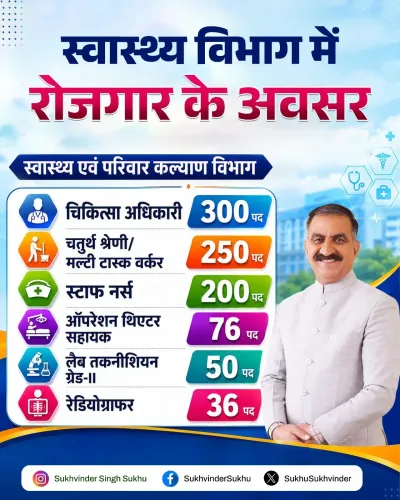
Medical colleges are required to submit department-wise nurse and technician requirements to fast-track the recruitment process.
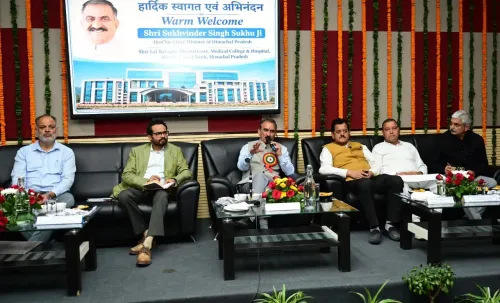
Health Minister Dr. (Col.) Dhani Ram Shandil and medical college principals attended the review meeting.
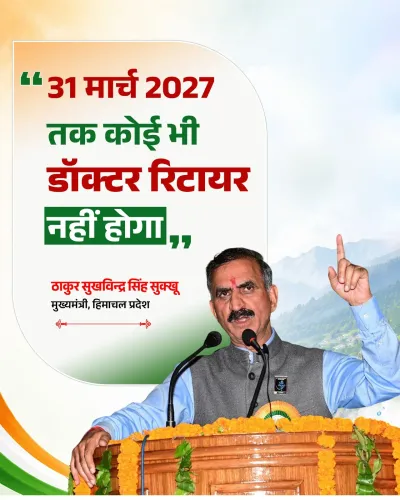
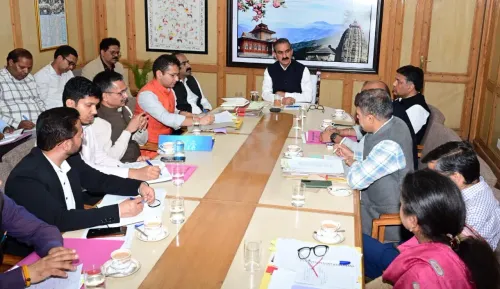
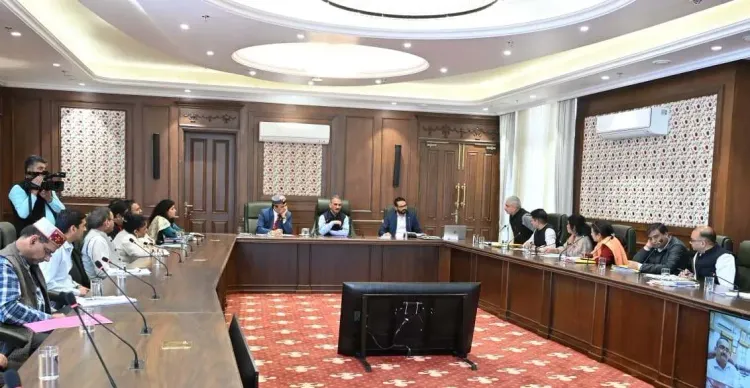
Himachal Pradesh Chief Minister Sukhvinder Singh Sukhu chaired a high-level review of the state health department on Monday, October 5, 2026, issuing a series of directives aimed at shoring up the medical workforce and digitising diagnostic infrastructure — signalling a push to stop trained talent from drifting away after the state pays to produce it.
PG and super-speciality doors open for government doctors
The most consequential order out of the meeting: the health department has been directed to allow job-trainee (प्रशिक्षु) doctors to pursue postgraduate (PG) medical courses while in service. Doctors keen on super-speciality programmes will be extended the same permission. The move addresses a long-standing frustration among young government doctors who had to choose between a state posting and higher education — a binary that often pushed talent toward the private sector or other states.
To ensure the investment flows back, CM Sukhu announced that the bond period and bond amount for doctors will be increased. The logic is straightforward: the state underwrites advanced education; in return, doctors commit to serving Himachal Pradesh's public for a longer, legally binding stretch after completing their courses. It is a retention mechanism with teeth.
October 20 deadline to digitise radiology data across all medical colleges
On the infrastructure side, the Chief Minister set a hard deadline of October 20 for end-to-end digitisation of radiology data — covering MRI, CT scan, X-ray, and ultrasound investigations — across all government medical colleges in the state. The instruction signals zero tolerance for siloed, paper-based diagnostic records that slow down patient care and audit trails.
Full digital integration of imaging data is increasingly the baseline for modern hospital management: it enables remote reads, faster second opinions, and cleaner public-health analytics. Himachal's terrain — spread across difficult hill districts — makes digital diagnostics especially valuable, reducing the need for patients to physically carry reports between facilities.
Staffing gaps to be mapped before the next recruitment round
CM Sukhu also asked every government medical college to submit department-wise data on the requirement of nurses and technicians. The explicit purpose: speed up the recruitment process by entering it with precise numbers rather than approximate demand. Health Minister Dr. (Col.) Dhani Ram Shandil, principals of medical colleges, and other senior officials were present at the meeting.
Taken together, the directives sketch a health-system agenda built on three pillars — upskilling existing doctors, building a digital diagnostic backbone, and plugging workforce gaps with data-driven hiring. Whether the deadlines hold and the bond revisions survive legal scrutiny will determine how much of Monday's boardroom energy actually reaches a patient in a district hospital.
Point of View
Higher-value bond is a pragmatic — if blunt — retention tool that several states have attempted with mixed results, and Himachal's relatively small cadre makes the stakes higher. The October 20 radiology-digitisation deadline is aggressive for a state with infrastructure constraints, suggesting the CM wants optics of urgency as much as systemic reform. The staffing-gap survey is the least glamorous but potentially most durable measure: recruitment based on real department-level data beats the ad-hoc hiring that has historically left some specialities understaffed while others are overstaffed.
NationPress
5 Oct 2026
Frequently Asked Questions
Will Himachal Pradesh government doctors be allowed to do PG courses?
Yes. CM Sukhu has directed the health department to allow job-trainee (practitioner) doctors employed by the state government to pursue postgraduate medical courses. Doctors interested in super-speciality programmes will also be granted permission.
What is the bond requirement for Himachal Pradesh doctors after PG?
The state government has announced that both the duration and the monetary amount of the bond for doctors will be increased, ensuring that after completing PG or super-speciality courses, they return to serve Himachal Pradesh's public health system for a specified period.
What is the deadline for digitising radiology data in HP medical colleges?
CM Sukhu has set October 20, 2026 as the deadline for end-to-end digitisation of all MRI, CT scan, X-ray, and ultrasound investigation data across all government medical colleges in Himachal Pradesh.
Why is Himachal Pradesh surveying nurse and technician requirements in medical colleges?
The Chief Minister asked all government medical colleges to provide department-wise data on their requirements for nurses and technicians so that the recruitment process can be accelerated using precise, need-based numbers rather than estimates.
Who attended the Himachal Pradesh health department review meeting on October 5?
The meeting was chaired by CM Sukhvinder Singh Sukhu and was attended by Health and Family Welfare Minister Dr. (Col.) Dhani Ram Shandil, principals of government medical colleges, and other senior health department officials.