CM Sukhu Plans ₹170/kg Turmeric Price to Keep HP Farmers Home
Synopsis
Chief Minister Sukhvinder Singh Sukhu announced at a farmer dialogue in Tanda that Himachal Pradesh plans to raise raw turmeric procurement prices from ₹150 to ₹170 per kg next year, aiming to boost rural incomes and curb out-migration from hill districts.
Key Takeaways
CM Sukhu spoke at the Kisan Samvad programme in Tanda, Himachal Pradesh on 18 November 2026 .
The state plans to raise raw turmeric procurement price from ₹150 to ₹170 per kilogram — a roughly 13 percent increase — from next year.
The goal is to generate 'lakhs of rupees in annual income' for farmers on their own land, reducing the need to migrate to cities for ₹15,000–₹20,000-a-month jobs.
Himachal Pradesh has operated a state turmeric procurement programme since at least 2022 , with key growing districts including Kangra and Mandi .
The formal rate revision is expected to be confirmed in the state Budget 2027–28 .
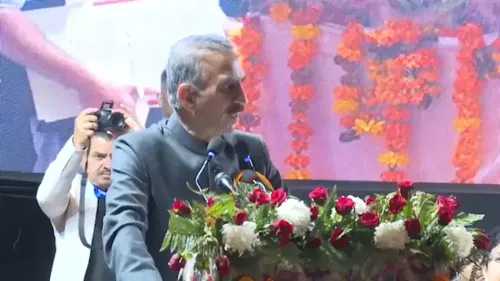
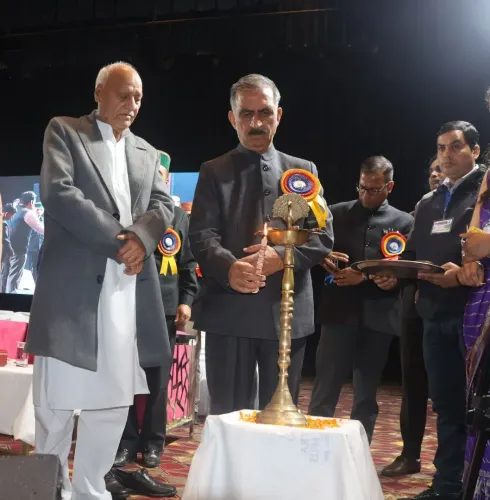
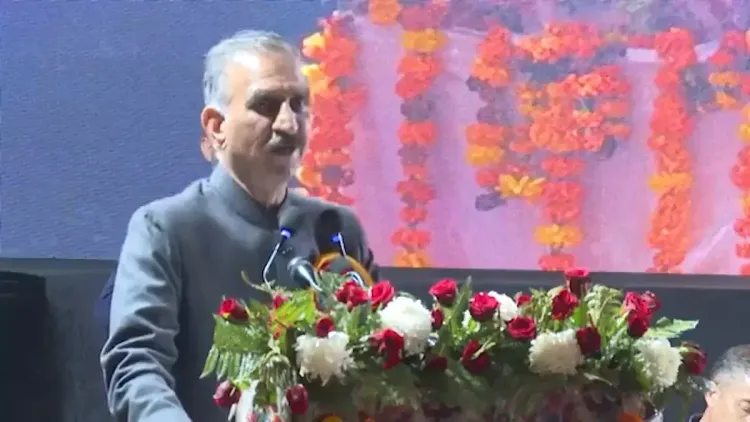
A young farmer in the hills of Himachal Pradesh should not have to pack a bag for Delhi, Mumbai, or Chandigarh in search of a ₹15,000–₹20,000-a-month job — not when the same soil beneath his feet can yield lakhs of rupees a year. That is the argument Himachal Pradesh Chief Minister Sukhvinder Singh Sukhu put directly to farmers on Wednesday, 18 November 2026, at a Kisan Samvad (farmer dialogue) programme held in Tanda.
The ₹170 promise: what Sukhu announced at Tanda
Speaking at the event, CM Sukhu announced that the state government is planning to raise the procurement price of raw turmeric from the current ₹150 per kilogram to ₹170 per kilogram from next year. The pitch was explicit: 'We want to put money directly into your hands,' he told the gathering, framing the price hike as a tool to anchor rural households to their own land rather than push them into distant urban labour markets.
The ₹20-per-kg increase — roughly a 13 percent jump — may look incremental on paper. But for a smallholder household in a hill district growing turmeric on even a modest plot, the compounding effect across a full harvest season can be the difference between staying home and leaving.
Himachal's turmeric strategy and the out-migration problem
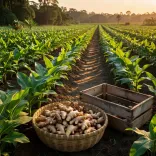
Himachal Pradesh has run a state-supported procurement programme for raw turmeric since at least 2022, designed to give growers an assured floor price and reduce their exposure to volatile open-market rates. Districts such as Kangra and Mandi have been at the centre of the state's push to promote natural and organic turmeric cultivation as part of its broader horticulture strategy.
The underlying problem the policy targets is structural. Hill-state economies across India have long struggled with out-migration: young workers leave for plains cities because agricultural income feels uncertain, while urban wages — however modest — feel predictable. Assured procurement prices are one of the most direct levers a state government controls to change that calculation.
A pattern spreading across India's spice belt
Himachal's turmeric support mirrors moves other Indian states have made for ginger, garlic, and saffron — high-value crops where a guaranteed buyer at a guaranteed price can unlock investment in quality and volume that farmers would otherwise never risk. The logic is consistent: if the floor is visible, farmers plant more, invest more, and stay closer to home.
The formal announcement of the ₹170 rate is expected to come in the state's Budget 2027–28, which will also be watched for any expansion of turmeric collection infrastructure across the state's hill districts. What CM Sukhu signalled at Tanda is the direction of travel — a government betting that a higher procurement price is cheaper than the social cost of an empty village.
Point of View
The government is also building political ownership over procurement policy ahead of a budget cycle. At a broader level, this signals that hill states with limited industrial bases are increasingly treating high-value crop price support as their primary rural-retention tool, a model that will face scrutiny on fiscal sustainability when the Budget 2027–28 is tabled.
NationPress
18 Nov 2026
Frequently Asked Questions
What is the new turmeric procurement price announced by Himachal Pradesh?
CM Sukhvinder Singh Sukhu announced that the state plans to raise the raw turmeric procurement price from ₹150 per kilogram to ₹170 per kilogram from next year, a roughly 13 percent increase.
Where did CM Sukhu make the turmeric price announcement?
The announcement was made at a Kisan Samvad (farmer dialogue) programme held in Tanda, Himachal Pradesh, on 18 November 2026.
Why is Himachal Pradesh raising the turmeric procurement price?
The stated aim is to give hill farmers a viable income on their own land so they do not need to migrate to cities like Delhi, Mumbai, or Chandigarh for low-wage jobs earning ₹15,000–₹20,000 a month.
Which districts in Himachal Pradesh grow turmeric?
Kangra and Mandi are among the key districts in Himachal Pradesh where natural and organic turmeric cultivation has been promoted under the state's horticulture strategy.
When will the ₹170 turmeric procurement price officially take effect?
The formal announcement is expected in the Himachal Pradesh state Budget 2027–28; CM Sukhu's statement at Tanda signals the government's intent ahead of that budget.