CM Sukhu Reviews Shimla Utility Duct and Street Light Works
Synopsis
Himachal Pradesh CM Sukhvinder Singh Sukhu inspected utility ducting and new street-light works in Shimla on 24 May 2026, interacting with tourists who praised the city's civic progress and sharing suggestions for further improvement.
Key Takeaways
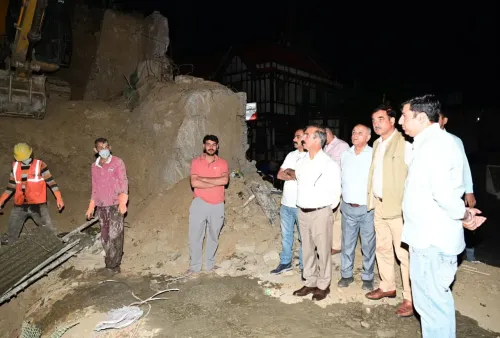
CM Sukhvinder Singh Sukhu conducted a ground inspection of ongoing utility duct and street-lighting works in Shimla on 24 May 2026 .
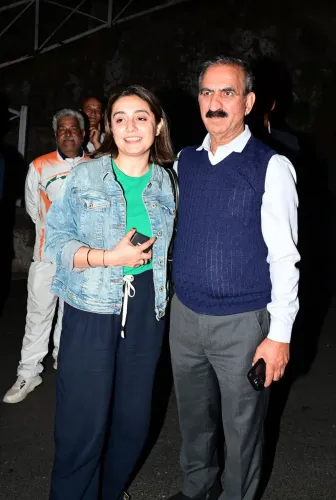
Tourists met during the walkthrough expressed satisfaction at the city becoming more organised and visually improved.
Visitors shared suggestions that the Chief Minister indicated would inform future planning.
The works are part of a longer pattern of urban upgrades in Shimla supported by central schemes such as AMRUT .
CM Sukhu's stated objective is to establish Shimla as a model destination balancing modern infrastructure , urban order and environmental sustainability .
Public participation — janbhagidari — was highlighted as a key element of the city's development approach.
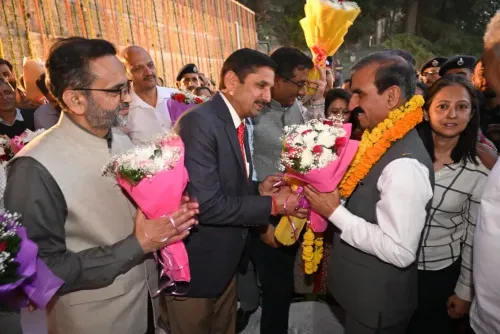
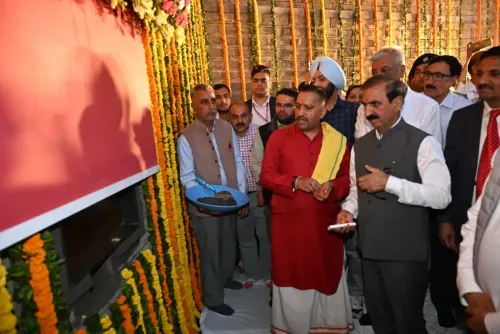
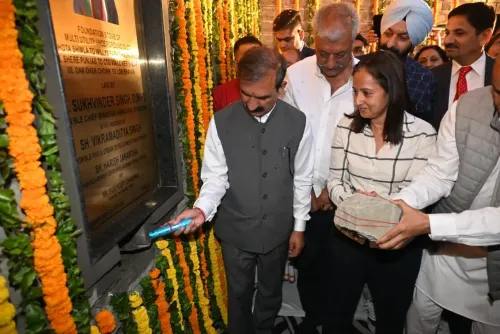
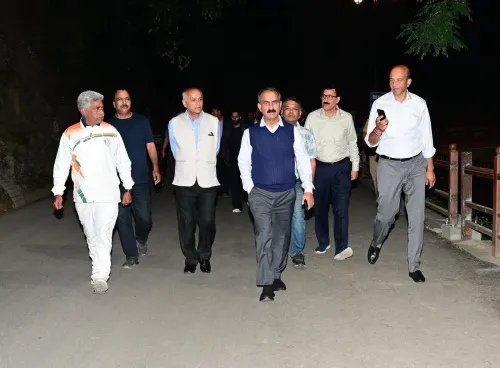
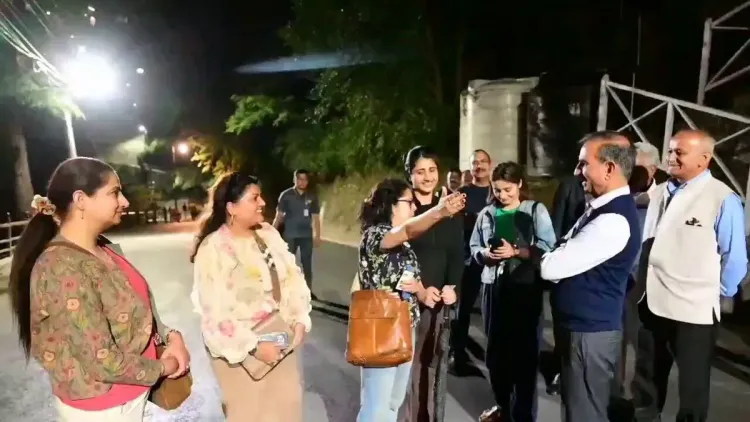
Himachal Pradesh Chief Minister Sukhvinder Singh Sukhu on Sunday, 24 May 2026, conducted a ground-level inspection of ongoing utility duct and street-lighting works in Shimla, interacting with tourists visiting the hill capital during the evening. The Chief Minister shared his observations on social media, underscoring the government's push to transform Shimla into a model destination combining modern infrastructure with environmental balance.
Context
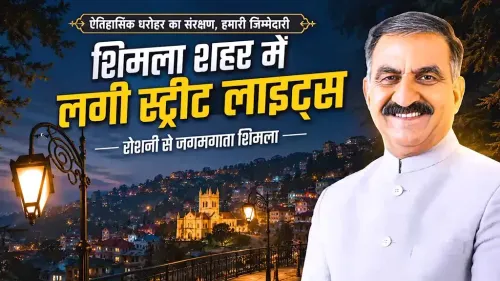
Posting in Hindi, CM Sukhu described a walkthrough of the city amid what he called a 'beautiful Shimla evening' — 'आज शिमला की खूबसूरत शाम के बीच' ['amid the beautiful evening of Shimla today']. He noted that tourists he met expressed happiness at seeing the city become 'more beautiful, organised and improved' than before, and openly appreciated the ongoing government works. Visitors also shared suggestions that the Chief Minister said would be taken on board.
The post highlights two specific civic projects under way: utility ducting, which consolidates overhead cables and service lines underground, and the installation of new street lights across the city. Both are visible, resident-facing improvements that directly affect the pedestrian experience in a heavily visited hill town.
Policy Backdrop
Shimla has received central government support for urban upgrades under the Atal Mission for Rejuvenation and Urban Transformation (AMRUT), launched in 2015, which has funded water supply, sewerage and urban mobility projects in the city. The Himachal Pradesh Urban Development Department has periodically executed street-lighting modernisation and underground utility projects in the capital since the early 2010s, making the current works part of a longer institutional pattern.
Across Indian hill states, targeted urban-amenity upgrades have accelerated as governments seek to revive tourism after the pandemic while managing the chronic pressures of congestion and environmental fragility in Himalayan ecosystems. Combining visible civic works with direct public engagement has become a recognisable governance signal, aligning state action with national urban missions that stress integrated infrastructure and sustainability.
Stakeholders and Impact
Shimla functions simultaneously as the state capital, a major commercial hub and one of India's most visited hill destinations, meaning infrastructure improvements affect a wide cross-section of users — permanent residents, daily commuters, local traders and seasonal tourists alike. CM Sukhu specifically noted that tourists arrive already curious about Himachal Pradesh, reflecting the state's strong pre-visit brand awareness that better civic infrastructure is expected to reinforce.
The Chief Minister stressed the importance of 'जनभागीदारी' ['public participation'] in Shimla's development, framing citizen and visitor feedback as an integral input rather than an afterthought. This positions the government's urban programme as iterative and consultative, with tourist suggestions potentially feeding into future planning decisions.
What's Next
The completion timelines and maintenance arrangements for the utility duct and LED street-light installations will be closely watched as indicators of whether the current momentum translates into durable urban change. Any follow-up announcements — including expanded pedestrian zones or revisions to a broader tourism master plan — in the next state budget cycle will signal how far the government intends to carry the current push.
CM Sukhu's stated goal is clear: to make Shimla a stronger 'ideal tourism and residential destination' through modern infrastructure, organised urban management and environmental balance — a benchmark against which both residents and visitors are likely to hold the administration accountable.
Point of View
Particularly in tourism-dependent economies where the gap between promise and ground reality is acutely felt by visitors. For the Congress government in Himachal Pradesh, which has faced fiscal pressures since taking office in late 2022, showcasing tangible urban improvements in the capital serves a dual purpose: reassuring residents of delivery and reinforcing the state's tourism brand ahead of the peak summer season. The emphasis on tourist feedback as a planning input also signals an intent to frame governance as participatory — a posture that carries political value in a state where tourism is both an economic lifeline and a reputational asset.
NationPress
19 Sept 2026
Frequently Asked Questions
What infrastructure work is ongoing in Shimla in 2026?
Shimla is currently undergoing utility duct installation — which consolidates overhead cables and service lines underground — and the fitting of new street lights across the city, as confirmed by Chief Minister Sukhvinder Singh Sukhu during a site inspection on 24 May 2026.
What is the AMRUT scheme and how does it relate to Shimla?
AMRUT, the Atal Mission for Rejuvenation and Urban Transformation, is a central government scheme launched in 2015 that provides funding for urban infrastructure including water supply, sewerage and mobility upgrades. Shimla has previously received AMRUT support and the current civic works align with the mission's objectives.
Why is CM Sukhu focusing on Shimla's urban development?
As the state capital and Himachal Pradesh's primary tourism hub, Shimla's infrastructure directly affects both residents and the large number of visitors the state depends on economically. CM Sukhu has stated his goal is to make Shimla a model destination combining modern infrastructure, organised urban management and environmental balance.
How are tourists responding to Shimla's development works?
According to CM Sukhu's account of his 24 May 2026 walkthrough, tourists expressed happiness at seeing Shimla become more beautiful and organised than before, praised the government's ongoing works, and also shared constructive suggestions for further improvements.
What does 'utility duct' work in Shimla mean for residents?
Utility ducting involves placing overhead cables — electricity, telecom and other service lines — into underground conduits. For Shimla residents and visitors, this typically means cleaner skylines, reduced risk of cable-related hazards and a more organised streetscape, particularly in heritage and high-footfall areas.