CM Sukhu tables Sukhashray Bill 2026 for orphaned children

Synopsis
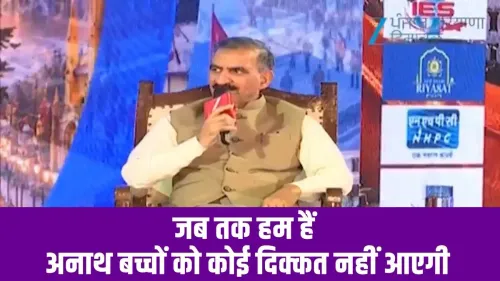
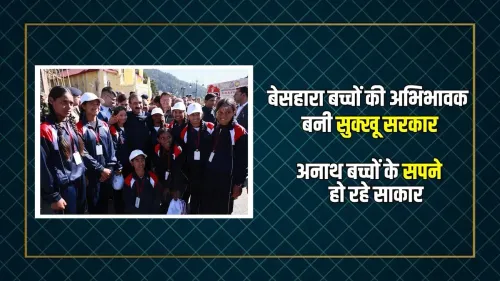
Himachal Pradesh CM Sukhvinder Singh Sukhu announced the Sukhashray Vidheyak 2026, committing the state government to bearing all expenses of orphaned children until they turn 27, covering education, care and self-reliance opportunities.
Key Takeaways
CM Sukhvinder Singh Sukhu announced the Sukhashray Vidheyak 2026 on 20 November 2026 .
The bill targets children who have lost both parents, providing a full state-funded support framework.
State support will extend until beneficiaries reach 27 years of age — well beyond most comparable state schemes.
Coverage includes education, healthcare, care and pathways to self-reliance .
The bill must still be tabled and passed in the Himachal Pradesh Vidhan Sabha with matching budgetary provisions.
Himachal Pradesh has a track record of cross-party social security expansion for vulnerable groups.
A child who loses both parents in Himachal Pradesh will no longer face that grief alone — the state has pledged to stand in as guardian, financier, and champion of their future, all the way to age 27. Himachal Pradesh Chief Minister Sukhvinder Singh Sukhu announced on Friday, 20 November 2026, that his government is tabling the 'Sukhashray Vidheyak 2026' — a legislative shield designed to give orphaned children not just survival, but a dignified shot at life.
What the Sukhashray Bill promises
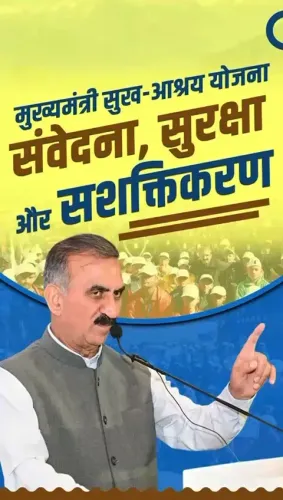
In his post, CM Sukhu described the bill as 'ek majboot suraksha kavach' — 'a strong protective armour' — for children who have lost their parents. The commitment is sweeping: the Himachal Pradesh government will bear the complete expenses of these children until they reach 27 years of age, ensuring access to better education, healthcare and care, and meaningful pathways to self-reliance. The choice of 27 as the threshold is deliberate — it pushes well past the age of schooling into the years when a young adult is finding economic footing, applying for jobs, or completing higher education.
Himachal's record on social-sector legislation
Himachal Pradesh has a cross-party record of expanding social security for vulnerable groups. Indian states have periodically enacted targeted laws for children who have lost parents, typically bundling education subsidies, health cover, and skill development. What distinguishes the Sukhashray Bill — if its provisions hold as announced — is the extended age ceiling of 27, which goes beyond most comparable state schemes that cap support at 18 or 21. The Congress-led government in Shimla has positioned social-sector spending as a defining pillar of its tenure since CM Sukhu took office in December 2022.
From announcement to Vidhan Sabha floor
The critical next step is the bill's tabling and passage in the Himachal Pradesh Vidhan Sabha, along with the budgetary provisions needed to actually fund the commitment across thousands of beneficiaries over decades. A promise of full state expenditure until age 27 per child is fiscally significant, and the implementation architecture — which department administers it, how beneficiaries are identified, what 'full expenses' covers — will determine whether the bill becomes a genuine safety net or a well-intentioned statute without muscle.
For the children it is designed to serve, the Sukhashray Bill is a rare legislative wager: that the state can be a good enough parent to close the opportunity gap that grief so often opens. Whether Himachal Pradesh makes that wager pay off will be the story to watch when the assembly takes up the bill.
Point of View
Targeted social welfare legislation. Extending state guardianship to age 27 is a politically bold ceiling — it signals ambition but also creates a long-duration fiscal obligation that will test implementation capacity. For the Congress party nationally, such state-level bills serve as proof-of-concept models ahead of election cycles. The real test is whether the Vidhan Sabha passage is paired with ring-fenced budget lines, or whether the announcement outpaces the delivery architecture.
NationPress
20 Nov 2026
Frequently Asked Questions
What is the Sukhashray Vidheyak 2026?
The Sukhashray Vidheyak 2026 is a proposed law announced by Himachal Pradesh Chief Minister Sukhvinder Singh Sukhu that commits the state government to bearing all expenses of orphaned children — those who have lost both parents — until they reach the age of 27, covering education, healthcare, care and opportunities to become self-reliant.
Who will benefit from the Sukhashray Bill in Himachal Pradesh?
The bill is designed for children in Himachal Pradesh who have lost both their parents, providing them with state-funded support for education, healthcare and overall care up to the age of 27.
Until what age will Himachal Pradesh support orphaned children under this bill?
Under the Sukhashray Vidheyak 2026, the Himachal Pradesh government will support eligible orphaned children until they turn 27 years of age.
Has the Sukhashray Bill been passed in the Himachal Pradesh Vidhan Sabha?
As of the announcement on 20 November 2026, the bill has been introduced but its tabling and formal passage in the Himachal Pradesh Vidhan Sabha, along with budgetary provisions, is the next critical step.
What is CM Sukhu's track record on social welfare in Himachal Pradesh?
Since taking office in December 2022, Chief Minister Sukhvinder Singh Sukhu's Congress-led government has positioned social-sector spending and welfare legislation as a central part of its governance agenda, continuing Himachal Pradesh's cross-party tradition of expanding protections for vulnerable groups.