CM Tamang Submits SIR Form, Urges Sikkim Voters to Enrol
Synopsis
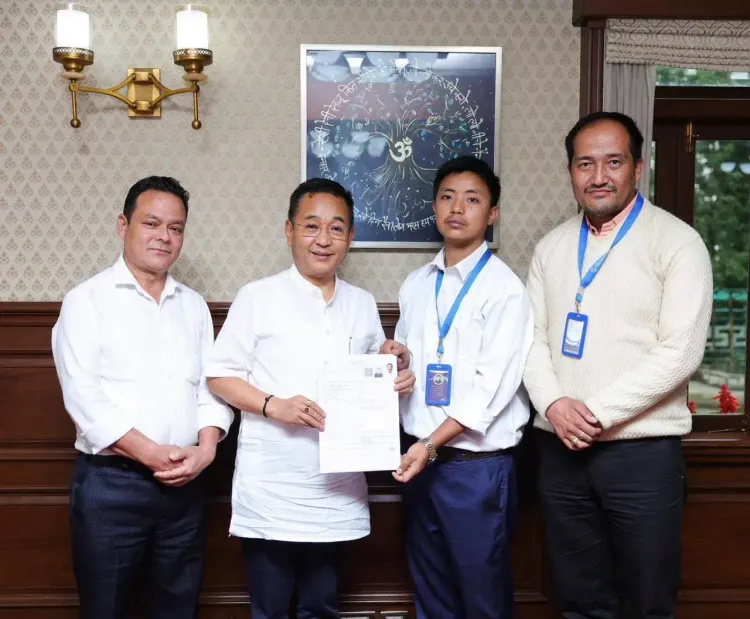
Sikkim Chief Minister Prem Singh Tamang publicly submitted his SIR electoral roll form in Soreng District on 22 June 2026, alongside local election officials, and called on all eligible Sikkim residents to complete the process within the stipulated deadline to keep voter records accurate.
Key Takeaways
Sikkim Chief Minister Prem Singh Tamang submitted his SIR form at Soreng District on 22 June 2026 .
The submission was made before Supervisor Jas Bahadur Tamang and BLOs Semi Hang Limboo and Deepson Tamang .
The SIR exercise is part of the Election Commission of India's Special Summary Revision of electoral rolls.
Soreng District was created in 2021 , making it one of Sikkim's newer administrative units with a recently constituted BLO network.
The Chief Minister urged all eligible citizens to submit forms within the stipulated timeline to maintain accurate voter records.
Accurate electoral rolls directly affect voter eligibility for any forthcoming election or by-election in Sikkim .
Sikkim Chief Minister Prem Singh Tamang on Monday, 22 June 2026, publicly submitted his Special Summary Revision (SIR) form at Soreng District in western Sikkim, in the presence of election officials, urging all eligible residents of the state to complete the exercise before the deadline.
Context
The Chief Minister submitted his form in the presence of Mr. Jas Bahadur Tamang, Supervisor, and Mr. Semi Hang Limboo and Mr. Deepson Tamang, Booth Level Officers (BLOs) of Soreng District. By personally appearing before grassroots election officials, Tamang sought to signal that no citizen — including the highest constitutional office-holder in the state — is exempt from the electoral roll verification process.
In his post, the Chief Minister stated: 'Participating in this process helps ensure that our records remain accurate and strengthens our democratic system.' The appeal was directed at all eligible citizens of Sikkim and carried an implicit call to act within the stipulated timeline set by election authorities.
Policy Backdrop
The Special Summary Revision of electoral rolls is a periodic exercise conducted under the superintendence of the Election Commission of India (ECI). The ECI has run annual revision drives since the 1990s, intensifying them ahead of scheduled Lok Sabha and state assembly elections. The process allows voters to register afresh, migrate their entries, update demographic details, and correct errors — all through a standardised form submitted to the BLO of their respective polling booth.
Soreng District, created in 2021 by carving out areas from the earlier West Sikkim district, is among the newer administrative units in the state. Its BLO network is relatively recently constituted, making outreach campaigns particularly important to ensure comprehensive voter coverage in the district.
Booth Level Officers are the frontline representatives of the electoral machinery, appointed by the ECI to verify voter particulars at the polling-booth level. Their role during a summary revision period is to receive, verify, and forward SIR forms submitted by residents.
Stakeholders and Impact
The primary stakeholders are Sikkim's eligible voters — those who are 18 years or older and have not yet registered, as well as existing voters who need to update their details. An accurate electoral roll directly determines who can exercise their franchise in any forthcoming election or by-election in the state.
State governments across northeastern India have routinely joined ECI revision drives to maximise form submissions, reduce duplicate entries, and bring first-time voters into the system. A visible lead from the Chief Minister's office typically amplifies public participation, particularly in smaller hill states where community trust in leadership translates into civic action.
The Sikkim Krantikari Morcha (SKM), founded and led by Prem Singh Tamang, has held power in the state since 2019. Any improvement in the accuracy and completeness of the electoral roll has implications for all political parties contesting future elections in Sikkim.
What's Next
The immediate milestone is the final date for SIR form submission in Sikkim, after which the Chief Electoral Officer is expected to announce a claims-and-objections period during which residents can contest or correct entries in the draft roll. The revised, final electoral roll is typically published after this period closes.
Whether the Chief Minister's public participation translates into measurably higher enrolment numbers in Soreng District and across Sikkim will be a test of how effectively symbolic leadership can drive administrative outcomes at the booth level.
Point of View
Where electoral margins are often narrow, the completeness of the voter roll carries outsized political weight for every party. The move also reflects a broader pattern seen across northeastern states, where ruling governments have leveraged executive visibility to accelerate ECI-mandated enrolment drives. The real measure of success will be whether booth-level submission rates in Soreng and other districts show a meaningful uptick before the revision window closes.
NationPress
22 Jun 2026
Frequently Asked Questions
What is the SIR form in Sikkim elections?
The SIR form is used during the Election Commission of India's Special Summary Revision of electoral rolls, allowing citizens to register as new voters, update existing details, or migrate their voter entries to a new address.
Why did Sikkim CM Prem Singh Tamang submit the SIR form publicly?
Chief Minister Tamang submitted the form publicly to encourage eligible Sikkim residents to participate in the electoral roll revision process and to demonstrate that the exercise applies to all citizens regardless of their position.
What is the role of a Booth Level Officer (BLO) in Sikkim?
A Booth Level Officer is a grassroots election official appointed by the Election Commission of India to receive, verify, and forward voter registration and revision forms submitted by residents of a specific polling booth area.
Where is Soreng District located?
Soreng District is located in western Sikkim and was created in 2021 by carving out areas from the earlier West Sikkim district.
What happens after the SIR form submission deadline in Sikkim?
After the submission deadline, the Chief Electoral Officer announces a claims-and-objections period during which residents can contest or correct entries in the draft electoral roll, following which the final revised roll is published.