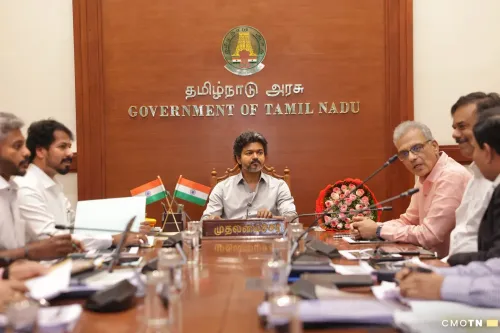
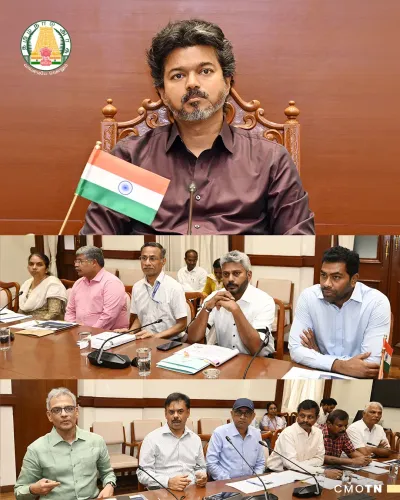
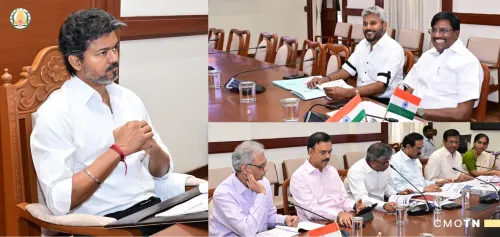
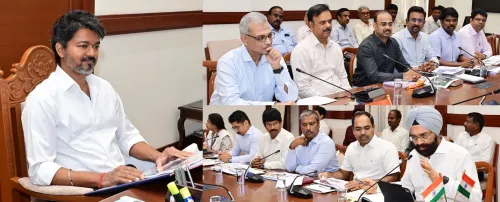
CM Vijay Chairs Water Resources Review at Secretariat

Synopsis
Chief Minister Joseph Vijay chaired a review of Tamil Nadu's Water Resources Department schemes at the state secretariat on 20 July 2026, signalling administrative focus on irrigation and water infrastructure ahead of the northeast monsoon season.
Key Takeaways
Chief Minister Joseph Vijay chaired a Water Resources Department review meeting on 20 July 2026 at the Tamil Nadu Chief Secretariat in Chennai.
The meeting assessed the schemes and operations of the Water Resources Department, which oversees dams, canals, irrigation, and water supply infrastructure.
High-level departmental reviews of this kind are standard administrative practice under Tamil Nadu governments, particularly ahead of monsoon seasons.
Farmers across the state are the primary stakeholders, as outcomes can affect irrigation timelines, fund releases, and drought or flood mitigation measures.
Follow-up announcements on project completions, new schemes, or budget releases are expected from the government in subsequent communications.
The Chief Minister's Office of Tamil Nadu announced on Monday, 20 July 2026 that Chief Minister Joseph Vijay chaired a review meeting on the schemes and operations of the Water Resources Department at the state secretariat in Chennai.
The post, shared in Tamil, stated: 'மாண்புமிகு தமிழ்நாடு முதலமைச்சர் திரு.ச.ஜோசப் விஜய் அவர்கள் தலைமையில் இன்று (20.7.2026) தலைமைச் செயலகத்தில், நீர்வளத் துறையின் திட்டங்கள் மற்றும் செயல்பாடுகள் குறித்த ஆய்வுக்கூட்டம் நடைபெற்றது.' — 'Under the chairmanship of the Honourable Chief Minister of Tamil Nadu, Mr Joseph Vijay, a review meeting on the schemes and operations of the Water Resources Department was held today (20.7.2026) at the Chief Secretariat.'
Context
The Water Resources Department is the nodal agency of the Tamil Nadu government responsible for managing irrigation infrastructure, dams, canals, and water supply systems across the state. Review meetings of this nature are convened at the secretariat level to assess scheme progress, fund utilisation, and readiness for seasonal weather events such as the northeast monsoon.
Such high-level administrative reviews have been a standard practice under successive Tamil Nadu governments, reflecting the state's long-standing emphasis on water governance amid monsoon variability.
Policy Backdrop
Tamil Nadu's water infrastructure agenda has historically been shaped by two persistent pressures: inter-state river disputes — most notably over the Cauvery — and the state's vulnerability to both drought and cyclone-driven flooding. Successive administrations have used periodic departmental reviews to course-correct on scheme timelines and budget absorption.
Water resource planning in the state spans a wide portfolio, from large reservoir maintenance and canal modernisation to groundwater recharge schemes and urban water supply projects, all of which typically come under scrutiny at such meetings.
Stakeholders and Impact
The primary stakeholders of any Water Resources Department review are farmers across Tamil Nadu's agricultural districts, who depend on irrigation infrastructure for kharif and rabi cultivation cycles. Decisions emerging from such meetings — including fund releases, scheme accelerations, or drought-mitigation measures — have a direct bearing on agricultural productivity in the state.
Urban residents and local bodies also have a stake, as the department's mandate extends to drinking water supply infrastructure in several districts. Any revision to project timelines or budgets would affect service delivery at the ground level.
What's Next
Follow-up communications from the Chief Minister's Office and the Water Resources Department are expected to detail specific decisions taken at the meeting, including project completion targets, budget releases, or new scheme announcements. The review comes ahead of the northeast monsoon season, making flood preparedness and reservoir management likely agenda items. Observers will watch for any announcements on inter-state water-sharing or major infrastructure completions in subsequent government orders.
Point of View
As outcomes directly affect farmers and rural constituencies that form a significant vote base. The meeting also fits a broader pattern of new administrations using departmental reviews to stamp authority on infrastructure delivery and signal responsiveness on agrarian issues. Whether the review translates into concrete fund releases or scheme accelerations will be the real test of its significance.
NationPress
21 Jul 2026
Frequently Asked Questions
What was the Water Resources Department review meeting about in Tamil Nadu?
The review meeting, chaired by Chief Minister Joseph Vijay on 20 July 2026 at the Tamil Nadu Chief Secretariat, assessed the schemes and operations of the state's Water Resources Department, covering areas such as irrigation infrastructure, dams, canals, and water supply projects.
Who is Joseph Vijay and what is his role in Tamil Nadu?
Joseph Vijay is the Chief Minister of Tamil Nadu, heading the state government. He chaired the Water Resources Department review meeting at the secretariat on 20 July 2026.
Why does Tamil Nadu hold Water Resources Department reviews?
Tamil Nadu holds periodic Water Resources Department reviews to assess scheme progress, monitor fund utilisation, and prepare for seasonal events such as the northeast monsoon, drought conditions, or flooding — challenges the state faces regularly due to its geography and inter-state river dependencies.
Who benefits from Tamil Nadu's water resources schemes?
Farmers are the primary beneficiaries, as irrigation infrastructure directly affects agricultural productivity. Urban residents and local bodies also benefit, since the department manages drinking water supply infrastructure in several districts.
What announcements can be expected after the Tamil Nadu water review meeting?
Follow-up communications are expected to detail specific decisions such as new scheme launches, budget releases, project completion timelines, or flood and drought preparedness measures, particularly relevant ahead of the northeast monsoon season.