CM Vijay Meets FEFSI Leaders at Secretariat
Synopsis
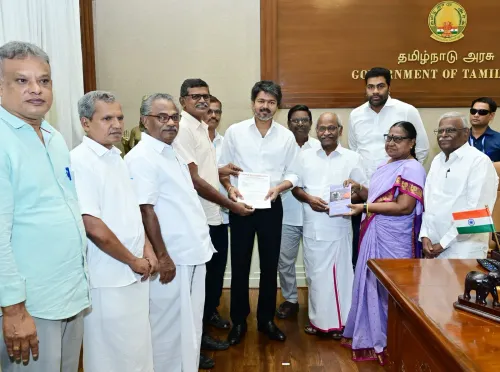
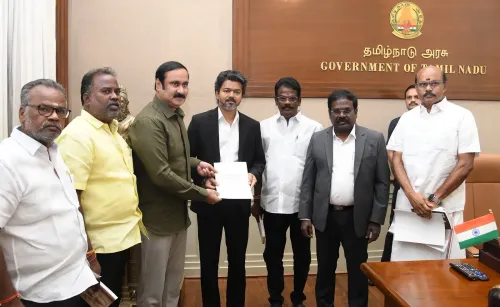
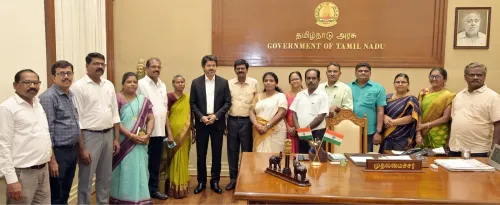
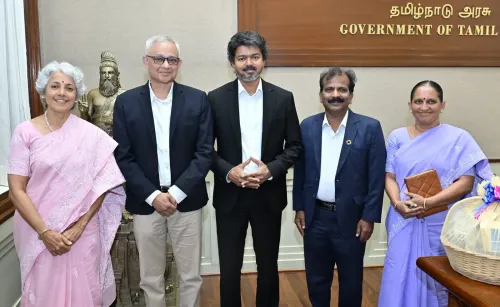
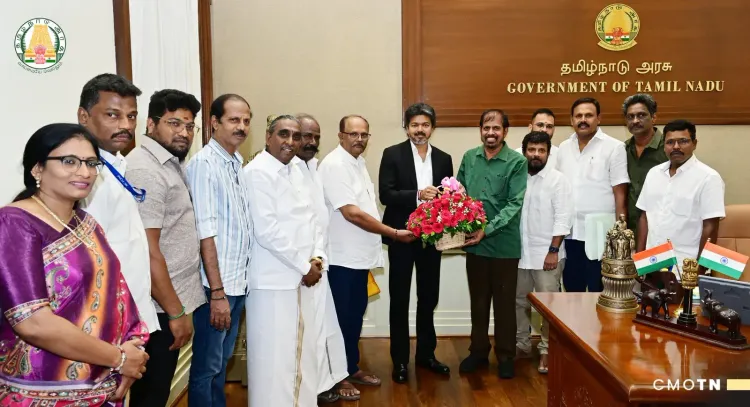
Tamil Nadu Chief Minister S. Joseph Vijay received a delegation from FEFSI at the Chief Secretariat on 2 July 2026. President R.K. Selvamani, general secretary P.N. Swaminathan, treasurer S.P. Senthilkumar and other executives represented the federation in discussions on film-industry concerns.
Key Takeaways
Joseph Vijay met FEFSI leaders at the Chief Secretariat, Chennai on 2 July 2026 .
The FEFSI delegation included president R.K.
Selvamani , general secretary P.N.
Swaminathan , and treasurer S.P.
FEFSI is the principal trade union for film technicians and workers across South Indian cinema.
Tamil Nadu established the Tamil Nadu Film Development Corporation in 1970 to regulate and promote the state's film sector.
No specific policy announcements were detailed in the official post; outcomes are expected to emerge in the coming weeks.
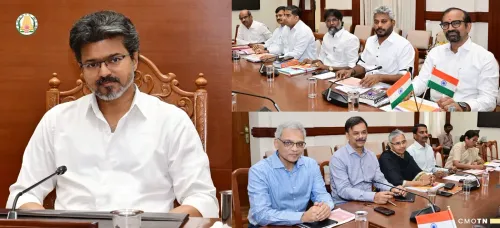
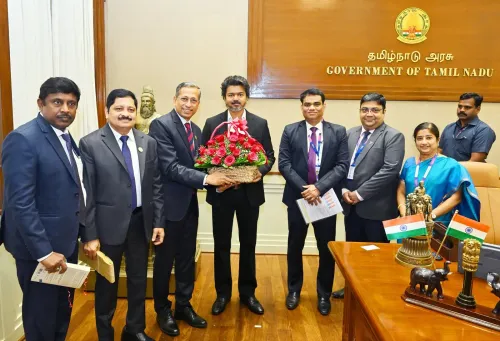
Tamil Nadu Chief Minister S. Joseph Vijay met senior office-bearers of the Federation of Film Employees of South India (FEFSI) at the Chief Secretariat, Chennai, on 2 July 2026. The delegation was led by FEFSI president R.K. Selvamani, general secretary P.N. Swaminathan, and treasurer S.P. Senthilkumar, along with other executives of the federation.
Context
The Chief Minister's Office of Tamil Nadu confirmed the meeting through an official post on X, sharing that the FEFSI leadership called on CM Vijay at the Chief Secretariat. FEFSI is one of the largest trade unions representing film technicians, daily-wage workers, and other employees across the South Indian cinema industry, with a significant base in Tamil Nadu.
The meeting brings together the state's top executive and the principal labour body of an industry that employs hundreds of thousands of workers across production, post-production, and distribution.
Policy Backdrop
Tamil Nadu has historically maintained close institutional ties with its film sector. The state established the Tamil Nadu Film Development Corporation in 1970 to promote and regulate cinema, and successive governments have engaged with unions such as FEFSI on issues ranging from worker welfare to production incentives.
Film-worker welfare boards, insurance schemes, and revised remuneration structures have periodically been on the agenda in such high-level consultations. The broader pattern reflects the dual role cinema plays in Tamil Nadu — as a major employer and as a culturally influential institution.
Stakeholders and Impact
FEFSI's membership spans a wide cross-section of the industry: camera assistants, light technicians, set workers, drivers, and other daily-wage earners who form the backbone of Tamil film production. Any policy outcomes emerging from this meeting would directly affect their livelihoods and working conditions.
The presence of the federation's top three office-bearers — president, general secretary, and treasurer — alongside other executives signals that the delegation raised substantive concerns rather than making a routine courtesy call. The outcome of the discussions has not been officially detailed in the post.
What's Next
Observers of Tamil Nadu's film-industry policy will watch for possible announcements in the coming weeks on film-worker welfare board schemes, revised production incentives, or regulatory changes affecting the South Indian cinema ecosystem. The meeting at the Chief Secretariat level suggests the government is actively engaging with organised labour in the sector.
Any formal policy decisions are expected to be communicated through the Tamil Nadu Film Development Corporation or the state's Labour Department, which typically administers welfare provisions for unorganised and semi-organised workers in the entertainment industry.
Point of View
And unions like FEFSI carry significant influence over production schedules and worker mobilisation. The fact that all three principal office-bearers attended suggests the federation is pressing specific demands, possibly on welfare board coverage or wage revisions, rather than making a symbolic visit. How the administration responds will be an early signal of CM Vijay's approach to managing the industry's powerful labour ecosystem.
NationPress
2 Jul 2026
Frequently Asked Questions
Who is FEFSI and what does it do?
FEFSI, the Federation of Film Employees of South India, is a major trade union representing technicians, daily-wage workers and other employees in the South Indian film industry, including Tamil cinema. It negotiates on wages, working conditions and welfare schemes on behalf of its members.
Why did FEFSI meet Tamil Nadu CM Joseph Vijay?
The FEFSI delegation, led by president R.K. Selvamani, met CM Joseph Vijay at the Chief Secretariat on 2 July 2026 to discuss concerns related to the film industry. The specific agenda was not detailed in the official announcement.
What welfare schemes exist for Tamil Nadu film workers?
Tamil Nadu administers welfare provisions for film workers through the Tamil Nadu Film Development Corporation and the Labour Department. These have historically included insurance schemes, welfare board benefits and production incentives, though specific current schemes depend on active government notifications.
What is the Tamil Nadu Film Development Corporation?
The Tamil Nadu Film Development Corporation was established in 1970 to promote and regulate the state's film industry. It functions as the nodal body for policy implementation, co-productions and welfare measures related to Tamil cinema.
What could come out of the CM Vijay and FEFSI meeting?
Possible outcomes include announcements on film-worker welfare board schemes, revised production incentives or new labour regulations for the entertainment sector. Formal decisions are typically communicated through the Tamil Nadu Film Development Corporation or the Labour Department.