CM Vijay Meets Rahul Gandhi in New Delhi
Synopsis
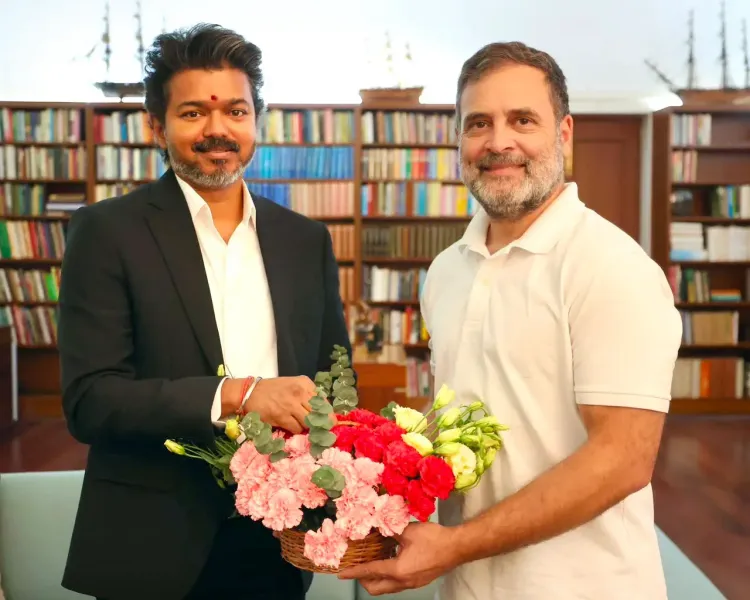
Tamil Nadu Chief Minister C. Joseph Vijay met Lok Sabha Leader of the Opposition Rahul Gandhi in New Delhi on June 10, 2026. The Chief Minister's Office described the meeting as a courtesy call, with photographs released from the interaction. The meeting is among CM Vijay's early high-profile political engagements at the national level.
Key Takeaways
Tamil Nadu Chief Minister C.
Joseph Vijay met Rahul Gandhi , Leader of the Opposition in the Lok Sabha, in New Delhi on June 10, 2026 .
The meeting was officially described as a courtesy call by the Chief Minister's Office of Tamil Nadu.
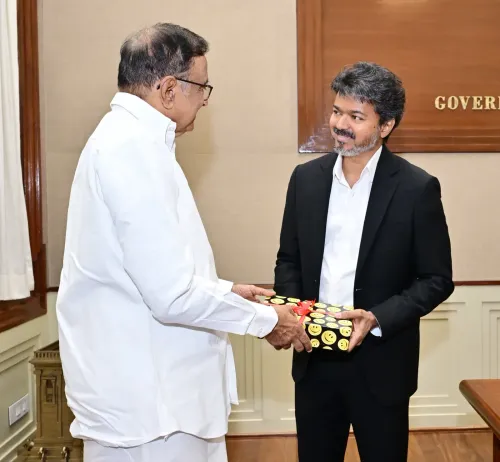
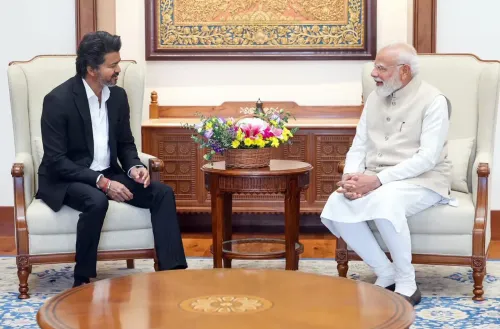
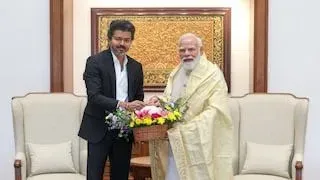
Two photographs from the meeting were shared in the official post.
Vijay founded the Tamilaga Vettri Kazhagam (TVK) party in February 2024 before contesting the 2026 Tamil Nadu assembly elections.
No specific policy outcomes or joint statements were announced following the meeting.
The meeting reflects the routine federal practice of state chief ministers engaging with national political figures across party lines.
The Chief Minister's Office of Tamil Nadu announced on Wednesday, June 10, 2026, that Tamil Nadu Chief Minister C. Joseph Vijay met Lok Sabha Leader of the Opposition Rahul Gandhi in New Delhi in a courtesy call. The meeting marks one of the first high-profile inter-party engagements by the newly elected Chief Minister at the national level.
Context
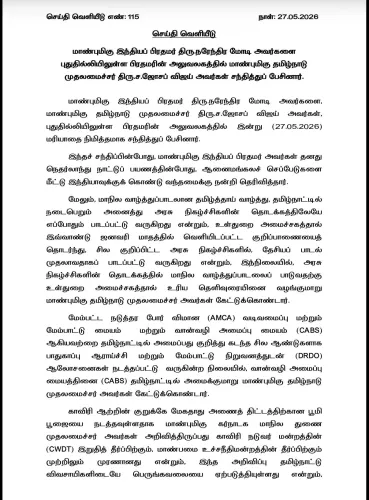
The official post from the Chief Minister's Office read: 'மாண்புமிகு தமிழ்நாடு முதலமைச்சர் திரு.ச.ஜோசப் விஜய் அவர்கள் இன்று (10.6.2026) புதுதில்லியில், மக்களவை எதிர்க்கட்சித் தலைவர் திரு.ராகுல் காந்தி அவர்களை மரியாதை நிமித்தமாக சந்தித்துப் பேசினார்.' Translated: 'The Honourable Tamil Nadu Chief Minister Mr. C. Joseph Vijay today (10.6.2026) in New Delhi met and spoke with Lok Sabha Leader of the Opposition Mr. Rahul Gandhi as a courtesy call.' The post was accompanied by two photographs from the meeting.
Policy Backdrop
C. Joseph Vijay, widely known by his screen name Thalapathy Vijay, formally entered politics in February 2024 when he launched the Tamilaga Vettri Kazhagam (TVK) party ahead of the 2026 Tamil Nadu assembly elections. His transition from one of Tamil cinema's biggest stars to the state's top executive represents a significant political arc in Tamil Nadu's history. The TVK's rise reflects a broader pattern of film personalities entering electoral politics in the state.
Rahul Gandhi has served as the Leader of the Opposition in the Lok Sabha, a constitutionally significant role that places him as the principal voice of the opposition in the lower house of Parliament. Courtesy meetings between state chief ministers and national opposition leaders are a routine feature of India's federal political culture, used to maintain communication channels across party lines on issues ranging from central funding to pending legislation.
Stakeholders and Impact
The meeting holds significance for both Tamil Nadu's political establishment and the national Congress party. For CM Vijay, engaging with a major national opposition figure signals his intent to build relationships across the political spectrum as he navigates the responsibilities of governance. For Gandhi, the meeting underscores the Congress party's interest in maintaining dialogue with regional governments and emerging political formations.
Tamil Nadu has historically been a state with strong regional parties, and any alignment or understanding between a regional chief minister and a national opposition figure carries weight in the broader calculus of coalition politics. Observers from both Chennai and New Delhi will note the optics of this early outreach.
What's Next
No formal joint statement or specific policy outcome was announced following the meeting, consistent with its characterisation as a courtesy call. Follow-up engagements — including possible visits by national leaders to Chennai or further bilateral discussions on centre-state issues — remain a possibility. The political community will watch whether this meeting develops into a sustained working relationship on legislative or federal matters.
Point of View
Engaging with the principal opposition figure in Parliament signals an awareness that state governance inevitably intersects with central politics on funding, legislation, and federal disputes. The meeting also offers Gandhi's Congress an opportunity to signal relevance in a state where regional parties have long dominated. Whether this courtesy call matures into a substantive political alignment will be the defining question to watch in the months ahead.
NationPress
23 Sept 2026
Frequently Asked Questions
Why did Tamil Nadu CM Vijay meet Rahul Gandhi in New Delhi?
The Chief Minister's Office of Tamil Nadu described the meeting as a courtesy call. Such meetings between state chief ministers and national political leaders are routine in India's federal system and help maintain communication on governance and legislative matters.
Who is C. Joseph Vijay?
C. Joseph Vijay, widely known as Thalapathy Vijay, is a Tamil film actor who founded the Tamilaga Vettri Kazhagam (TVK) party in February 2024 and went on to become the Chief Minister of Tamil Nadu following the 2026 assembly elections.
What is Rahul Gandhi's current political position?
Rahul Gandhi serves as the Leader of the Opposition in the Lok Sabha, making him the principal opposition voice in India's lower house of Parliament.
What was the outcome of the CM Vijay and Rahul Gandhi meeting?
No specific policy outcomes or joint statements were announced. The meeting was characterised as a courtesy call, with the Chief Minister's Office releasing two photographs from the interaction.
What is the Tamilaga Vettri Kazhagam party?
Tamilaga Vettri Kazhagam (TVK) is a political party founded by C. Joseph Vijay in February 2024, ahead of the 2026 Tamil Nadu assembly elections.