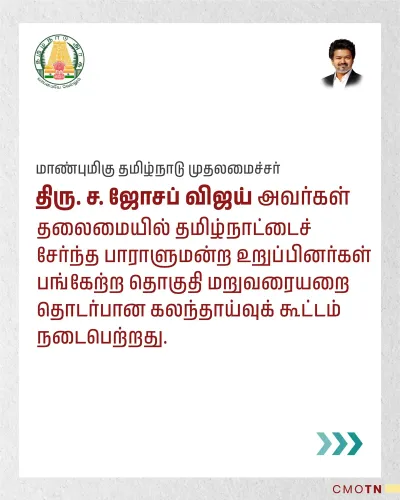
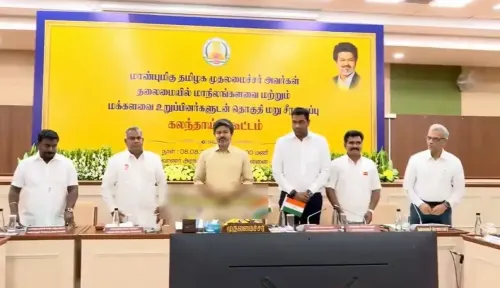
CM Vijay moves resolution in TN Assembly on Lok Sabha seat freeze
Synopsis
Tamil Nadu Chief Minister S. Joseph Vijay moved a government resolution in the state assembly on 12 August 2026, urging the Union to permanently fix Lok Sabha strength at 543, retain current inter-state seat proportions, and ensure women receive one-third of reserved constituencies in the next general elections.
Key Takeaways
Joseph Vijay moved a formal government resolution in the Tamil Nadu Legislative Assembly on 12 August 2026 .
The resolution demands the total Lok Sabha membership be permanently fixed at 543 seats .
It calls for the current inter-state proportional distribution of seats to be made permanent , shielding southern states from population-based reallocation.
It urges the Union government to ensure one-third of constituencies in the next Lok Sabha and state assembly elections are reserved for women.
The Women's Reservation Act (2023) currently ties implementation to a future delimitation exercise, which this resolution seeks to bypass.
The move is a formal government resolution, giving it official weight as a petition from the Tamil Nadu government to the Union.
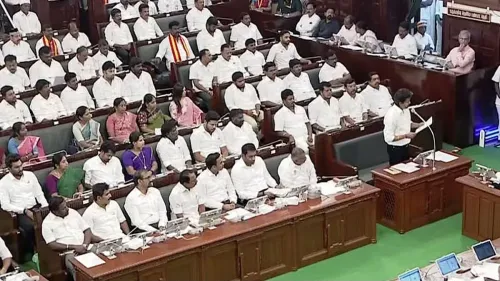
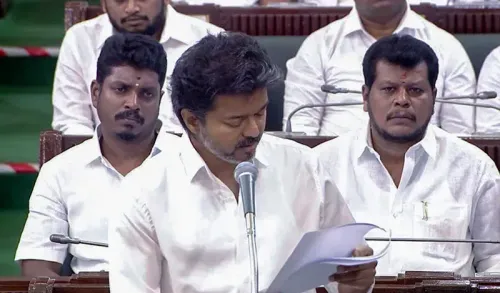
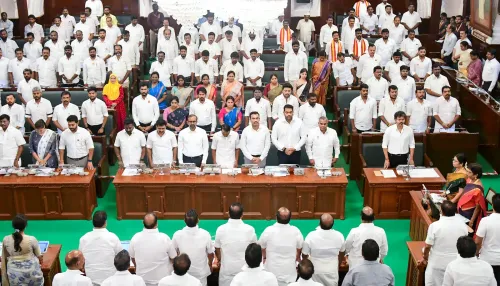
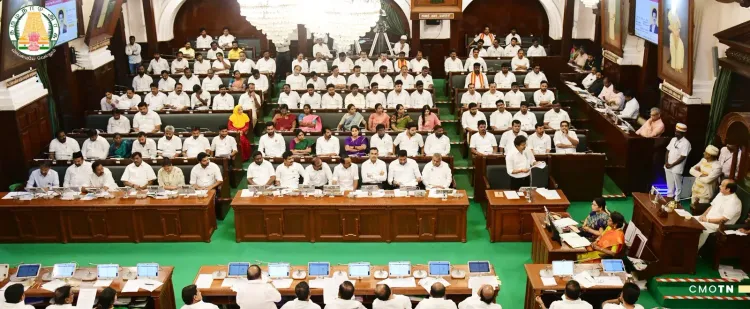
A resolution that cuts to the heart of India's federal compact landed on the floor of the Tamil Nadu Legislative Assembly on Wednesday, 12 August 2026 — moved by none other than the state's own Chief Minister. Chief Minister S. Joseph Vijay, addressing the House, formally urged the Union government to permanently fix the total Lok Sabha membership at 543 seats, lock in the current inter-state proportional representation of those seats, and guarantee that women receive one-third of constituency reservations in the next Lok Sabha and state assembly general elections.
The 543-seat demand and the delimitation fault line
The number 543 is not just a parliamentary statistic — it is the tripwire at the centre of India's most charged federal argument. Under the Constitution (Eighty-fourth Amendment) Act, 2001, the readjustment of Lok Sabha seats among states on the basis of population was frozen until after the first census published after 2026. That freeze is now expiring, and a fresh delimitation exercise — one that would use updated population data — could dramatically redraw the map of parliamentary power.
Southern states, Tamil Nadu foremost among them, have long warned that any population-based reallocation would punish states that successfully controlled their fertility rates. Fewer people, the argument goes, should not mean fewer representatives. By calling for the 543-seat total to be made permanent, and for current state-wise proportions to be locked in constitutionally, CM Vijay's resolution places Tamil Nadu squarely at the forefront of that southern coalition.
Women's reservation: the 2023 promise still waiting
The second plank of the resolution is equally consequential. The Constitution (One Hundred and Twenty-eighth Amendment) Act, 2023 — the Women's Reservation Act — legislated a one-third quota for women in the Lok Sabha and state assemblies. But the law tied its own implementation to the completion of a delimitation exercise, effectively deferring the quota to an undefined future date.
CM Vijay's resolution demands that this deferral end: women must receive their one-third share of reserved constituencies in the varavarukkum (upcoming) general elections, not after some future census-linked delimitation. The demand creates a direct tension — because the Union government cannot easily implement women's reservation without triggering the very delimitation that southern states fear.
A government resolution, not just a speech
Critically, this was a government resolution (arasinar thanit teermanam) moved by the Chief Minister himself — not a private member motion or a party statement. That distinction matters enormously: it carries the formal weight of the elected government of Tamil Nadu petitioning the Union, and it places the resolution on the official record of the state legislature. The Union government will now face pressure to respond, whether in Parliament or through the delimitation commission process.
The move arrives as speculation intensifies about when the next delimitation exercise will be announced and whether the 2021 census — itself delayed — will form its demographic basis. Every week of silence from New Delhi is a week in which the southern states' anxiety deepens.
Whether the Centre chooses to engage with Chennai's formal demand — or allows it to simmer into a larger federal confrontation — will define one of the most consequential constitutional debates of this decade.
Point of View
Tamil Nadu elevates the delimitation dispute from political rhetoric to an inter-governmental confrontation the Centre cannot easily dismiss. The dual demand — freezing seats and accelerating women's reservation — is strategically layered: it forces the Union to either implement women's quota without delimitation (conceding the southern argument) or admit that delimitation must come first (vindicating southern fears). This mirrors a broader pattern of southern state legislatures using formal resolutions to build a federal record ahead of what could be the most consequential delimitation exercise since independence.
NationPress
12 Aug 2026
Frequently Asked Questions
Why is Tamil Nadu demanding the Lok Sabha seat count be fixed at 543?
Tamil Nadu fears that a fresh delimitation based on updated population data would reduce its share of Lok Sabha seats because the state has lower population growth than several northern states. Fixing the total at 543 and locking in current state-wise proportions would prevent any such reduction.
What is the Women's Reservation Act and why is it not yet in force?
The Constitution (One Hundred and Twenty-eighth Amendment) Act, 2023 reserves one-third of Lok Sabha and state assembly seats for women, but the law conditions its implementation on the completion of a delimitation exercise, effectively deferring it to an unspecified future date.
What is a government resolution in the Tamil Nadu Assembly?
A government resolution ( arasinar thanit teermanam ) is a formal motion moved by the ruling government, carrying official state weight as a petition or position of the elected government — distinct from private member motions or party statements.
When is the next delimitation exercise expected in India?
The freeze on Lok Sabha seat readjustment was set to last until after the first census published after 2026. The timing of the next delimitation exercise depends on when the Union government announces the census and constitutes a Delimitation Commission.
Which other southern states share Tamil Nadu's concern about delimitation?
States including Kerala, Karnataka, Andhra Pradesh, and Telangana have expressed similar concerns, arguing that their lower fertility rates and successful population control should not result in reduced parliamentary representation under a population-based delimitation.