CM Vijay Reviews Northeast Monsoon Readiness at Chennai EOC
Synopsis
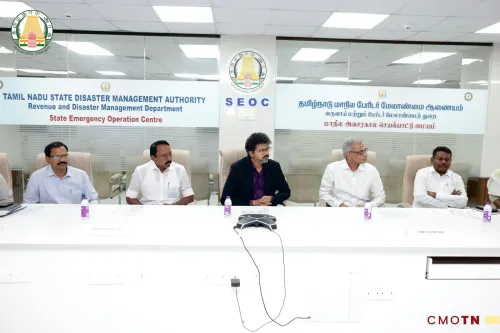
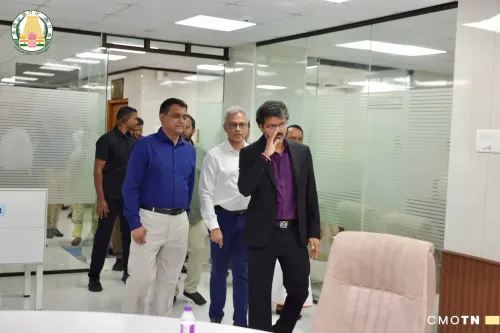
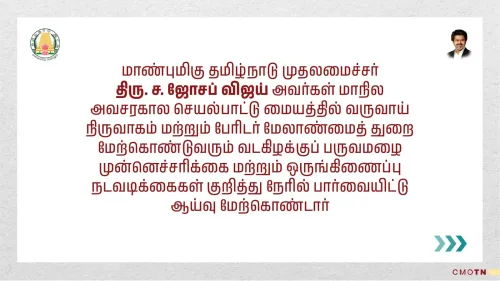
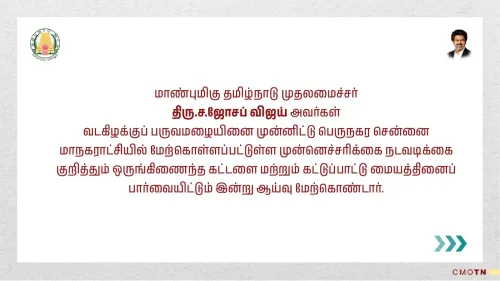
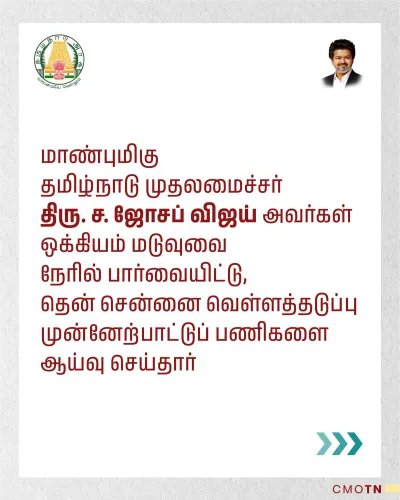
Chief Minister C. Joseph Vijay visited the State Emergency Operations Centre at Ezhilagam, Chennai on 22 October 2026, reviewing northeast monsoon precautionary measures across Tamil Nadu districts and holding a video conference with District Collectors to assess ground-level readiness.
Key Takeaways
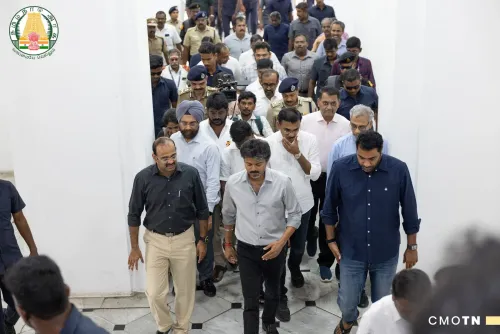
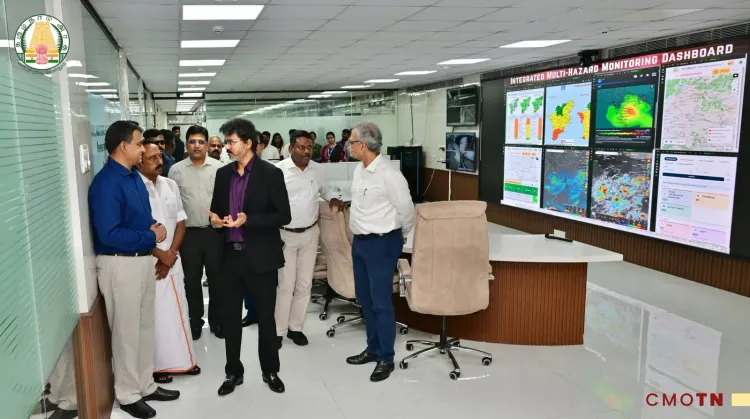
Joseph Vijay personally visited the State Emergency Operations Centre at Ezhilagam, Chennai on 22 October 2026 .
The visit focused on precautionary and coordination measures in districts other than Chennai ahead of the northeast monsoon season.
The CM held a video conference with District Collectors to directly review the status of preparedness measures.
The review was conducted through the Revenue Administration and Disaster Management Department , which operates the State Emergency Operations Centre.
Tamil Nadu's northeast monsoon runs from October to December and historically brings heavy rainfall and flood risk to coastal and delta districts.
With Tamil Nadu's northeast monsoon season in full swing, Chief Minister C. Joseph Vijay made a hands-on assessment of the state's emergency machinery — walking into the State Emergency Operations Centre at Ezhilagam, Chennai on 22 October 2026 to personally gauge how prepared every district is for the rainfall ahead.
What the CM found at Ezhilagam
The Revenue Administration and Disaster Management Department's State Emergency Operations Centre served as the command room for the review. CM Vijay inspected the precautionary and coordination measures already put in place across districts outside Chennai — the state's largest urban centre, which operates its own parallel preparedness structure.
He then convened a video conference with District Collectors across Tamil Nadu, drilling down into the status of pre-monsoon readiness at the ground level. The direct line to collectors — bypassing layers of bureaucracy — signals the administration's intent to hold district machinery accountable in real time.
Why the northeast monsoon demands this level of attention
Tamil Nadu is one of India's most monsoon-exposed states — and unlike much of the country, it receives the bulk of its annual rainfall not in June–September but during the northeast monsoon season from October to December. The seasonal pattern has historically brought heavy flooding to coastal and delta districts, disrupting lives and livelihoods across the state.
Pre-season reviews at the State Emergency Operations Centre are now a standard annual fixture, but the Chief Minister's personal appearance — rather than a delegated ministerial visit — raises the visibility of preparedness and sends a clear message down the administrative chain.
Districts beyond Chennai on alert
The specific focus on districts other than Chennai is notable. While the capital city draws the most media attention during flooding events, it is often inland and delta districts — including those in the Cauvery belt and along the northern coastal corridor — that bear the sharpest brunt of sustained rainfall. By directing attention outward, the review aims to ensure that preparedness is not concentrated only where cameras tend to follow.
District Collectors are now on notice: their precautionary plans have been reviewed directly by the Chief Minister, and follow-up monitoring through the monsoon weeks ahead is expected.
The northeast monsoon is only just arriving — and the state has made clear it is watching.
Point of View
Less-watched districts are caught underprepared. Whether the review translates into measurably faster relief deployment during the season will be the real test.
NationPress
22 Oct 2026
Frequently Asked Questions
Why did CM Vijay visit the State Emergency Operations Centre?
CM C. Joseph Vijay visited the State Emergency Operations Centre at Ezhilagam, Chennai on 22 October 2026 to personally review the precautionary and coordination measures put in place across Tamil Nadu districts ahead of the northeast monsoon season.
What is the State Emergency Operations Centre in Tamil Nadu?
The State Emergency Operations Centre is located at Ezhilagam, Chennai, and functions as the central coordination hub for state-level emergency responses, operated by the Revenue Administration and Disaster Management Department of Tamil Nadu.
When does the northeast monsoon affect Tamil Nadu?
Tamil Nadu's northeast monsoon season typically runs from October to December , bringing the bulk of the state's annual rainfall and posing flood risks particularly to coastal and delta districts.
What did CM Vijay discuss with District Collectors?
CM Vijay held a video conference with District Collectors across Tamil Nadu to review the status of precautionary measures being taken at the district level in preparation for the northeast monsoon.
Which districts were the focus of the monsoon review?
The review specifically focused on districts other than Chennai, ensuring that smaller and more vulnerable inland and coastal districts have adequate preparedness measures in place before the monsoon peaks.