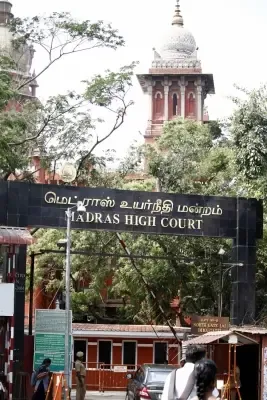
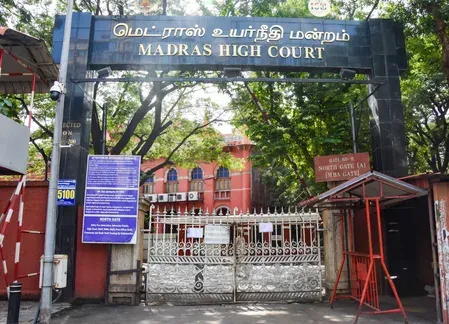
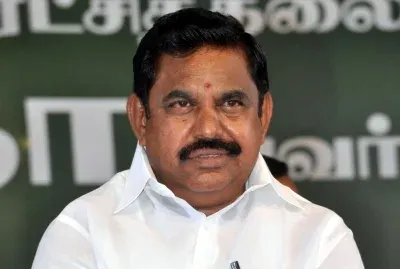
CM Vijay to face trial in Perambur poll case, Madras HC rules

Synopsis
Tamil Nadu CM C. Joseph Vijay has lost his bid to quash a challenge to his Perambur win. The Madras High Court ruled that claims of undisclosed income, land details and a disputed 'poramboke' property must go to trial. His election stands for now, but a sitting CM must now defend his poll affidavit in court.
Key Takeaways
The Madras High Court on 27 November 2026 rejected CM C.
Joseph Vijay's plea to dismiss an election petition against his Perambur victory.
Lakshminarayanan held that the alleged non-disclosure of income and land details warrants a trial.
Dinesh alleges incomplete asset disclosures, including government 'poramboke' land listed among Vijay's properties.
The court asked whether non-disclosure of ₹30 crore in assets is a corrupt practice when Vijay declared around ₹600 crore .
Vijay's counsel challenged maintainability under Section 81 of the Representation of the People Act.
The ruling does not invalidate Vijay's election; the merits will be decided at trial.
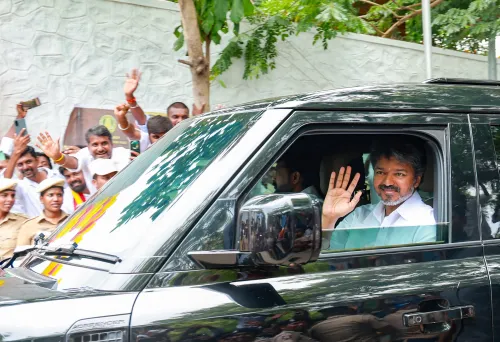
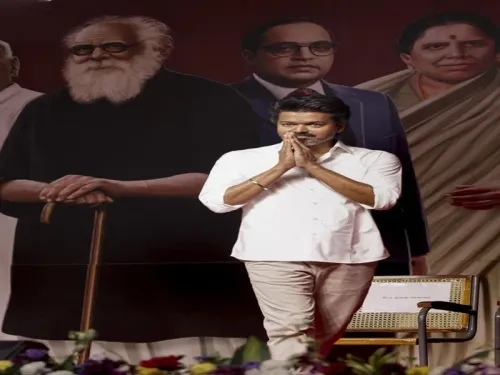
Tamil Nadu Chief Minister C. Joseph Vijay will have to face trial in an election petition challenging his victory from the Perambur Assembly constituency. On Friday, 27 November 2026, the Madras High Court in Chennai rejected his plea seeking dismissal of the case. The court held that allegations of incomplete disclosure of income and land ownership details in the Chief Minister's election affidavit need to be examined at trial.
What the High Court Decided
A bench of Justice V. Lakshminarayanan ruled that the allegations of non-disclosure could not be thrown out at the preliminary stage. By rejecting Vijay's application, the court allowed the petition to proceed. The merits of the allegations will be decided during the trial.
The ruling does not invalidate Vijay's election. It only means the Chief Minister cannot have the challenge set aside without a full hearing on the evidence.
The Allegations Against the Chief Minister
The election petition was filed by S. Dinesh. He alleges that Vijay did not make complete and accurate disclosures about his financial assets and immovable properties in the affidavit filed with his nomination papers.
The petitioner also alleged that Vijay had listed government 'poramboke' land among his declared properties. The court noted that Vijay had produced a sale deed for the property. However, the petitioner's counsel argued that both the authenticity of the document and the accuracy of the disclosure required examination.
During the hearing, the court asked whether the alleged non-disclosure of assets worth ₹30 crore would amount to a corrupt practice, given that Vijay had declared assets worth around ₹600 crore.
Arguments From Both Sides
Advocate Ashok, appearing for the petitioner, argued that suppression of assets could amount to undue influence under electoral law. He said that whether any suppression was deliberate could only be established during trial.
The petitioner further argued that election officials scrutinise nomination papers only summarily, so discrepancies can be challenged later through an election petition.
Vijay's legal team argued that discrepancies in asset declarations do not automatically justify setting aside an election. It said the petitioner had not provided material particulars showing that the alleged omissions influenced the result.
The defence also questioned whether the petition was maintainable at all. It argued that Dinesh had not adequately established that he was an elector of the constituency, as required under Section 81 of the Representation of the People Act. Vijay's counsel also said that non-disclosure of certain assets cannot be equated with suppression of criminal antecedents, and that the alleged discrepancies had no material bearing on how voters decided.
Why the Ruling Matters
The order means a sitting Chief Minister must now defend the accuracy of his poll affidavit in a full trial. Notably, the court's own question about whether a ₹30 crore gap is significant against ₹600 crore in declared wealth suggests materiality will be central to the case. So will the question of whether any omission was deliberate.
The case also tests how far affidavit disclosures, which election officials only check summarily at the nomination stage, can be challenged after an election. The outcome could shape how courts treat incomplete asset declarations by candidates. The trial now moves to the evidence stage, where both the disputed sale deed and the asset figures are expected to come under close scrutiny.
Point of View
Not a verdict, but its political weight is real: a sitting Chief Minister must now defend his own affidavit under cross-examination. The court's question about whether ₹30 crore matters against ₹600 crore goes to the heart of a long-standing grey zone in electoral law. Asset disclosure exists to inform voters, but challengers rarely manage to prove that an omission changed the result. Whichever way the trial goes, it could set a useful marker on whether affidavit accuracy carries real consequences or remains a box-ticking formality checked only in summary at nomination.
NationPress
27 Nov 2026
Frequently Asked Questions
What did the Madras High Court rule in CM Vijay's election case?
The Madras High Court on 27 November 2026 rejected Chief Minister C. Joseph Vijay's plea to dismiss an election petition challenging his Perambur victory. Justice V. Lakshminarayanan held that the allegations must be examined through a trial.
What are the allegations against CM Vijay?
Petitioner S. Dinesh alleges that Vijay did not fully and accurately disclose his financial assets and immovable properties in his nomination affidavit. He also alleges that government 'poramboke' land was included among Vijay's declared properties.
Does the ruling disqualify Vijay as MLA or Chief Minister?
No, the ruling does not invalidate Vijay's election. It only allows the election petition to proceed to trial, where the merits of the allegations will be decided.
What was Vijay's defence in the High Court?
Vijay's counsel argued that asset discrepancies do not automatically invalidate an election and had no material bearing on voters' decisions. The defence also questioned whether the petitioner had established his status as an elector under Section 81 of the Representation of the People Act.
How much in assets is allegedly undisclosed?
During the hearing, the court asked whether the alleged non-disclosure of assets worth ₹30 crore would amount to a corrupt practice. Vijay had declared assets worth around ₹600 crore.