CM Vishnu Deo Sai Champions Food Security for Chhattisgarh's Poorest
Synopsis
Chhattisgarh Chief Minister Vishnu Deo Sai reaffirmed his government's commitment to zero hunger on 30 September 2026, citing the Mukhyamantri Khadyannam Sahayata Yojana as the vehicle to ensure food grain access for the state's neediest families.
Key Takeaways
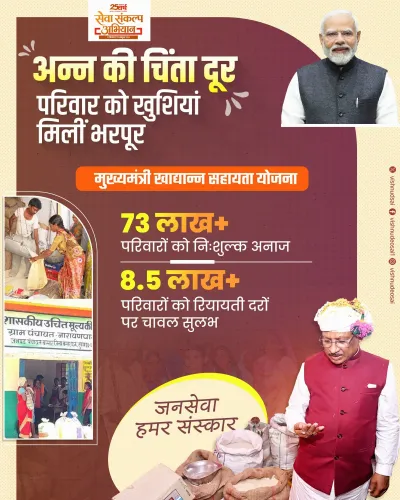
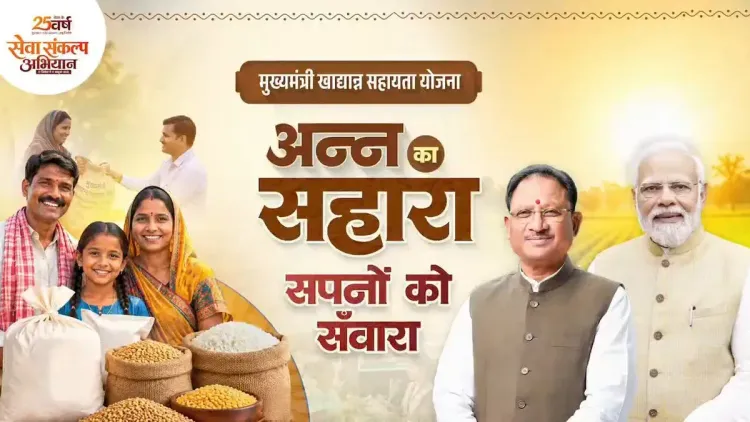
CM Vishnu Deo Sai posted on 30 September 2026 under #SevaSankalpAbhiyan , highlighting food-grain support for needy Chhattisgarh families.
The Mukhyamantri Khadyannam Sahayata Yojana provides food grains to poor households, supplementing the central National Food Security Act of 2013 .
Chhattisgarh has operated a reformed Public Distribution System since the early 2000s, with expanded coverage including doorstep delivery in remote areas.
CM Sai framed the scheme not merely as hunger relief but as a ladder enabling families to focus on children's education and long-term self-reliance.
The state's significant tribal and rural population makes targeted food-security interventions a critical governance priority.
Budget allocations for scheme expansion and NFSA integration are expected to feature in the next assembly session .
No family should go to bed hungry — and no parent should lie awake worrying about their child's next meal. That is the governing promise Chhattisgarh Chief Minister Vishnu Deo Sai restated on Wednesday, 30 September 2026, spotlighting the state's Mukhyamantri Khadyannam Sahayata Yojana as the mechanism designed to turn that promise into reality.
Posting under the hashtag #SevaSankalpAbhiyan, CM Sai framed the food-grain scheme in explicitly human terms: 'Koi parivar bhookha na soye' — 'Let no family sleep hungry.' The vision extends beyond filling plates. As the Chief Minister put it, once families are freed from the anxiety of daily sustenance, they can redirect energy toward their children's education and a better future — self-respect and aspiration walking hand-in-hand with food security.
What the Mukhyamantri Khadyannam Sahayata Yojana does
The Mukhyamantri Khadyannam Sahayata Yojana — the Chief Minister Food Grain Assistance Scheme — channels food grains directly to needy households in Chhattisgarh, supplementing the entitlements already available under the central National Food Security Act (NFSA) of 2013. State-level top-up schemes like this one have a well-established logic: the NFSA sets a nationwide floor, but pockets of exclusion persist, and a state scheme can plug those gaps faster than a central amendment can.
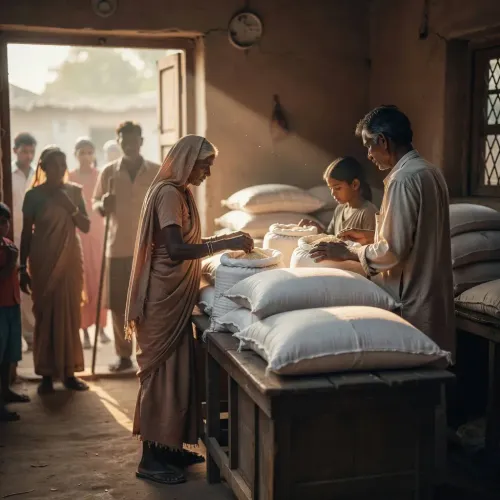
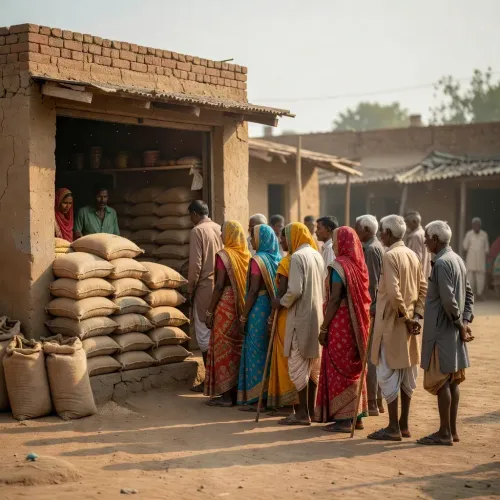
Chhattisgarh has run one of India's more ambitious reformed Public Distribution Systems since the early 2000s — expanding coverage and, in many areas, moving to doorstep delivery in a state where significant tribal and rural populations are scattered across difficult terrain. The current scheme sits squarely in that lineage.
The bigger bet: food security as a ladder, not just a safety net
The political philosophy embedded in CM Sai's post is worth unpacking. Standard welfare messaging stops at 'we are feeding the poor.' This framing goes a step further: food security is positioned as the foundational rung that lets families climb — toward schooling, toward economic mobility, toward what the Chief Minister called 'aatmsamman ke saath aage badhna', or 'moving forward with self-respect.'
Indian state governments across the political spectrum have long used supplemental food schemes to shore up support among rural and tribal constituencies. In Chhattisgarh, where poverty and hunger indicators have historically tracked above the national average in several districts, the political and humanitarian calculus converges. A state budget that sustains this scheme signals where the Sai administration places its welfare priorities ahead of the next assembly session.
The question the scheme must eventually answer is one of scale and reach: whether grain is reliably arriving at the households most difficult to serve. That accountability test — beneficiary numbers, delivery metrics, budget allocation for expansion — will define whether the Chief Minister's promise holds beyond the hashtag.
Point of View
Distancing it from older 'dole' optics. For Chhattisgarh specifically, where tribal-belt constituencies carry outsized electoral weight, visible food-security commitment is both a governance imperative and a vote-bank reinforcement. The real test will arrive when the assembly scrutinises beneficiary data and delivery reach — the gap between the hashtag and the last-mile household is where political capital is actually earned or lost.
NationPress
30 Sept 2026
Frequently Asked Questions
What is the Mukhyamantri Khadyannam Sahayata Yojana in Chhattisgarh?
The Mukhyamantri Khadyannam Sahayata Yojana is a Chhattisgarh state government scheme that provides food grains to needy families, supplementing the entitlements available under the central National Food Security Act to reduce hunger and ease the food burden on poor households.
What did Chhattisgarh CM Vishnu Deo Sai say about food security?
On 30 September 2026, CM Vishnu Deo Sai stated that no family should sleep hungry and no parent should worry about their child's meal, pledging that his government would ensure food grain availability so families could focus on education and a better future.
How does Chhattisgarh's food distribution system work?
Chhattisgarh has run a reformed Public Distribution System since the early 2000s that features expanded coverage and doorstep delivery in many areas, including remote tribal regions, and is now supplemented by the state's own Mukhyamantri Khadyannam Sahayata Yojana.
Who benefits from the Chhattisgarh food grain assistance scheme?
The scheme targets needy and poor families in Chhattisgarh, with a particular focus on ensuring that vulnerable households — including those in tribal and rural areas — have reliable access to food grains.
What is the SevaSankalpAbhiyan hashtag associated with CM Sai's post?
SevaSankalpAbhiyan appears to be a campaign or outreach initiative used by CM Vishnu Deo Sai's government to highlight welfare and service delivery efforts, with his 30 September 2026 post on food security using this hashtag.