CM Vishnu Deo Sai Marks World Children's Day
Synopsis
On Universal Children's Day 2026, Chhattisgarh CM Vishnu Deo Sai called quality education, safety, and equal opportunity every child's right, urging collective commitment to child protection and development as the foundation of a strong nation.
Key Takeaways
CM Vishnu Deo Sai posted his Universal Children's Day message on 20 November 2026 .
He called quality education, a safe environment, and equal opportunity every child's fundamental right .
India ratified the UN Convention on the Rights of the Child in 1992 , forming the legal backbone of child welfare commitments.
The Right to Education Act (2009) guarantees free schooling for children aged 6–14 across India.
Chhattisgarh is aligned with central schemes including Samagra Shiksha for school education delivery.
State-level budget allocations for school infrastructure and child protection cells remain the key performance markers ahead.
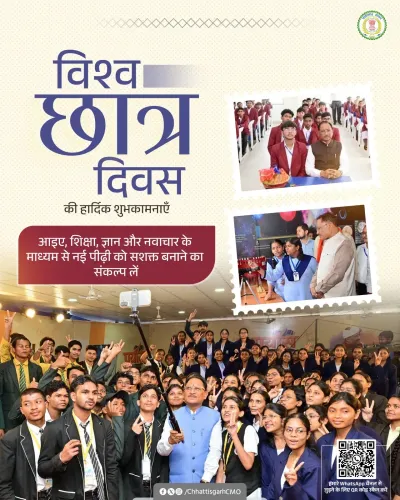
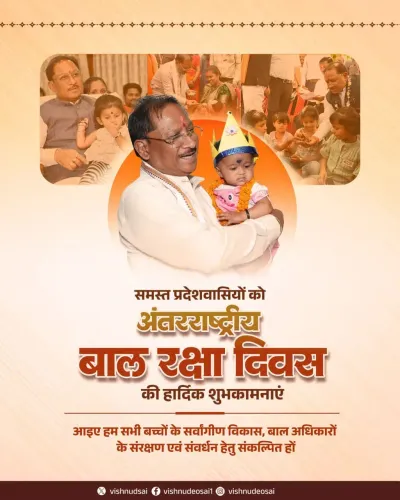
Every child's right to quality education and a safe environment is a collective responsibility — not a government favour. On Universal Children's Day, Friday, 20 November 2026, Chhattisgarh Chief Minister Vishnu Deo Sai renewed his commitment to child welfare, calling the bright future of children the cornerstone of a prosperous society and a strong nation.
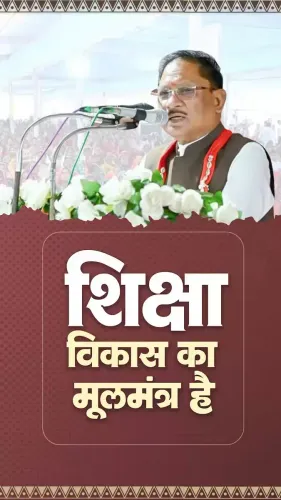
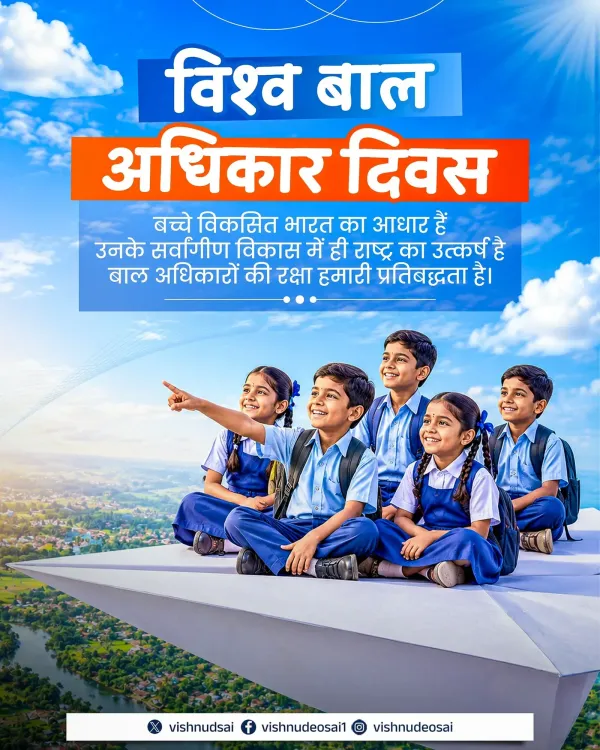
Posting on X in Hindi, CM Sai wrote: 'हर बच्चे को गुणवत्तापूर्ण शिक्षा, सुरक्षित वातावरण और अपने सपनों को साकार करने के समान अवसर मिलें, यह उसका अधिकार है।' — 'Every child deserves quality education, a safe environment, and equal opportunities to realise their dreams — this is their right, and ensuring it is our shared responsibility.' He called on all to rededicate themselves to protecting children's rights, dignity, security, and all-round development.
A Day Rooted in International Law — and India's Own Commitments
Universal Children's Day falls on 20 November each year, marking the anniversary of the adoption of the UN Convention on the Rights of the Child. India ratified the Convention in 1992, legally binding itself to guarantees of child protection and development. That framework found domestic expression in the Right of Children to Free and Compulsory Education Act, 2009, which mandates free schooling for all children aged 6 to 14 across the country.
Chhattisgarh, a central Indian state governed by the BJP since CM Sai assumed office in December 2023, has aligned with national programmes including Samagra Shiksha — the Centre's integrated school education scheme — along with nutrition and child protection initiatives. The state's school infrastructure and child protection cell budgets remain active areas to watch as annual planning cycles unfold.
Why These Words Land on a State's Shoulders
Routine as such statements may appear on the calendar, the politics underneath are real. Education delivery, school building quality, mid-day meal implementation, and child protection cells are overwhelmingly a state subject. A chief minister's public restatement of these obligations is also, implicitly, a signal to the state machinery. Indian states that follow Universal Children's Day messages with budget allocations and audit disclosures tend to see measurable improvements in enrolment and retention data — the gap between pledge and performance is exactly what civil society groups track each year.
CM Sai's framing — 'बच्चों का उज्ज्वल भविष्य ही समृद्ध समाज और सशक्त राष्ट्र की आधारशिला है' ('the bright future of children is the foundation of a prosperous society and a powerful nation') — echoes a consensus that spans party lines. The question Chhattisgarh's education departments will be asked is simple: what does the state's next budget cycle say about that foundation?
Point of View
Statements like these will increasingly be measured against school infrastructure spending and child protection outcomes in the state's annual budget cycle. The post carries no policy announcement, but its ceremonial weight is real: in a state where tribal and rural child enrolment gaps persist, public reaffirmations from the top set the tone for bureaucratic priority-setting. Analysts will watch whether the rhetoric translates into verifiable resource commitments before the next financial year.
NationPress
20 Nov 2026
Frequently Asked Questions
Why is Universal Children's Day celebrated on 20 November?
20 November marks the anniversary of the UN Convention on the Rights of the Child , adopted in 1989. India ratified the Convention in 1992 , and the date is observed globally to reaffirm commitments to child rights, protection, and development.
What did Chhattisgarh CM Vishnu Deo Sai say on Children's Day 2026?
CM Vishnu Deo Sai said every child has the right to quality education, a safe environment, and equal opportunity to fulfil their dreams, calling it a shared collective responsibility. He described children's bright future as the foundation of a prosperous society and a powerful nation.
What is the Right to Education Act in India?
The Right of Children to Free and Compulsory Education Act, 2009 guarantees free and compulsory education to all children between the ages of 6 and 14 across India, making quality schooling a legal entitlement rather than a privilege.
What is Samagra Shiksha and how does Chhattisgarh fit in?
Samagra Shiksha is the central government's integrated school education scheme covering pre-primary to senior secondary levels. Chhattisgarh implements the scheme alongside state-level initiatives for school infrastructure, nutrition, and child protection.
When did Vishnu Deo Sai become Chief Minister of Chhattisgarh?
Vishnu Deo Sai assumed office as Chief Minister of Chhattisgarh in December 2023 after the BJP won the state assembly elections, making him the state's first tribal chief minister.