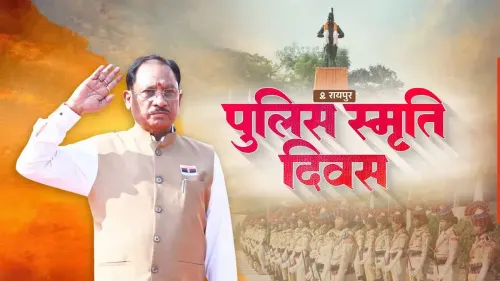
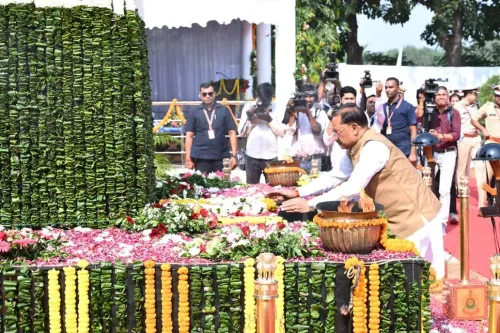
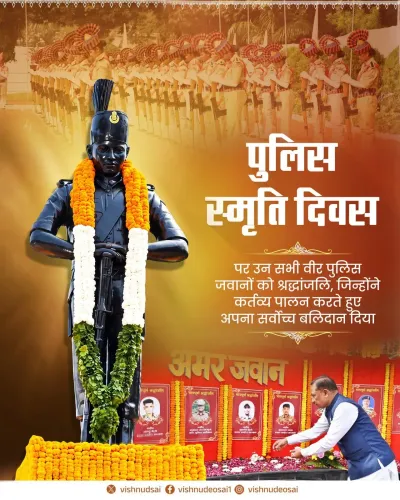
CM Vishnu Deo Sai pays tribute to 26/11 martyrs
Synopsis
Chhattisgarh Chief Minister Vishnu Deo Sai paid tribute on 26 November 2026 to security personnel and civilians killed in the 2008 Mumbai terror attacks, saying a new India stands determined against terrorism to protect security, sovereignty and citizens.
Key Takeaways
Chhattisgarh Chief Minister Vishnu Deo Sai on 26 November 2026 paid tribute to those killed in the 26/11 Mumbai attacks.
He honoured brave security personnel and innocent civilians and said a new India is determined against terrorism.
The 26 November 2008 assaults by Lashkar-e-Taiba killed 166 people across multiple Mumbai sites.
The National Investigation Agency was created in December 2008 after the attacks, with UAPA changes also following.
Sai, who became chief minister in December 2023, did not announce new policy in the tribute.
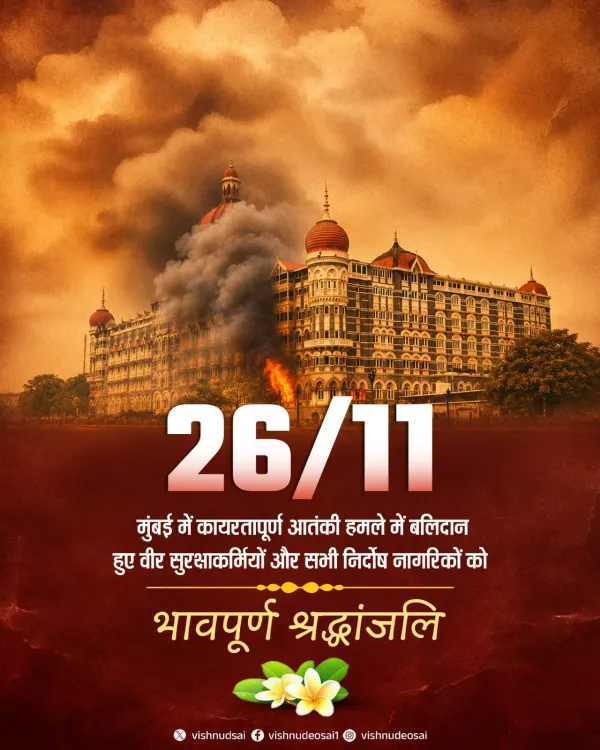
Eighteen years after coordinated gunmen struck India's financial capital, Chhattisgarh Chief Minister Vishnu Deo Sai on Thursday, 26 November 2026 paid homage to the security personnel and civilians killed in the 26/11 Mumbai terror attacks, tying the anniversary to a pledge of national resolve.
In a post on X, Sai offered a humble tribute — vinamra shraddhanjali — to the brave security personnel and all innocent civilians who sacrificed their lives in what he called the cowardly terrorist attack of 26/11 in Mumbai. Today's new India, he wrote, is firmly determined against terrorism and stands with full strength and commitment to protect its security, sovereignty and citizens.
The 2008 assault on Mumbai
On 26 November 2008, militants of Lashkar-e-Taiba launched coordinated attacks across multiple sites in Mumbai, India's financial capital. The assault killed 166 people, including security personnel and civilians.
The siege remains one of the deadliest terror strikes on Indian soil. Annual remembrances by political leaders typically honour both the uniformed dead and the civilians who had no role in the fight except to be in the city that night.
Laws born in the weeks after 26/11
Within weeks, Parliament passed the National Investigation Agency Act in December 2008, creating a federal body to probe terror cases that crossed state lines. Amendments to the Unlawful Activities (Prevention) Act followed, tightening the legal net around terror financing and organised cells. A National Counter Terrorism Centre framework was also sketched as part of the post-2008 overhaul.
Sai, a Bharatiya Janata Party leader who took office as Chhattisgarh's chief minister in December 2023, did not announce new measures. His message sat inside a familiar pattern: state and central leaders use the 26/11 date to underline sovereignty, citizen protection and a harder line against terrorism.
Why leaders still mark the date
For security forces, 26/11 is a professional memory of response gaps that night, and of the specialised units and intelligence sharing built afterwards. For civilians, it is a civic one: ordinary public spaces in Mumbai were targets until the shooting stopped.
Sai's formulation of a 'new India' standing with full strength for security, sovereignty and the defence of citizens tracks the language Indian governments have used at every subsequent anniversary. Eighteen years on, the names of the dead still set the standard against which that resolve is measured.
Point of View
And Sai's post sits squarely in that groove. The substance is not a new law or a new operation; it is a restatement that counter-terror resolve, sovereignty and citizen protection remain the frame through which governing leaders read the anniversary. The real policy residue of that night is the post-2008 architecture: the NIA, a tougher UAPA, and the still incomplete National Counter Terrorism Centre idea. Watch whether future anniversaries bring legislative or operational updates, or merely the same language of determination.
NationPress
26 Nov 2026
Frequently Asked Questions
What did Chhattisgarh CM Vishnu Deo Sai say on 26/11?
He offered a humble tribute to the brave security personnel and innocent civilians killed in the 26/11 Mumbai terrorist attack. He added that today's new India is firmly determined against terrorism and stands with full strength to protect its security, sovereignty and citizens.
When did the 26/11 Mumbai terror attacks take place?
The attacks began on 26 November 2008, when Lashkar-e-Taiba militants struck multiple sites across Mumbai. The coordinated assault is commemorated every year on that date.
How many people were killed in the 26/11 Mumbai attacks?
The coordinated assaults killed 166 people, including security personnel and civilians. The figure is the standard official death toll cited for the 2008 Mumbai attacks.
What agency was created after the 26/11 attacks?
Parliament passed the National Investigation Agency Act in December 2008 to create a federal body for terror-related cases. Post-2008 reforms also included amendments to the Unlawful Activities (Prevention) Act and work on a National Counter Terrorism Centre framework.
Who is Vishnu Deo Sai?
Vishnu Deo Sai is the Chief Minister of Chhattisgarh and a Bharatiya Janata Party leader. He assumed office in December 2023.